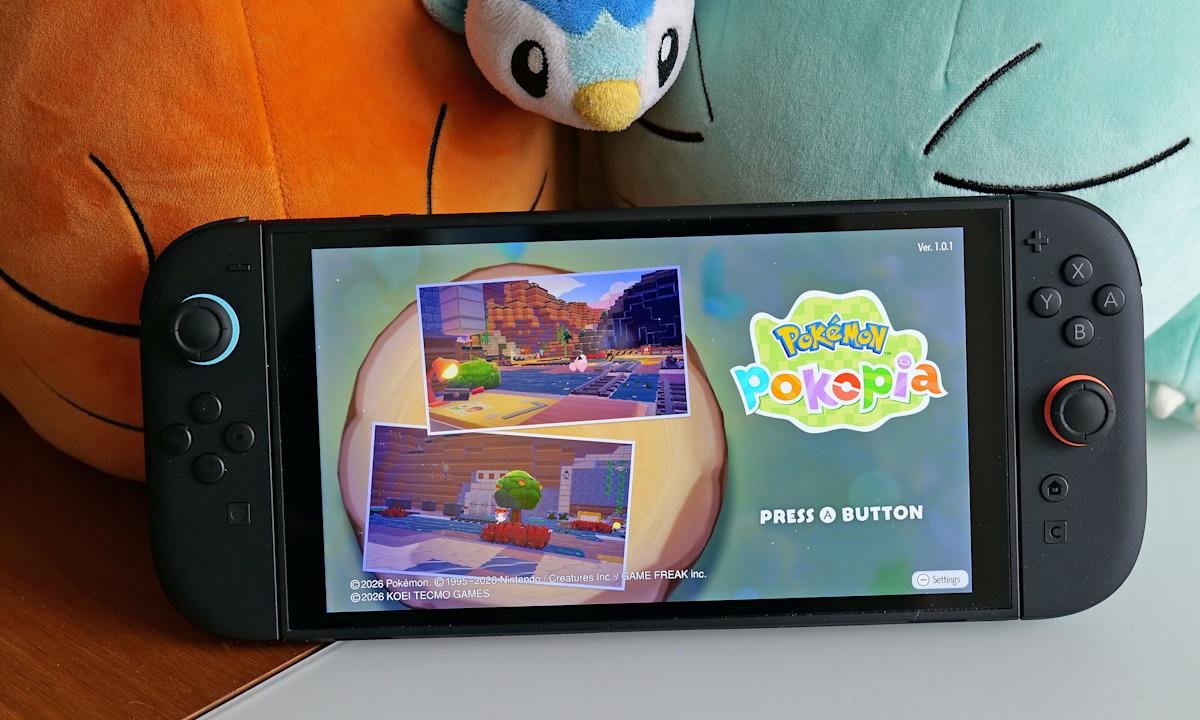
One of the biggest issues with mainline Pokémon games is that you’re often so focused on catching, battling and trying to be the very best that you don’t have time to stop and smell the flowers. But in Pokémon Pokopia, you’re rewarded for doing just that while building a loving community of friendly monsters. The game is one part Animal Crossing and one part Dragon Quest Builders sprinkled with a touch of Minecraft and Stardew Valley. he result might be one of the coziest, most wholesome life sims on the market.
Setup and gameplay
In Pokopia, you play as a Ditto, who has awakened to a world where all the other humans and Pokémon have mysteriously disappeared. Naturally, the loss of your trainer has inspired you to take the form of a person (well, as best as a Ditto can). You work together with the only other soul around, Professor Tangrowth, to figure out how to revitalize this once thriving town. As you explore, you learn to create habitats from a mix of shrubs, trees and anything else you can scavenge. You can also create new homes for the missing Pokémon and lure them back, slowly converting the wasteland into a bustling place full of life and excitement. It’s a simple but extremely rewarding gameplay loop, and as you make friends with the returning monsters, they help you on your quest by teaching you skills that allow you to continue shaping and manipulating the environment. They also provide handy items and building materials.
Some Pokémon like Squirtle can even teach you new moves that you can use to manipulate your environment. (Nintendo / Engadget)
This is where the other main gameplay cycle comes in, as the entire world is made up of blocks that you can excavate or rework to your heart’s content. Not only does this let you customize your environment, it also serves as a way to traverse the world. See a shiny treasure on the other side of a river but you can’t swim there? You can simply build a bridge instead. And just like in Minecraft, you can use raw materials to create all sorts of fancy blocks and furniture so your homes look exactly how you want. When compared to games like Animal Crossing, I found I actually prefer Pokopia’s flavor of world-building a touch more, as it relies slightly more on building and exploring and less on decorating.

In order to lure Pokémon to your town, first you need to build a home they’ll want to live in. (Nintendo / Engadget)
My one small issue with the game is that while I like the real-time building mechanic that lets Pokémon work on stuff while you’re not playing, having to wait a full day for bigger projects to be completed can bog down your progress a bit. With a game that easily provides more than 50 hours of content just for its main story (and that’s not counting all the time you’ll spend customizing and tweaking your town), sometimes things become a slower burn than they ought to be.
The magic of Pokopia

As befitting a Pokémon game, each monster has skills befitting their type like Charmander being able to light fires. (Sam Rutherford for Engadget)
While the success of Pokopia’s core mechanics can be largely attributed to co-developer Bandai Namco borrowing the game’s basic template from the Dragon Quest Builders series, the real magic of the game comes from the Pokémon themselves. When I load into the world and the first thing that happens is one of my townsfolk running up to me to say thanks or give me a present, it just makes me happy. And unlike most other Pokémon games, you can actually have proper conversations with them, instead of just hearing them do their 8-bit cries. Speaking of that, I really think it’s time for Game Freak to archive those Game Boy-inspired sound bites in favor of proper voice acting. We’ve had thirty years of crunchy, low-fi yells, and in an open-world game with adorable polygonal graphics, I think we can finally let the ‘mons say their names like they do in the anime.
Pokopia’s roster of characters is also bigger than expected. That’s because in addition to new faces like Peakychu and Mosslax, there are well over 100 different Pokémon to befriend. And while the game leans a bit more heavily on characters from Kanto and the original 151, there’s solid representation from other generations, including cameos from legendaries. Furthermore, each monster has its own unique habitat, preferences and abilities. I appreciate little details like water-type Pokémon who ask you to make their home a bit more humid or fighting-type monsters who ask for exercise equipment to spruce up theirs. Similarly, when it comes to building out your town, I like that the game makes you turn towards plant-types if you want help with your crops or a fire-type if you need help smelting some iron.

Teamwork makes the dream work. (Nintendo / Engadget)
However, the most heartwarming thing about Pokopia might not even be how you interact with the other Pokémon, but how they socialize with themselves. Sometimes you’ll run into two mons chasing each other around, working out together or cuddling up for a nap. And thanks to the game’s photo mode, you can capture all these moments when they happen.
Exploring the world is also quite satisfying, particularly for anyone who has played any of the Pokémon games from gen one. There are a ton of references to memorable people and places from Kanto. Plus, when you’re just out and about or spelunking, you’ll sometimes run into other adventurous mons who need a little help before you can convince them to move into town. It feels like there are fun secrets hiding around every other corner, and even for those that are a bit less obvious, Pokopia drops just enough hints to point you in the right direction.
Wrap-up

Just look how happy everyone is when we all work together. (Nintendo / Engadget)
There’s so much to do in Pokopia that I wouldn’t be surprised if dedicated players could tide themselves over with this game until Pokémon Winds and Waves comes out next year. But more importantly, Bandai Namco and Game Freak have found a perfect balance between the title’s open-world building mechanics and homages to the underlying franchise. Pokopia isn’t just a half-hearted life-sim clone with a thin veneer of monster catching (or in this case, monster community outreach) draped on top; it’s a good game in its own right that just gets better with the addition of neighborly Pokémon.