New ‘Cicada’ COVID variant is spreading in the U.S.—here’s what to know
Infections of the BA.3.2 variant of the COVID-causing coronavirus are still at very low levels, but experts are concerned it may be resistant to immunity from vaccines or prior infection
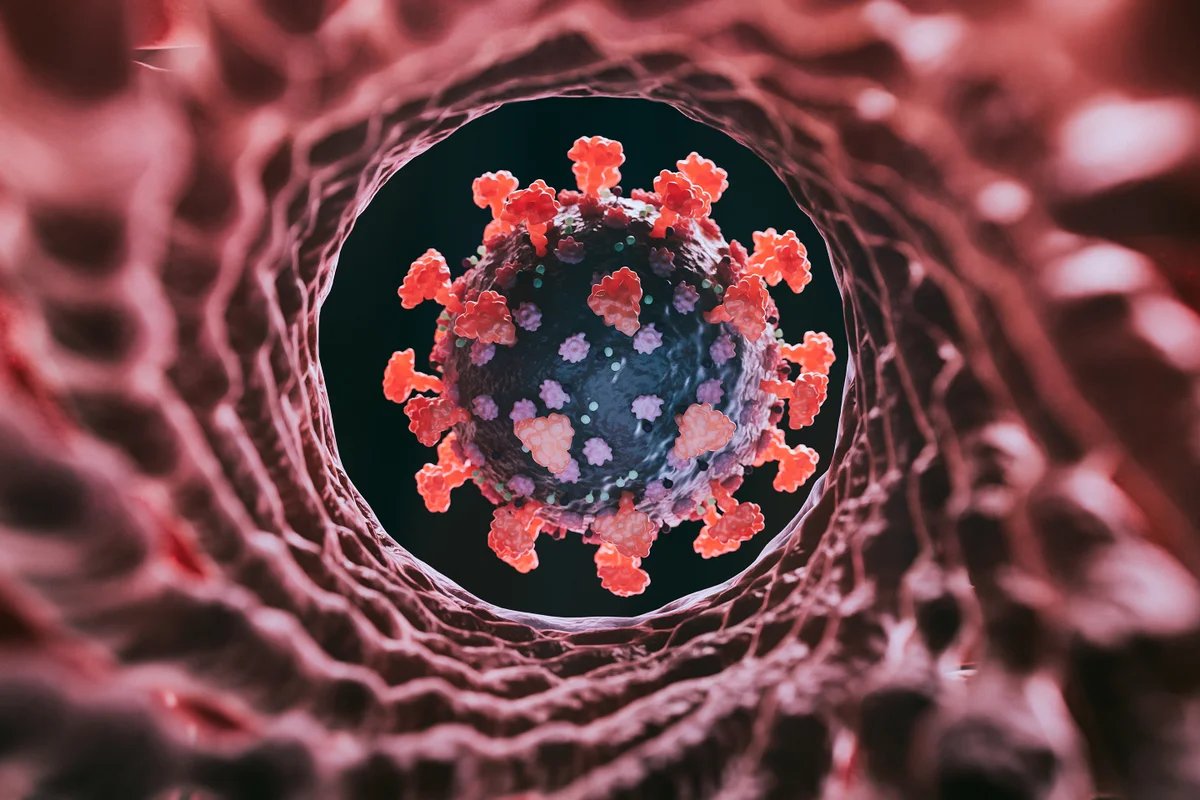
A new variant of SARS-CoV-2, the virus that causes COVID, dubbed “Cicada” is circulating.
A new variant of the virus that causes COVID is spreading in the U.S. The “Cicada” variant, officially known as BA.3.2, was first detected in South Africa in November 2024. But infection rates in the U.S. have been slowly rising since last fall, according to a recent Centers for Disease Control and Prevention report.
Cicada is notable because it has a highly mutated genetic sequence that some experts fear could enable it to evade some of our immunity from vaccination or a past COVID infection.
The variant had been detected in 23 countries as of February, the CDC’s report states. The agency’s genomic surveillance program first detected the variant in the U.S. last June in a traveler from the Netherlands. It later showed up in nasal swabs from four travelers, three samples of airplane wastewater, five clinical samples from patients and 132 wastewater samples from 25 states, according to the report, which was published on March 19 in the CDC’s Morbidity and Mortality Weekly Report.
On supporting science journalism
If you’re enjoying this article, consider supporting our award-winning journalism by subscribing. By purchasing a subscription you are helping to ensure the future of impactful stories about the discoveries and ideas shaping our world today.
The BA.3.2 variant has around 70 to 75 mutations in the genetic sequence of its spike protein (the protein the virus uses to infect cells) relative to the strains that were included in last fall’s COVID vaccines: the JN.1 variant and its descendent LP.8.1. And in laboratory studies, the Cicada variant was able to evade antibodies, “highlighting the need for ongoing genomic surveillance and observational evaluations of vaccine and antiviral effectiveness,” the report’s authors write.
Still, Cicada accounts for only a tiny fraction of COVID cases in the U.S.—fewer than 0.2 percent of sequences collected from December 1, 2025, through February 11, 2026. And it hasn’t been linked with higher COVID cases overall.
While COVID is no longer as serious as it was during the pandemic’s early years, it nonetheless caused an estimated 390,000 to 550,000 hospitalizations and 45,000 to 64,000 deaths during the 2024–2025 respiratory virus season—and preliminary estimates of 110,000 to 210,00 hospitalizations and 12,000 to 37,000 deaths between October 1, 2025, and March 21, 2026—according to CDC data.
It’s Time to Stand Up for Science
If you enjoyed this article, I’d like to ask for your support. Scientific American has served as an advocate for science and industry for 180 years, and right now may be the most critical moment in that two-century history.
I’ve been a Scientific American subscriber since I was 12 years old, and it helped shape the way I look at the world. SciAm always educates and delights me, and inspires a sense of awe for our vast, beautiful universe. I hope it does that for you, too.
If you subscribe to Scientific American, you help ensure that our coverage is centered on meaningful research and discovery; that we have the resources to report on the decisions that threaten labs across the U.S.; and that we support both budding and working scientists at a time when the value of science itself too often goes unrecognized.
In return, you get essential news, captivating podcasts, brilliant infographics, can’t-miss newsletters, must-watch videos, challenging games, and the science world’s best writing and reporting. You can even gift someone a subscription.
There has never been a more important time for us to stand up and show why science matters. I hope you’ll support us in that mission.