NASA’s Artemis II moon mission preps for its last full day in space
The moon is now far in the rearview after a near-flawless spaceflight, but the crew of Artemis II aren’t home safe yet
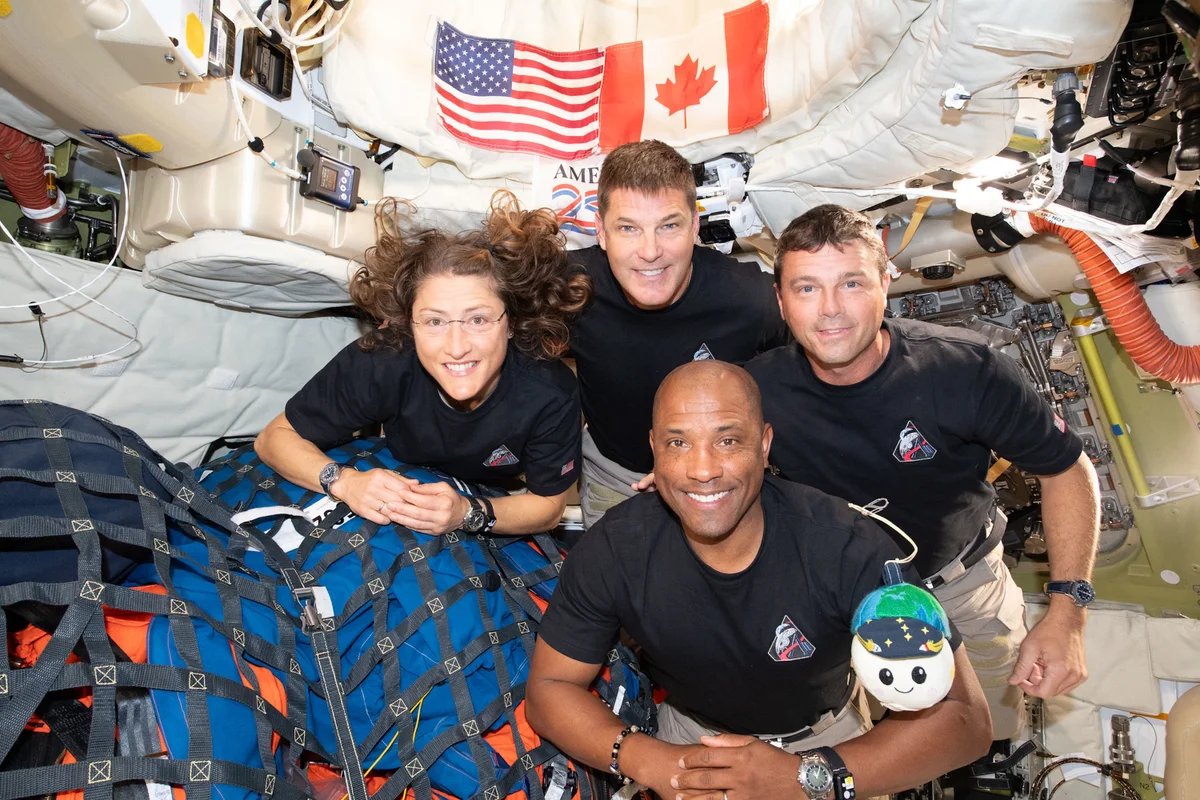
NASA’s Artemis II crew (from left to right) mission specialist Christina Koch, mission specialist Jeremy Hansen, pilot Victor Glover and commander Reid Wiseman pose for a group photo with their zero-gravity indicator “Rise,” inside the Orion spacecraft on their way home.
NASA has launched four astronauts on a pioneering journey around the moon—the Artemis II mission. Follow our coverage here.
Almost everything has gone to plan for NASA’s Artemis II mission, the first human voyage beyond low-Earth orbit since 1972.
Launched on April 1, it is the first crewed test flight of the space agency’s Space Launch System megarocket and Orion crew capsule. The four brave astronauts onboard—Reid Wiseman, Victor Glover and Christina Koch of NASA and Jeremy Hansen of the Canadian Space Agency—completed their historic lunar flyby five days later.
The biggest issue so far seems to have been a troublesome toilet—the first ever flown around the moon. It has repeatedly clogged and may be the source of a mysterious burning smell, turning the crew and mission controllers into part-time “space plumbers.”
On supporting science journalism
If you’re enjoying this article, consider supporting our award-winning journalism by subscribing. By purchasing a subscription you are helping to ensure the future of impactful stories about the discoveries and ideas shaping our world today.
Still, now in the ninth day of their ten-day mission and with Earth looming larger in the spacecraft’s windows, the crew is facing what could be a fraught homecoming. On Friday around 7:45 P.M. EDT, after jettisoning its bulky service module, the Orion capsule will plunge into our planet’s atmosphere at a projected speed of about 24,000 miles per hour.
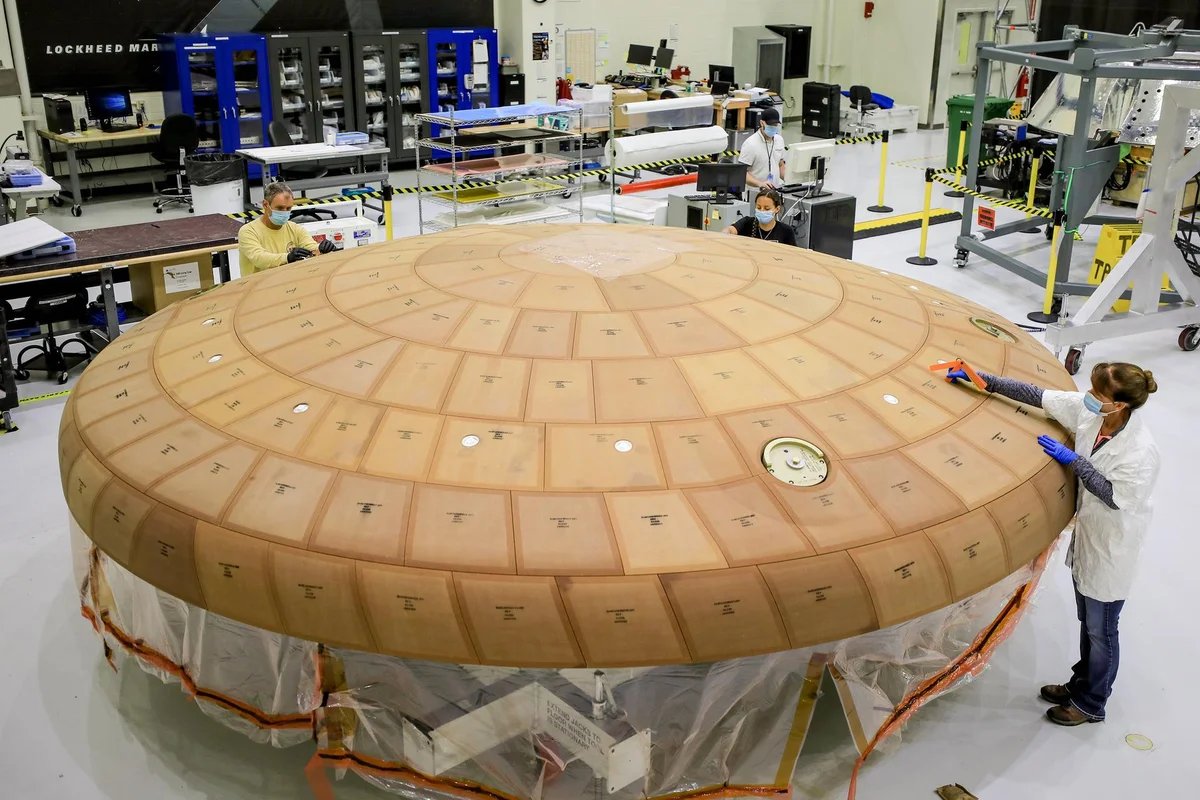
In the best-case scenario, what follows will be 13 minutes of nerve-racking tension—about half of which will be in radio blackout. As it falls, the spacecraft’s heat shield endures temperatures as high as 5,000 degrees Fahrenheit, before slowing under parachutes to splashdown off the coast of San Diego. There, a fleet of naval ships will be waiting to recover the astronauts.
Day Eight of the Artemis II astronauts’ voyage betrayed no signs of concern. Fueled by a stick-to-your-ribs menu featuring beef stew, chicken noodle soup and “cosmic” brownies, the crew’s activities included snapping a unique selfie, completing one last in-space workout session, and testing compression garments meant to ease the physiological transition back to Earth gravity.
Mission controllers chose to call off the crew’s planned construction of a radiation shelter, explaining that most of its core objectives had already been demonstrated. A manual piloting demonstration was also canceled due to its potential interference with a pressurization test for part of the Orion spacecraft’s propulsion system.
In the evening, the astronauts spoke with Canadian Prime Minister Mark Carney and answered questions from Canadian schoolchildren, discussing the relative merits of Nutella versus maple syrup on pancakes, as well as their favorite wake-up songs from the mission.
Day nine sees the astronauts very busy once again. Today, they are focused on configuring the Orion capsule for return to Earth and carefully studying their planned re-entry procedures. Because no matter how care-free the crew and the personnel of Houston Ground Control may seem, they know all too well the high stakes of the imminent homecoming.
“I’ve actually been thinking about reentry since April 3, 2023 when we got assigned to this mission,” said Glover, Artemis II’s pilot, when asked at a Thursday press conference how he was feeling about the return. “There’s so many more pictures, so many more stories, and gosh, I haven’t even begun to ⁠process what we’ve been through. We’ve still got two more days, and riding a fireball through the atmosphere is profound as well.”
It’s Time to Stand Up for Science
If you enjoyed this article, I’d like to ask for your support. Scientific American has served as an advocate for science and industry for 180 years, and right now may be the most critical moment in that two-century history.
I’ve been a Scientific American subscriber since I was 12 years old, and it helped shape the way I look at the world. SciAm always educates and delights me, and inspires a sense of awe for our vast, beautiful universe. I hope it does that for you, too.
If you subscribe to Scientific American, you help ensure that our coverage is centered on meaningful research and discovery; that we have the resources to report on the decisions that threaten labs across the U.S.; and that we support both budding and working scientists at a time when the value of science itself too often goes unrecognized.
In return, you get essential news, captivating podcasts, brilliant infographics, can’t-miss newsletters, must-watch videos, challenging games, and the science world’s best writing and reporting. You can even gift someone a subscription.
There has never been a more important time for us to stand up and show why science matters. I hope you’ll support us in that mission.