‘Microbubbles’ Help Spread Dangerous Microplastics Through Our Water, Study Finds
Water plays a crucial role in how tiny pieces of plastic enter our environment—and us
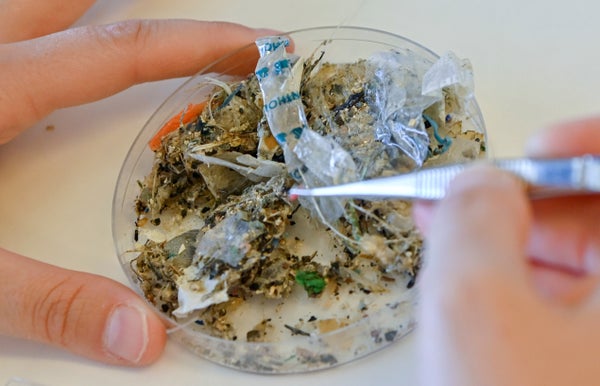
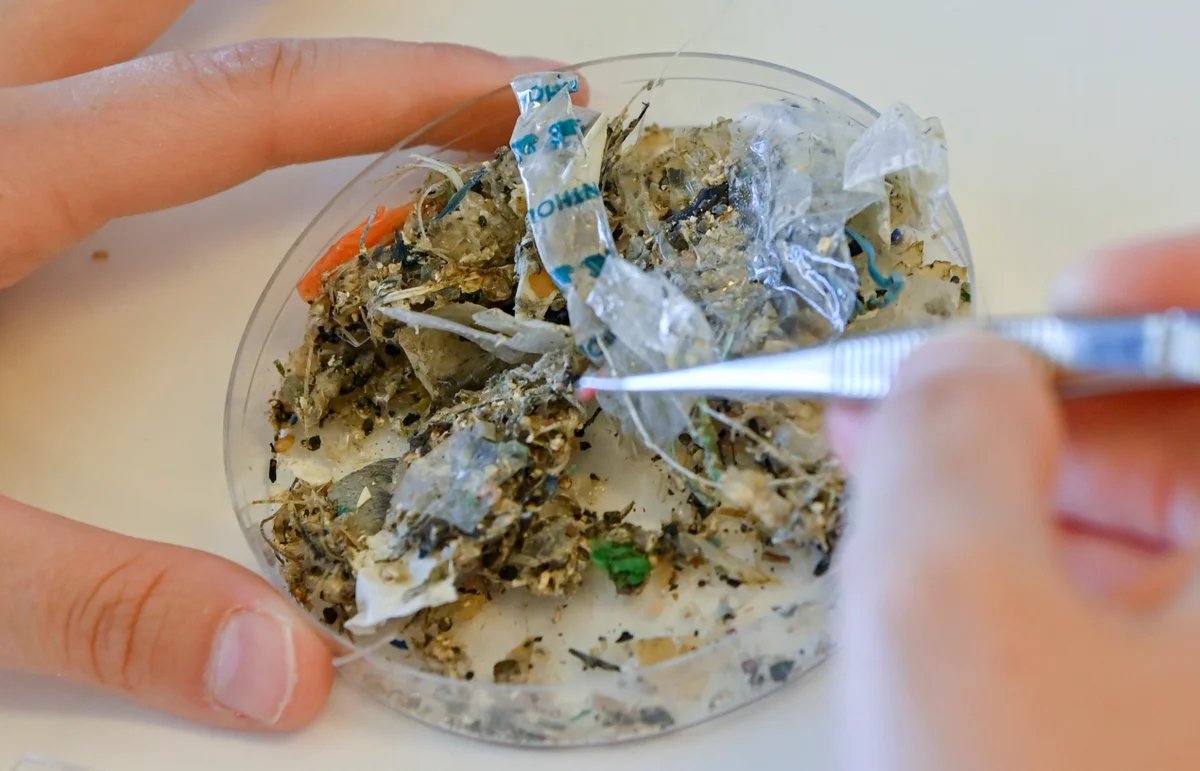
A researcher selects microplastics found in sea species at the Hellenic Center for Marine Research in Anávissos, Greece, near Athens, on July 15, 2025.
Photo by Milos Bicanski/Getty Images
If you read the research on microplastics, these pollutants appear to be as frightening as they are ubiquitous. Found throughout our bodies, food and environment, both microplastics and their ingredients have been linked to heart attacks, stroke, respiratory conditions, fertility issues and death—to name just a few issues.
Yet despite these traits, scientists don’t fully understand how all the minuscule filaments of plastic get into our environment. A study published last month in Science Advances offers some new clues as to how water may be contributing to their spread.
Scientists already knew that plastics degrade through exposure to sunlight and repeated weathering by waves, sand or other debris. But the new study suggests contact with water itself is also a factor: in both marine and river environments, researchers found that microbubbles can form on the surface of a piece of plastic, breaking it down—and releasing tiny, practically invisible plastic bits into the surrounding water.
On supporting science journalism
If you’re enjoying this article, consider supporting our award-winning journalism by subscribing. By purchasing a subscription you are helping to ensure the future of impactful stories about the discoveries and ideas shaping our world today.
From there, nanoplastics and microplastics often enter the food chain—and, in turn, us. An estimated 130 million metric tons of plastic waste enters our bodies and the environment every year, with that number on track to more than double by 2040.
The results, the researchers write, could inspire future research on how to control the release of microplastic into, well, everything. “Plastic degradation is an invisible threat to the environment and human health,” said John Boland, a professor in the School of Chemistry at Trinity College Dublin and senior author of the study, in a statement. “Society urgently needs to come to grips with the enormity of the challenge posed by our ubiquitous use of plastics.”
It’s Time to Stand Up for Science
If you enjoyed this article, I’d like to ask for your support. Scientific American has served as an advocate for science and industry for 180 years, and right now may be the most critical moment in that two-century history.
I’ve been a Scientific American subscriber since I was 12 years old, and it helped shape the way I look at the world. SciAm always educates and delights me, and inspires a sense of awe for our vast, beautiful universe. I hope it does that for you, too.
If you subscribe to Scientific American, you help ensure that our coverage is centered on meaningful research and discovery; that we have the resources to report on the decisions that threaten labs across the U.S.; and that we support both budding and working scientists at a time when the value of science itself too often goes unrecognized.
In return, you get essential news, captivating podcasts, brilliant infographics, can’t-miss newsletters, must-watch videos, challenging games, and the science world’s best writing and reporting. You can even gift someone a subscription.
There has never been a more important time for us to stand up and show why science matters. I hope you’ll support us in that mission.