Israel’s leaders had little to say on Sunday about President Trump’s announcement of an emerging peace deal with Iran.
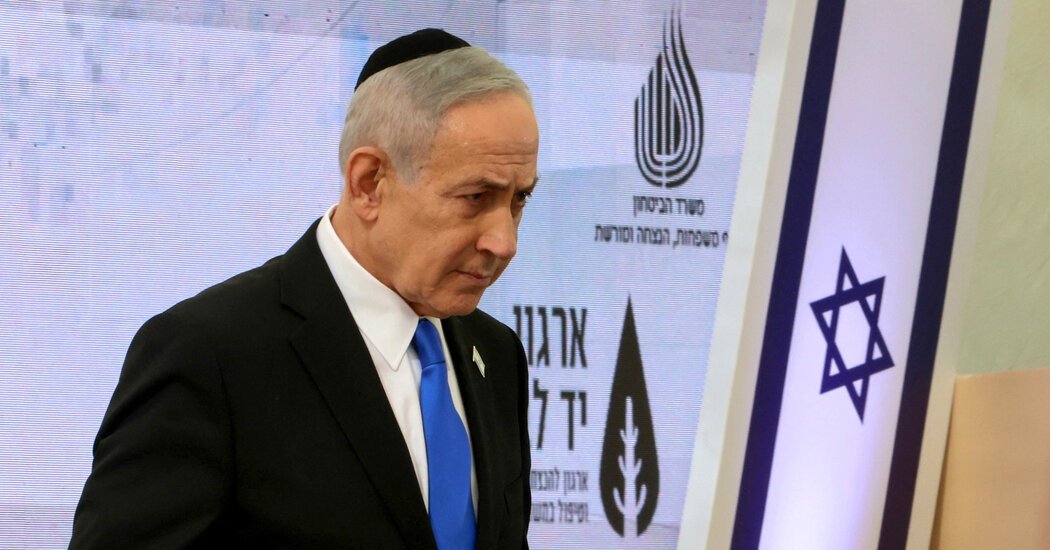
A statement attributed to an unnamed government official said only that Mr. Trump had assured Prime Minister Benjamin Netanyahu in a phone call on Saturday that he would stick to his demand that Iran dismantle its nuclear program and remove all enriched uranium from Iranian territory. It added that Mr. Trump said he would not sign a final agreement unless those conditions were met.
The statement said that Mr. Netanyahu had told Mr. Trump that Israel would maintain freedom of action against threats on all fronts, including Lebanon — as it has under previous cease-fires — and that the president reiterated his support for this principle.
Mr. Netanyahu had said nothing publicly about the deal and only issued a statement that condemned Saturday’s shooting near the White House.
The hush contrasted with Mr. Netanyahu’s resounding declarations of his war goals when Israel and the United States launched a joint offensive against Iran three months ago. Analysts said the near silence reflected the uncertainties and anxiety inside Israel that this deal could fall far short of the country’s aims of significantly degrading Iran’s nuclear and missile capabilities.
Mr. Netanyahu said at the outset that the war was “designed to remove the existential threats” to Israel. That meant destroying Iran’s nuclear threat and its ballistic missile program, as well as “creating the conditions” for the Iranian people to topple the government, he added.
Israel also demanded an end to Iranian support for anti-Israel proxies in the region, including Hezbollah and Hamas.
Initial reports of the deal suggested Mr. Trump was focused on other priorities. The president said in a social media post that the United States was close to reaching a preliminary agreement with Iran toward ending the war and reopening the Strait of Hormuz, a vital waterway for oil and gas shipments.
The proposal would defer questions pertaining to Iran’s nuclear program to future talks, according to American and Iranian officials, and there appeared to be no mention of limits on Iran’s ballistic missiles.
Far from the Iranian government being toppled, the United States would continue to negotiate with it. Israel has not been a party to the talks.
But the few signals emanating from the Israeli government suggested that the vagueness of the deal meant that all might not be lost and that Mr. Netanyahu will likely use the period when a final agreement is being negotiated to try to influence the result.