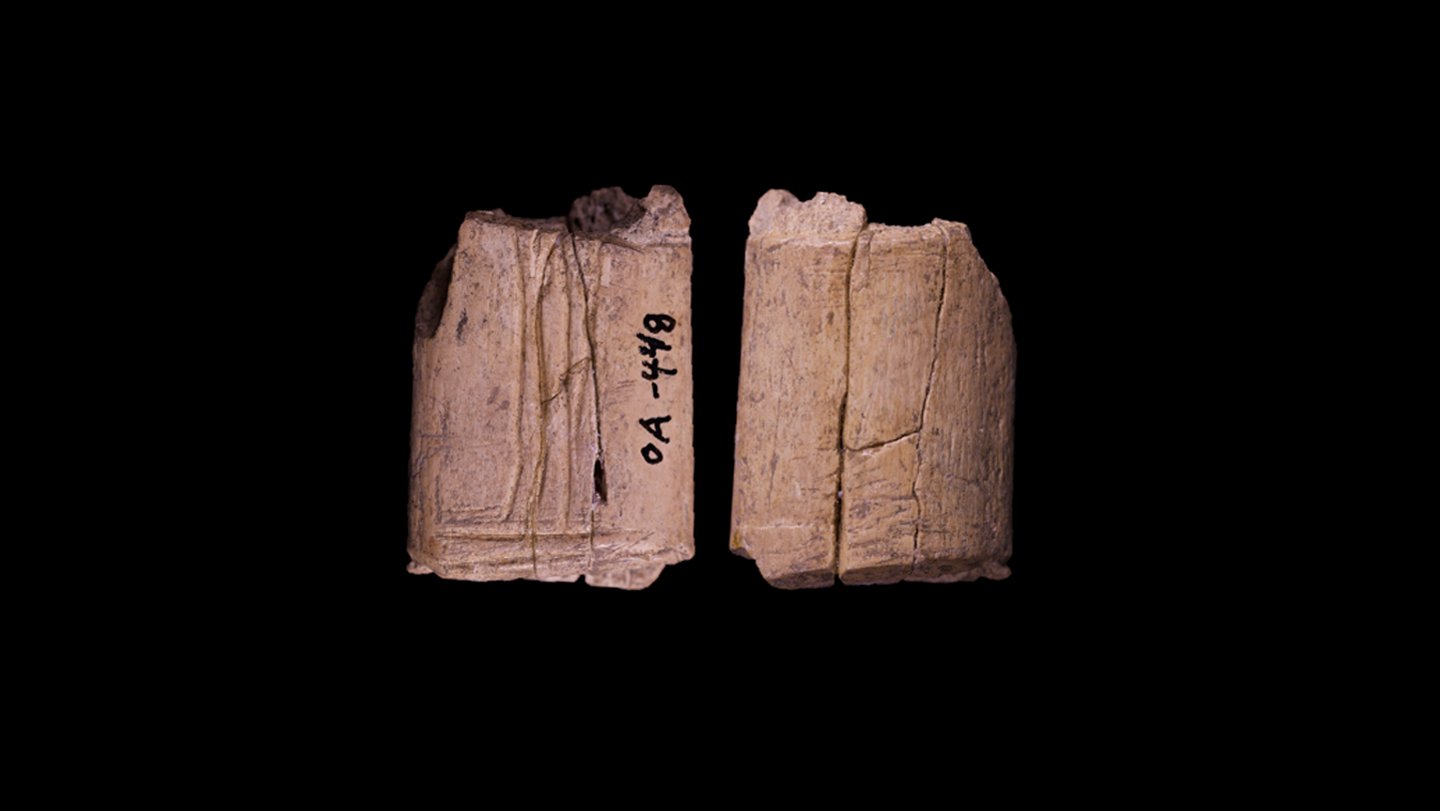
The history of gambling goes back way further than anyone imagined. This new discovery drastically alters the date of a key intellectual moment in the history of human culture—the recognition that some events in nature are random, under nobody’s control.
All games of chance, from Yahtzee to horse race betting, rely on probability, a relatively unintuitive concept. So archaeologists have taken care to document early examples, including dice used for games played by North Americans as early as 2,000 years ago. They’ve uncovered similar-seeming objects at even more ancient sites, but these pieces were individually too tiny and nondescript, and too isolated in the archaeological record, to identify with any certainty.
A new analysis by archaeologist Robert J. Madden, published today in the journal American Antiquity, changes that. Madden combed through this sparse record, confirming the oldest-known dice and establishing an unbroken, previously hidden lineage of chance-based games dating back at least 12,000 years, 6,000 before any counterpart in the Old World.
On supporting science journalism
If you’re enjoying this article, consider supporting our award-winning journalism by subscribing. By purchasing a subscription you are helping to ensure the future of impactful stories about the discoveries and ideas shaping our world today.
“This is the most exciting paper I’ve seen in North American archaeology in at least the last five years,” says Robert Weiner, an archaeologist at Dartmouth College. “Demonstrating this Native American contribution to global intellectual history is fantastic.”
Madden got interested in the origins of games of chance when he saw a line in a 2001 paper by the late anthropologist Warren DeBoer alluding to a number of small objects found at archaeological sites in North America that were thought to be possible game pieces.
Archaeologists had identified more recent two-sided “dice”—essentially objects with a “heads” and “tails” side, like modern-day coins—thanks to ethnographic accounts of early European settlers observing Native Americans playing games.
The games “were often raucous affairs with huge groups of people around,” Madden says. The rules were often too complicated for the inexperienced spectators to follow, but they involved tossing a bunch of these dice and seeing how many came up “heads.”
While many of the older objects’ discoverers suspected they’d found antecedents of the same tools, they couldn’t be sure. “There’s this evasive uncertainty,” Madden says. “Everybody’s like, ‘I don’t even know what we’re looking at here.’”
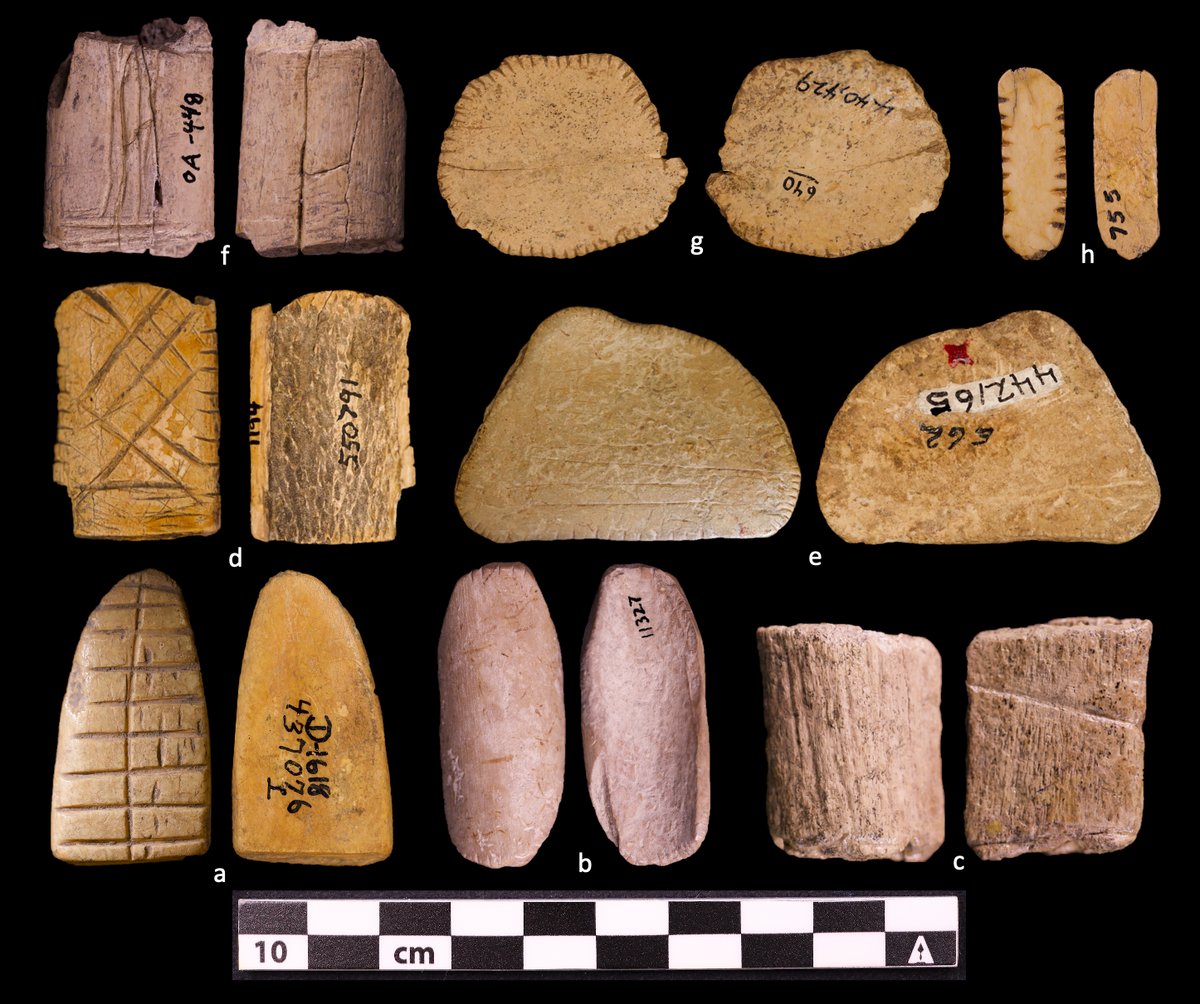
Madden used these later confirmed specimens to establish a set of criteria for what these dice looked like. Some had characteristic ticks etched along their outer edges, while others looked like small sticks cut lengthwise, with a flat and a curved side—forms that their makers crafted deliberately to produce random outcomes.
Then he went back through the record in search of these features in the earlier pieces. That meant spending countless hours combing through online databases to pick out features from photos of tiny pieces found scattered across the continent over the past century. “It took forever,” he says. The oldest dice specimens Madden confirmed come from sites in Colorado, Wyoming and New Mexico—but the study notes that the apparent concentration in the American West might just come from where these sites have been preserved and uncovered.
Madden credits the generations of archaeologists who did the initial legwork of assembling the record—and the online databases for making it available to a sole researcher. “I don’t think it even could have been done 25 years ago.”
He hopes that his work will begin to crystallize this scattered dataset for others to investigate further. “This seems to me like an area that really calls for a lot of study,” he says. “The goal of this was just to break through.”
Madden’s finding “makes the dice games played by Roman soldiers, or the ones found in Tutankhamun’s tomb, look young in comparison,” says Gabriel Yanicki of Carleton University.
But “it’s about so much more than pushing back the clock,” Yanicki says. It confirms and extends something unique to the Americas—that humans here have long used games of chance as a social excuse for groups to come together and trade, even without sharing a language. “That universal acceptance of the economic usefulness of gambling is something of a mystery, compared to other parts of the world,” says Yanicki.
Moreover, Weiner points out, the games represent “a way that people are engaging, both in intellectual and sort of spiritual ways, with that universal human question of why things happen.”
Gambling requires a rudimentary understanding, or at least a recognition, of the concept of probability. Madden expected that, like young children that struggle to understand randomness, the earliest civilizations would have viewed every event as following from some predictable force. “There’s a leap you have to take to this idea that there are things that do not have a cause,” he says. The theory of probability was a latecomer in the history of math. It was developed only 300 to 500 years ago—by mathematicians trying to understand how games of chance worked.
But gambling requires you to believe that some things in nature are truly unpredictable. Games of chance reflect the invention of a cultural technology that’s the direct ancestor of all of modern statistics—and all of empirical science.
“When you start flipping a coin and writing down the outcomes, you are kind of summoning randomness,” Madden says. “You can start to see these patterns emerging, and even more than seeing it, you can harness it.”