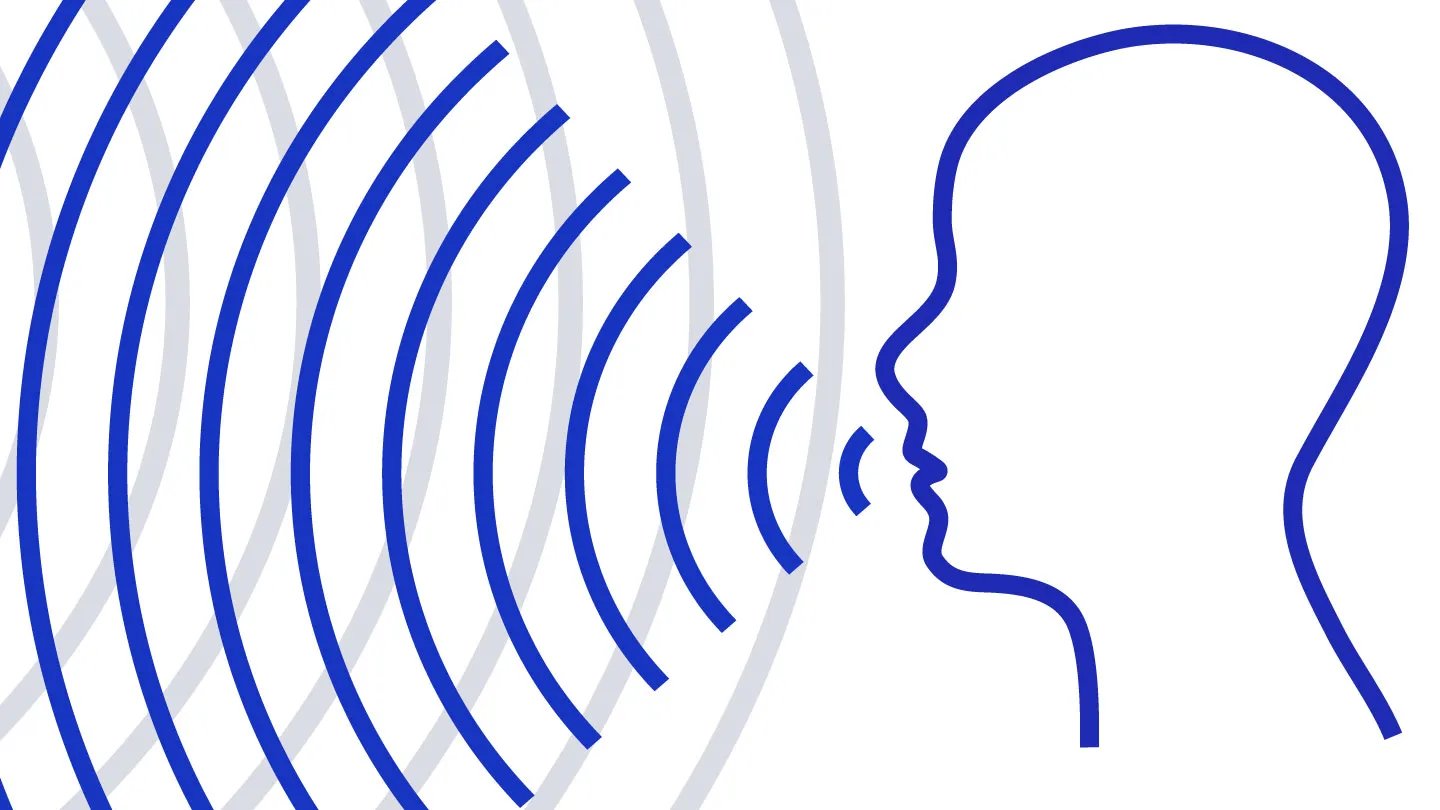
Navigating the world as a blind person sometimes involves using a cane, guide dog or wearable GPS system. For some, this toolkit includes echolocation. Producing tongue clicks and listening for echoes can be enough to gain information about nearby objects.
But even for expert echolocators, a single click is rarely enough to perceive an object. Echo after echo incrementally improves understanding, especially for expert echolocators, researchers report April 6 in eNeuro. The finding helps explain how the brain processes sound more generally.
Many studies have shown that echolocation recruits visual areas of the brain and that performance improves significantly with practice. “What remained unexamined here was how this happens, how the information builds in real time, over individual echo signals,” says cognitive neuroscientist Santani Teng at the Smith-Kettlewell Eye Research Institute in San Francisco.
Teng and his team attached electrode caps to record brain activity in four blind expert echolocators and 21 sighted novices as they listened to prerecorded clicks and echoes. The sounds were played in sets of two, five, eight or 11. After each set of clicks and echoes, the participants decided whether the object was to their right or left.
In line with previous research, expert echolocators were far better at determining the direction of an object than people who could see. One exceptional echolocator needed only to hear two sets of clicks and echoes to determine an object’s direction. Unlike in previous studies, the team used the brain wave data to show that each click-echo pair added to the evidence the brain was accumulating to make the perceptual decision.
“The study suggests that in human echolocation, spatial representations are constructed by progressively accumulating acoustic evidence over time, rather than through a single ‘optimal snapshot,’ ” says neuroscientist Monica Gori at the Italian Institute of Technology in Genoa and the Institute for Human & Machine Cognition in Florida, who was not involved in the study.
The team wants to continue to understand “what exactly makes better echolocators,” says cognitive neuroscientist Haydée García-Lázaro at the Smith-Kettlewell Eye Research Institute. In addition to tracking the information echolocators gain from each click, she’s interested in how experts learn to ignore the click itself and attune only to the echo.
“Echolocators have a truly remarkable skill, with real-life benefits, but it is not magic,” Teng says.