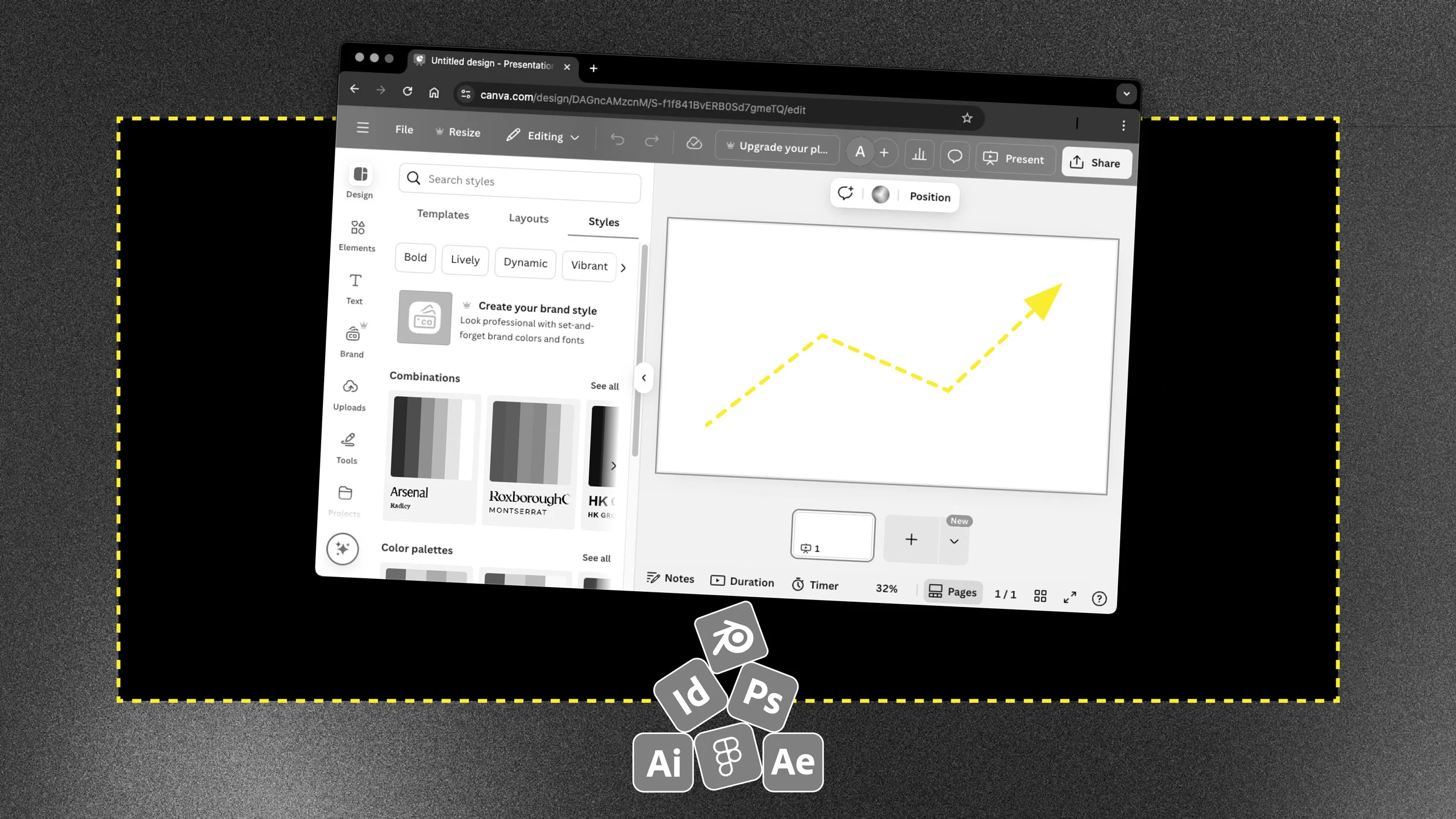
For our 2025 Where the Design Jobs Are report, Fast Company looked at which design tools were being mentioned in job listings across various disciplines, and how that has changed over time. With graphic design, there were a couple of particularly interesting findings. Asks for Blender expertise grew 82% year over year (read about that trend here), while requests for proficiency with Canva went up 72%.
When we put Canva on our cover in 2022, some people in the design world viewed it as borderline heresy. The easy-to-use app had become extremely popular because it promised that anyone could be a designer—a notion that naturally upset some trained designers. But Canva’s templated approach to designing everything from social media posts to T-shirts took off with the masses, and it spilled over to professionals.
The working thesis is that Canva, having won over marketing teams first, is now becoming a prerequisite for designers working alongside them. (This makes some sense, especially as the design department has started reporting to marketing in many companies.)
The good news is that designers we’ve spoken to more recently have come to appreciate Canva’s updated brand management tools, which essentially allow a designer to codify standards behind logos, typefaces, and colors for others to use. That means that when a marketer creates a slide deck or new social media ad, the standards stay in sync, with less oversight. Canva also requires a fraction of the learning curve of any Adobe product: Many of its tools can be picked up instantly.