Homegrown chickpeas could be on the menu for future astronauts. With help from compost and symbiotic fungi, chickpea plants grow and produce seeds in simulated lunar dirt, researchers report March 5 in Scientific Reports.
“I’m obsessed with the plant,” says fluid dynamicist Sara Oliveira Santos of the University of Texas at Austin. “The fact that we’re able to bring these add-ons and help the plant get to such a stage that it produces seed, I think is really important.”
Teaching lunar denizens to feed themselves is a problem of some urgency. NASA’s Artemis program lays out plans to return humans to the moon in the next few years, with the eventual goal of living there long-term. But lunar dirt, called regolith, is fine as baby powder, metallic, sticky and sharp and lacking in essential nutrients like nitrogen. “It is a hazard unamended,” says space biologist Jess Atkin of Texas A&M University in College Station. “It is the worst. It is awful.”
Scientists have had some success growing plants in actual lunar regolith from the Apollo missions. But the plants took in toxic metals and grew slowly, showing signs of stress.
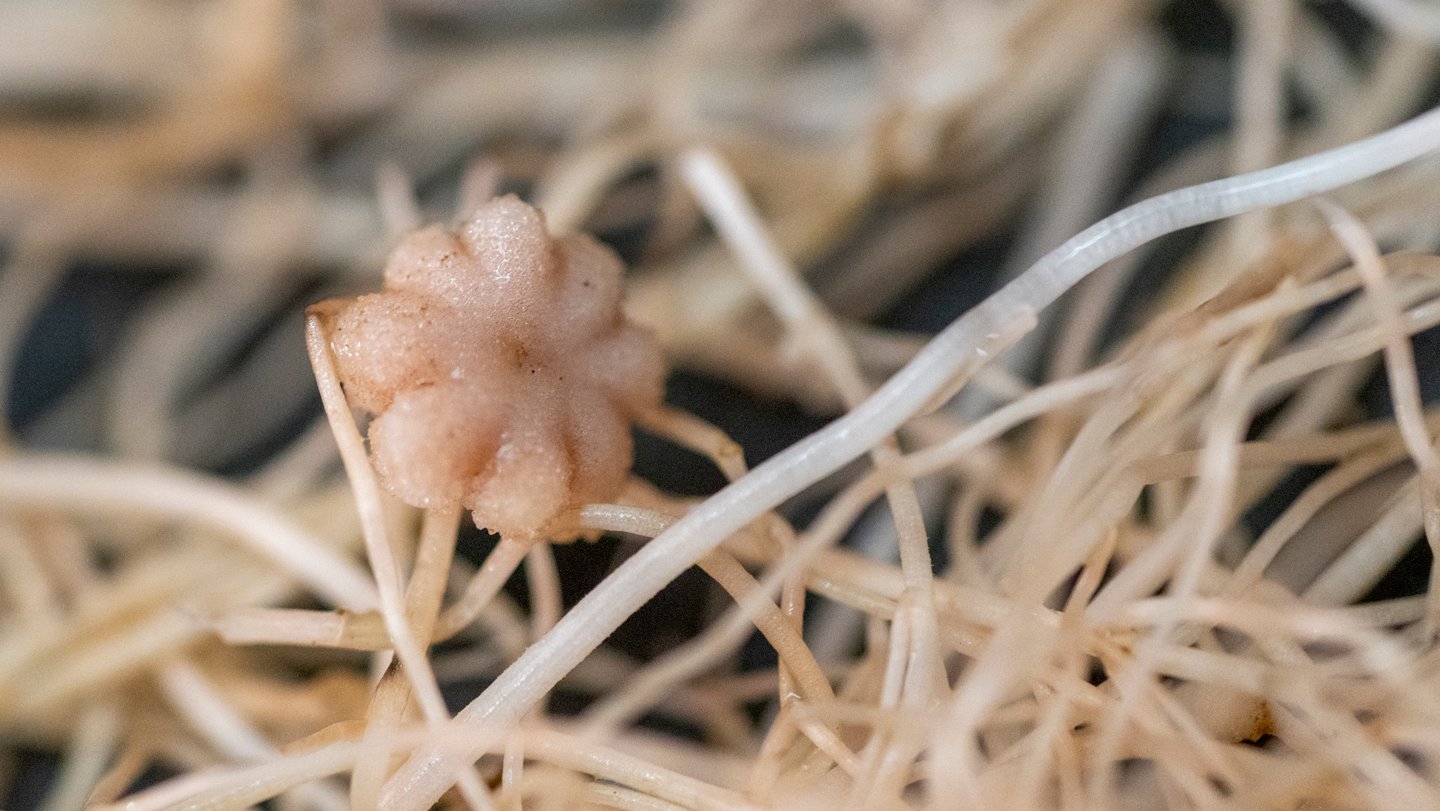
Atkin and Santos wondered whether techniques for removing toxins from Earth’s soils could help plants not just grow but thrive in lunar dirt. The researchers and their colleagues dusted chickpeas — chosen for their hardiness and high protein content — with powdered arbuscular mycorrhizal fungi. These fungi help plants’ taproots branch out and reach more soil while also helping sequester heavy metals away from the plant.
The team planted the seeds in various mixtures of lunar regolith simulant, a blend of geological materials from Earth that mimics the composition of moon dirt, and vermicompost, a fertilizer excreted by red wiggler worms that eat food waste.
The chickpea plants grew for weeks to months and produced flowers and seeds in soil mixtures of up to 75 percent lunar simulant. All plants grown with lunar soil showed signs of stress compared with plants grown in earthly conditions. But even when stressed, the plants that had been treated with fungi lived two weeks longer than those with no fungal help.
Atkin hopes fungi and vermicompost could help make a stable, healthy lunar soil in which future astronauts can grow any crop they want. “The plants are amazing, it’s great we can get seeds,” she says. “But they’re really the host for the transformation into the soil.”
The researchers are running more tests to see if the seeds can grow new generations of chickpea plants, and if those plants are safe to eat. “I asked to eat it, but she [Atkin] said no,” Santos says.
If they prove safe, Atkin says, “I will be the first one to make some moon hummus.”