
Trump Stays Out of Public View After U.S. Launches Military Assault on Iran
President Trump did not deliver a formal address to the American public to explain why the country was at war, a departure from his predecessors.
President Trump did not deliver a formal address to the American public to explain why the country was at war, a departure from his predecessors.
As Mayor Zohran Mamdani assailed what he called a “catastrophic escalation” in Iran, some Iranian Americans worried about what comes next, while others celebrated.
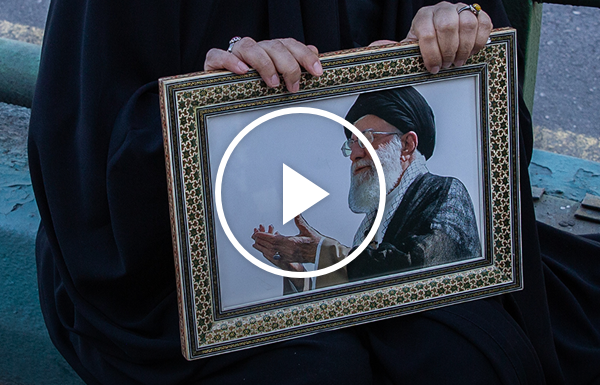
new video loaded: Where the Strikes Leave Iranians Iran is reeling a day after the United States and Israel carried out a large attack that killed Iran’s supreme leader, Ayatollah Ali Khamenei. Erika Solomon, the Iran bureau chief for The New York Times, explains how ordinary Iranians are responding to the sudden end of Khamenei’s…
Despite warnings after an earlier wave of killings, top Iranian officials gathered in person, and Israel seized the chance to kill Iran’s supreme leader.
Ayatollah Ali Khamenei is dead. Whoever takes his place will shape the Middle East’s future.
Experts say that Iran’s clerical rulers may be too deeply entrenched for Iranians to topple them, and that the U.S. and Israeli strikes risk setting off deeper radicalization or violence in the country.
It already proved its effectiveness on the battlefields of Ukraine. Now the Iranian-made Shahed-136 kamikaze has been unleashed across the Arab Gulf.
In an interview with The Atlantic, President Trump said the country’s new leaders after the death of Ayatollah Ali Khamenei “want to talk” but did not say whom he was referring to.
A badly weakened Iran will no longer intimidate or threaten its neighbors in the same way. The regional impact could be comparable to the collapse of the Soviet Union.
Air travel to and from the Middle East has become increasingly precarious.