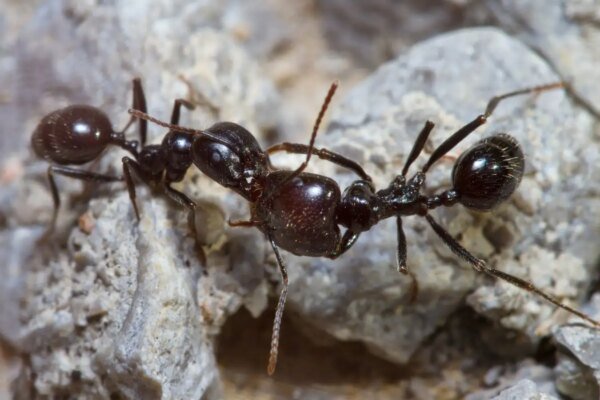
Ants attack their nest-mates because pollution changes their smell

Harvester ants attack nest-mates whose scent they don’t recognise JorgeOrtiz_1976/Shutters​tock Common air pollutants like ozone and nitric oxide can change the way ants smell, prompting their nest-mates to attack them as if they were intruders. Ants recognise their comrades by scent, and when they encounter an ant whose smell they don’t recognise, they respond aggressively,…


Read More

Poor sleep may account for a large share of dementia cases

Citations Y. Lin et al. Quantifying the population-level impact of insomnia on dementia among older adults in the United States. The Journals of Gerontology: Series A. Published online December 27, 2025. doi: 10.1093/gerona/glaf289. G. Mayer et al. Associations of sleep disorders with all-cause MCI/dementia and different types of dementia – clinical evidence, potential pathomechanisms and…

Read More

Neanderthals and early humans may have interbred over a vast area

An artist’s impression of Neanderthal life CHRISTIAN JEGOU/SCIENCE PHOTO LIBRARY Homo sapiens and Neanderthals were probably interbreeding over a huge area stretching from western Europe into Asia. We have long known that early humans (Homo sapiens) and Neanderthals (Homo neanderthalensis) interbred, which is why most non-African people today have some Neanderthal DNA, typically about 2…

Read More
Back To Top