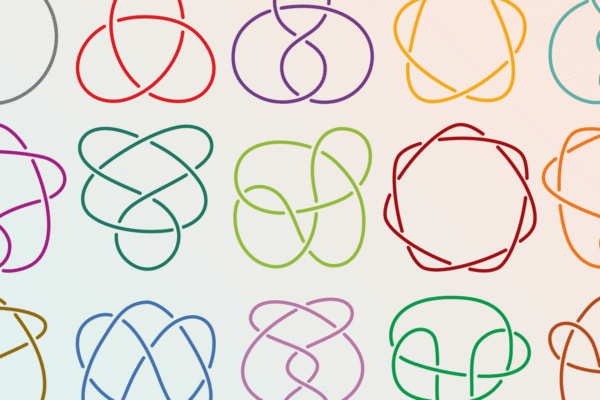
Mathematicians Discover Prime Number Pattern in Fractal Chaos

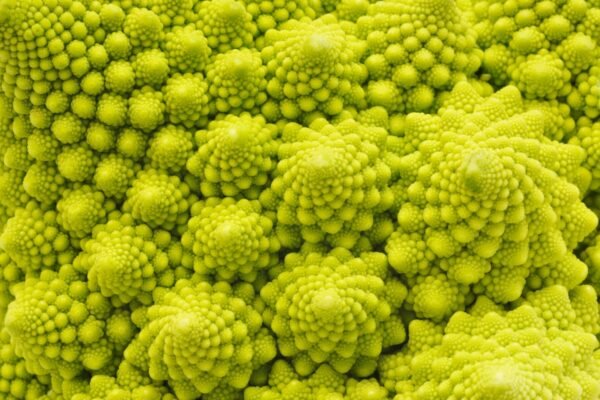
Prime numbers are sometimes called math’s “atoms” because they can be divided by only themselves and 1. For two millennia, mathematicians have wondered if the prime numbers are truly random, or if some unknown pattern underlies their ordering. Recently number theorists have proposed several surprising conjectures on prime patterns—in particular, probabilistic patterns that show up…

Read More

An Anechoic Chamber at Nokia Bell Labs Reveals the Hidden Sounds of Your Body

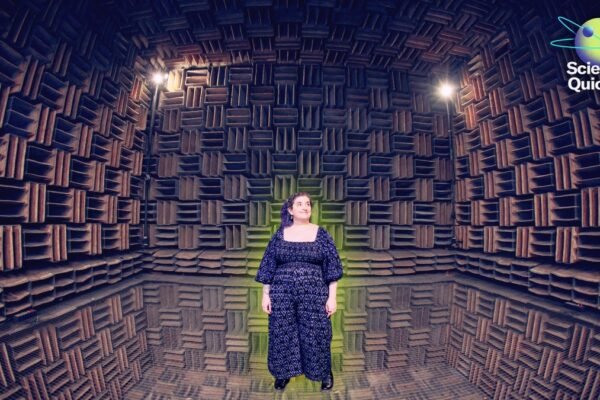
Seth Cluett: This experiment just pops a balloon. And normally, when a balloon would pop, you’d hear [makes an exploding noise]—the whole room just kind of expand, right? [Pops a balloon inside a normal room, making a loud noise.] Rachel Feltman: Ooh! On supporting science journalism If you’re enjoying this article, consider supporting our award-winning…

Read More

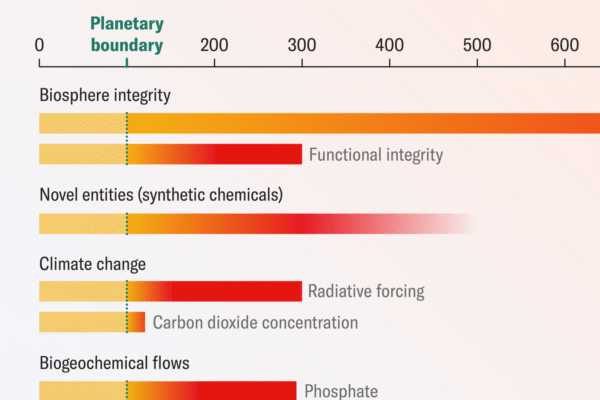
Ocean Acidification Threshold Pushes Earth Past Another Planetary Boundary

Our planet is sick, and its life-threatening symptoms are getting worse, a new report warns. Earth has been pushed past multiple physical and chemical boundaries crucial for keeping the world a livable place. Beyond already exceeded thresholds set by scientists for rising temperatures, biodiversity loss and chemical pollution, we have now also breached the boundary…

Read More

NASA’s asteroid deflection test had unexpected and puzzling outcome

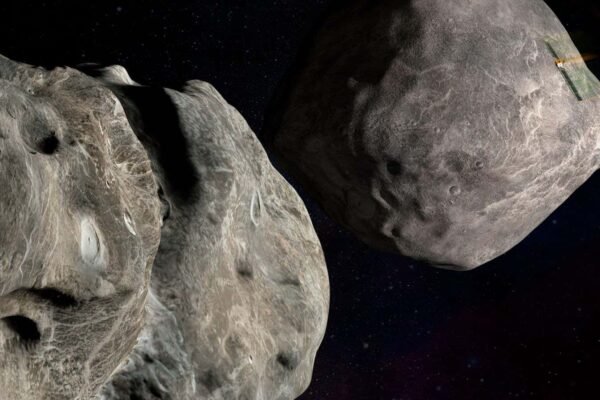
Illustration showing NASA’s DART probe, upper right, on course to strike the asteroid Dimorphos, left, which orbits Didymos Steve Gribben/Johns Hopkins APL/NASA/AP/Alamy After NASA smashed a spacecraft into an asteroid, its orbit slowly but surely changed over the next month, and astronomers can’t explain why. In 2022, the Double Asteroid Redirection Test (DART) flew a…

Read More
Back To Top