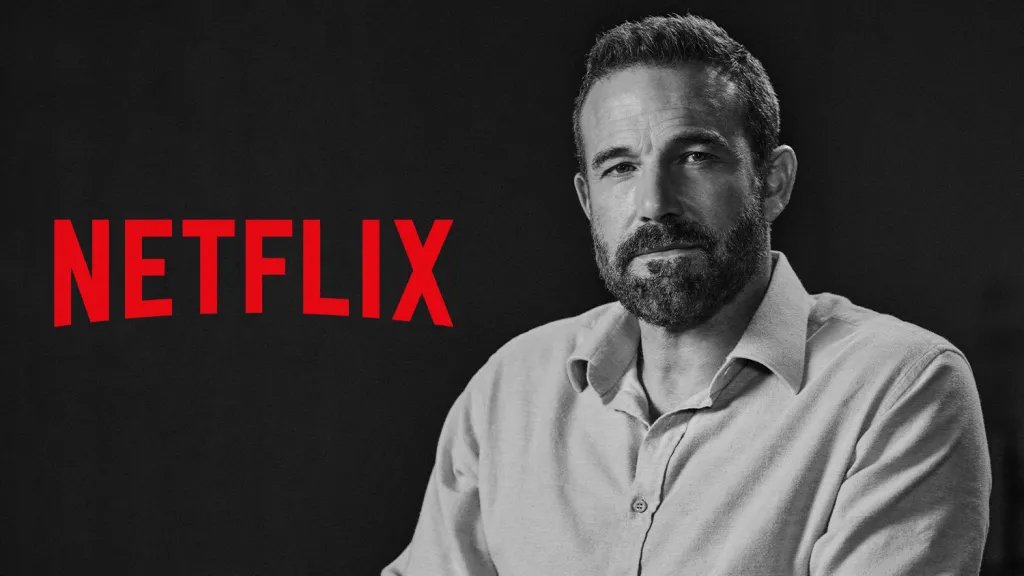
After revealing their surprise acquisition of Ben Affleck-founded AI firm InterPositive last month, Netflix executives and the actor-director emphasized how much it would benefit the creative community.
A patent application filed in 2024 and recently reviewed by Deadline shows that along with those benefits, the company also promised significant cost savings for film and TV producers. The reductions made possible by InterPositive‘s technology would be “substantial” on below-the-line production, “conservatively” reaching at least 10% to 20%, the application said.
The main document (read it HERE), filed under Affleck’s legal name, Benjamin Géza Affleck-Boldt, itemizes the areas where spending could drop thanks to the company’s technology. Visual effects costs, for example, would be cut by 50%, with savings reaching 70% for background actors and stand-ins.
An example included with the patent application includes a budget for an unidentified production that started in January 2023 and had its budget figures updated in April 2024. The names of the film’s director, producer and above-the-line talent are redacted, but below-the-line production costs are shown totaling $32.1 million. InterPositive claimed it could shave $7 million from that below-the-line number.
Citing the timing of the patent filing well before the acquisition, Netflix referred Deadline’s questions to Affleck’s camp, which declined to comment.
Specific departments and estimated savings are called out in the documents: additional production units in cities outside the main location, 40%; art department, 30%; set dressing, 40%. None of the projections include specifics about the number of jobs that could be affected by the adoption of the company’s tools. Nevertheless, with anxiety levels surging across Hollywood about the outlook for industry workers, especially as major unions negotiate new contracts with studios and streamers, the figures are certainly eye-opening.
“The financial implications of incorporating AI technology into the film production process are substantial,” the application states. “With principal photography savings estimated to range conservatively from 10-20% of total production costs, the financial burden on studios could be significantly reduced. For instance, considering the estimated spending on original films and series in 2022 by major companies, which amounted to a combined content spending of $140.5 billion, a hypothetical reduction of 20% in spending towards original content production could lead to substantial savings. This reduction translates to savings ranging from $8.43 billion to $16.86 billion, based on the estimated range of $56.2 billion to $84.3 billion allocated towards original productions.”
Now that InterPositive and its small group of employees have been integrated into Netflix, the company’s tools will be used exclusively on in-house productions. But the application posits a scenario of the company licensing its technology to various partners, as many vendors currently do. “AI service providers can generate substantial revenue by charging a fraction of the cost savings as their fee, thereby creating a win-win situation for both the film industry and the technology sector,” the application says.
The potential to lower production costs helps explain why Netflix paid up to $600 million to acquire InterPositive, according to Bloomberg. (The final cost could be lower, but company principals are eligible for payouts based on certain performance targets.)
In a video conversation with Netflix Chief Content Officer Bela Bajaria and Chief Technology and Product Officer Elizabeth Stone, Affleck says post-production tasks can be accomplished more “quickly” and “easily” with InterPositive. He doesn’t mention costs. “For me, it’s not really about cheaper, it’s really about better,” Bajaria says. (Netflix Co-CEO Ted Sarandos has made similar comments when asked by Wall Street analysts about potential efficiencies. In July 2025, he said AI “represents an incredible opportunity to help creators make films and series better, not just cheaper.”)
Affleck, in a statement about the company’s formation and growth released with the acquisition news, focused on narrative and craft rather than cost savings. He spoke about the obligation he felt to an industry experiencing significant disruption. “We need to preserve what makes storytelling human, which is judgment,” he wrote. “The kind that takes decades to build, experience to hone and that only people can have. I knew I had a responsibility to my peers and our industry, to protect the power of human creativity and the people behind it. In creating InterPositive, I sought to do just that.”
Stone said the deal is consistent with the company’s “general “responsible” approach to AI. “The InterPositive team is joining Netflix because of our shared belief that innovation should empower storytellers, not replace them,” she said in a press release announcing the deal.
The approach taken by the patent application is consistent with some of Affleck’s previous remarks about AI.
In a November 2024, he appeared at a CNBC conference alongside Gerry Cardinale, who co-founded production company Artists Equity with Affleck and his longtime collaborator Matt Damon.
Asked about his general outlook for AI, Affleck said he didn’t see an immediate threat to acting, writing and other core aspects of filmmaking. Even so, AI will “disintermediate more laborious, less creative, more costly aspects of filmmaking” and bring costs down, he predicted. “I wouldn’t like to be in the visual effects business. They’re in trouble because what used to cost a lot of money is going to cost a lot less. And it’s going to hammer that space, and it already is. And maybe it shouldn’t take a thousand people to render something.”
The upside of that cost reduction, he said, is that it will “lower the barrier to entry and allow more voices to be heard. It will make it easier for people who want to make Good Will Huntings to go out and make them.”