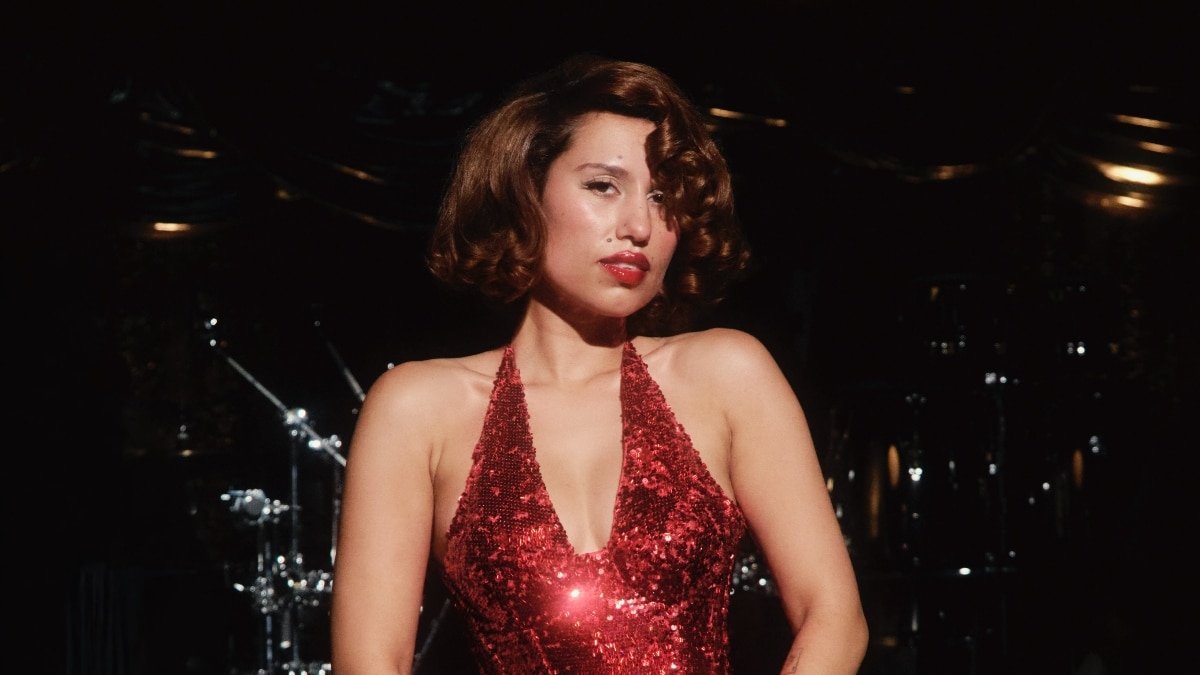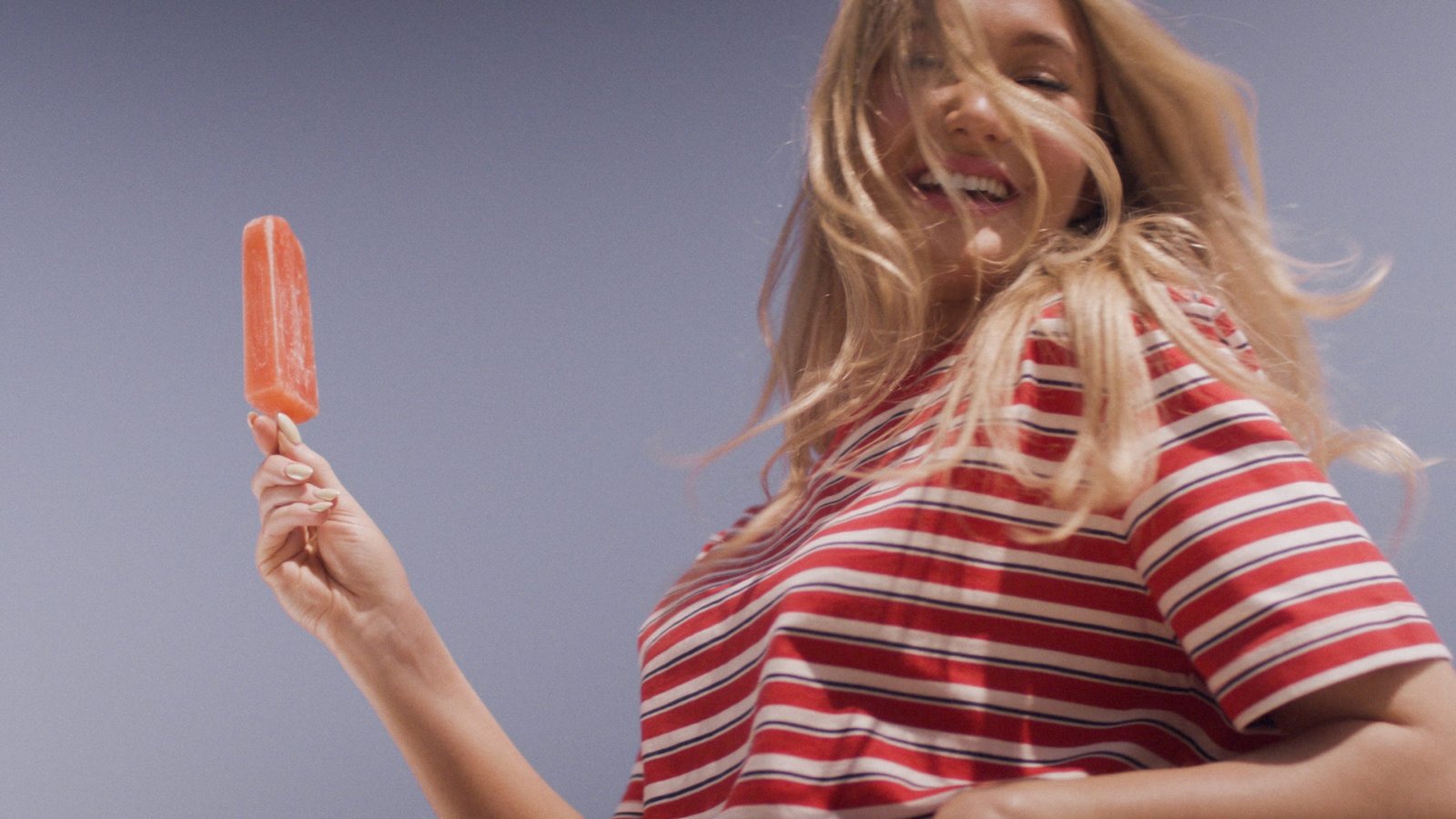
As the season stretches into its golden haze, Montreal-based singer-songwriter Annabel Gutherz returns with a track that feels like summer bottled in sound. Her new single, “Summer’s Here,” is a gently shimmering offering, which feels warm and wistful, wrapped in breezy guitars, intimate vocals and lyrics that trace the contours of memory and impermanence. Recorded in a single live take, the song leans into rawness over perfection, capturing the fleeting emotional texture of a season we’re always chasing.
Following the success of her 2021 debut album Loose Ends, Annabel has been quietly but confidently carving out space as one of indie-pop’s most emotionally articulate voices. Her work balances lyrical vulnerability with painterly production, and in “Summer’s Here,” that duality is on full display. We caught up with Annabel to talk about the making of the single, her evolving creative process and how she’s learning to listen more deeply—to chords, to silence and to herself.
First off, congratulations on being named to the Recording Academy’s 2025 New Member Class — such a beautiful milestone. What does it mean to you personally and professionally to now be part of that constellation of artists?
Thank you so much! I’m still pinching myself. Being welcomed into the Recording Academy’s 2025 New Member Class feels like an affirmation—both of the path I’ve walked and the one I’ve yet to tread. Personally, it’s a deeply meaningful milestone; I’ve looked up to so many of the artists and visionaries who make up the Academy, and to now be included among them is as humbling as it is inspiring… I’m giddy with gratitude.
Professionally, it encourages me to continue creating from a place of authenticity while staying in service of community, craft, and the ever-evolving landscape of music. It’s an invitation to contribute, not just create, and I look so forward to doing so!
Let’s talk about your new single—gorgeous, by the way; I’ve had it on repeat. You’ve called “Summer’s Here” a “sonic postcard”—a keepsake of warmth, longing, and transience. Did that emotional duality come through early in the writing process or did it reveal itself as the song evolved? What do you hope listeners feel when they first hear it?
Oh my goodness—thank you so much for listening (on repeat… that means the world to me), and for such a beautiful and thoughtful question. The emotional duality of “Summer’s Here” was present from the very beginning. I’ve always felt that summer carries this subtle ache, like laughter that echoes into a quiet room, or golden light that fades before you can bottle it.
I wanted the song to live in that space… to sound like a fleeting moment already becoming a memory. My hope is that when listeners hear it, they feel held in that tender balance between joy and wistfulness, celebration and surrender.
Was the track born out of a specific memory, moment or feeling? We’d love to hear the story behind it.
This track was born out of a feeling. I was reflecting on summer and summer love—and how these moments can feel both eternal and ephemeral—when I was struck by this ineffable blend of gratitude and melancholy. The melody came first, almost like it had been waiting to land. I followed it like a thread, and it led me here. I knew instinctively that this song was meant to be a sonic time capsule of that feeling.
Recording in a single live take is a rare and vulnerable choice in today’s pop landscape. Was that a deliberate choice from the outset? What made you commit to that approach and how do you think it shaped the emotional texture of the final version?
It certainly wasn’t a deliberate choice from the outset, but it became a conscious one after hearing it back. The band poured their instincts, feelings, and mastery into every note, and the result speaks to their expertise and artistry. I wanted the recording to feel like a breath—natural, human, and alive. There’s something magical about tracks that arise whenever a song is interpreted for the first time; they carry emotion in ways a polished edit sometimes can’t.
That one-take approach allowed me to surrender to the moment and preserve its fragility, and I think that tenderness lingers in the final recording. I should note that I re-recorded my lead vocals because there was a little too much bleed from the other instruments in the room and added harmonies retroactively as well.
There’s a quiet tenderness in the production—a kind of breathing space, like the moment was guiding you. With your shift from lyric-first to chord-first writing, would you say your creative process is becoming more instinctual or spacious? How has that opened up new dimensions for you artistically?
Absolutely! I think I’m learning to listen more—to the silence between the sounds, to my own instincts and to the music itself. Writing from chords first [approach] has opened a new emotional vocabulary for me… one that isn’t tethered solely to language. It’s like painting with atmosphere instead of outlines. This shift has helped me approach songwriting with more fluidity and wonder. I’m leaning into the sensation and letting the emotion shape the structure instead of the other way around.
“Summer’s Here” feels emotionally grounded yet cinematic, like a scene from a coming-of-age film. If it were a film moment, what would we be watching? Daylight through a car window? A quiet beach? A feeling? Paint us a visual!
Oh, I love this question! If “Summer’s Here” were a film scene, we’d see two hearts orbiting each other in the heat of something unspoken. They’re driving with the windows down, hair tangled in the breeze, cheeks flushed with laughter. Music hums low from the stereo. There’s something in the air: possibility, closeness, the ache of almost. A glance lingers longer than it should. A touch stays just a second too long. They’re glowing in that just-sunkissed way, caught between knowing it won’t last and wishing it could.
Later, we see them at the edge of the ocean—barefoot in the sand, a little out of breath, chasing waves and each other like it’s the only thing that matters. And when they kiss, under a sky of pink and gold, it feels like the whole season is holding its breath.
Wow—this sounds so gorgeous. If this single is a snapshot of summer, what would a voice note from autumn or winter sound like?
Hmm… I think you might have just inadvertently given me some new song ideas. Autumn would sound like warm acoustic tones, layered guitars and mandolins, with measured, more sparkly drone tones, wrapped in deep amber harmonies—introspective, earthy, and gently unraveling. Winter might whisper through soft piano and ambient textures, with echoes and space that allow reflection and stillness to breathe.
Your lyrics often feel like intimate and honest journal entries, but never self-indulgent. Do you jot down ideas in a journal or voice notes, and how do you turn those fleeting emotions into something structured and musical?
Thank you so much—that means more to me than I can express! I do keep a journal (several, in fact!), and I’m constantly recording little voice memos when inspiration strikes—whether it’s a lyric, a melody, or just a passing feeling I want to hold onto. But often, the most resonant ideas bloom from a feeling that’s lingered quietly inside for a while. My process is a blend of instinct and reflection. I try to write from a place of emotional truth, always asking: “What’s the most honest thing I can say right now?”
You’ve worked with producers like Dominique Messier, Mikal Blue, Bonnie Hayes, and Bleu McAuley—all with distinct creative styles. How have those collaborations shaped your instincts as a musician? Was there one that felt like an instant creative spark?
Each of those collaborators has left an indelible mark on my heart and artistry. They’ve taught me to trust my intuition, stretch my limits, and embrace the magic of creative alchemy. With Dominique and Mikal especially, there was an immediate synergy—an ease and shared language that made the process feel like home, which helped shape the foundation of my sound. Bonnie taught me so much about narrative clarity and global resonance, and Bleu helped me challenge my musical and lyrical precision. I feel immensely and infinitely grateful for their brilliance and generosity.
Who were the artists or records you grew up listening to that still echo in your songwriting today? Are there any contemporary artists you feel creatively aligned with or inspired by?
I grew up listening to Carole King, Joni Mitchell, Stevie Nicks, and Norah Jones—songwriters whose honesty and melody felt like a soft place to land. Their influence runs through everything I do. More recently, I’ve found inspiration in the work of artists like Lizzy McAlpine, Gracie Abrams, and Phoebe Bridgers—musicians who paint feelings with poetry and texture. I feel a deep kinship with that approach to storytelling.
Let’s rewind a bit in time—growing up in Montreal’s vibrant arts and musical theatre scene, do you remember the moment music shifted from a passion to a calling?
Yes, absolutely. I think music called to me quietly at first—through the curtain calls and crescendos of Montreal’s musical theatre scene. I loved performing and storytelling, but I didn’t yet know that music would become the deepest expression of who I am. That shift happened unexpectedly, one evening in high school. I remember writing in my journal, and instead of just reading the words, I heard them and set to melody—almost like they were singing themselves.
That’s when I realized I wanted to explore songwriting more deeply. Over time, it became clear to me that music brings together all my passions: story, emotion, reflection, connection, and creativity. That realization is what led me to pursue it more seriously in university.
Speaking of university, you’ve been pursuing a Master’s in Songwriting at Berklee while releasing music—have you completed the program now? How has that academic-creative space shaped your approach to structure, language, or stylistic boundaries?
I actually already earned my Master’s in Songwriting… time really flies. The program certainly changed how I thought about structure, language, and style. It deepened my understanding of song form, prosody, and lyrical intention in such profound ways. It challenged me to explore beyond my comfort zones—stylistically, emotionally and structurally. It’s like being given a toolkit to build better bridges between feeling and form. I became more curious, more intentional, and more open to experimentation, which was one of the greatest gifts.
While your debut album Loose Ends explored aftermaths and unspoken truths, “Summer’s Here” feels lighter—more open, grounded and joyful. Would you say you’re in a new creative season now, or is this more of a standalone moment of levity?
That’s such a beautiful way to put it. I think “Summer’s Here” is both a moment of levity and a harbinger of a broader shift. Loose Ends was very much an excavation—a journey through the past. Now, I feel like I’m writing from the present moment with more softness and clarity. There’s a joy in that! I’m learning to live the question, not just analyze the answer—and that’s coloring my music in new, more hopeful hues. That said, there’s also a broader arc on the horizon that explores a compendium of diverse emotional palettes.
Looking ahead, how would you describe the emotional core of your next album-in-progress? What themes are pulling at you most right now? Can we expect any surprises?
The next album is shaping up to be a mosaic of tenderness, curiosity and becoming. I’m drawn to themes of self-trust, love, transformation, connection and growth. There’s a thread of emotional chiaroscuro (my new favorite word!)—light and dark in dance with each other. And yes, I think there will be a few sonic surprises too. I’m embracing my inspirations while also experimenting with new writing and production techniques that I think will reflect on the soundscape and resonance of the album as a whole.
This all sounds brilliant—I, for one, can’t wait to hear your new music. To close us out, here’s a fun question: if you had to finish the sentence: “Right now, summer means…”—what would you say? No pressure to be profound (though I suspect you might be anyway).
Right now, summer means walking barefoot through fleeting moments, gathering warmth in your palms, and learning to let the light linger!
For more interviews and the latest in music, follow us on X @CelebMix and head to CelebMix for stories that bring you closer to the artists behind the sound.