CDC Will Continue a Controversial Vaccine Study in Africa
This clinical trial in Guinea-Bissau would withhold vaccination from some babies, sparking ethical concerns
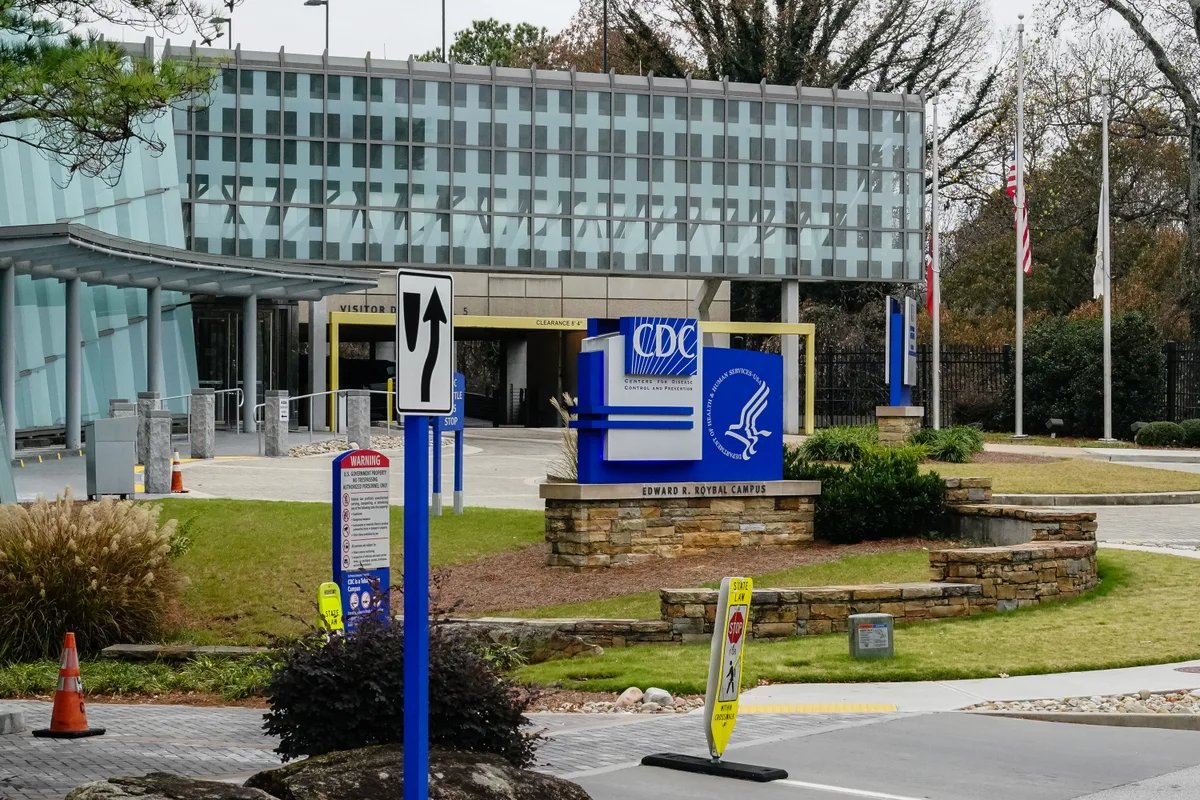
The Centers of Disease Control and Prevention (CDC) global headquarters during a meeting of the CDC Advisory Committee on Immunization Practices (ACIP) on December 4, 2025 in Atlanta, Georgia.
Elijah Nouvelage/Getty Images
A controversial hepatitis B vaccine safety trial will go on as planned in Africa, amid concerns over its ethics and design from medical experts. That’s despite news reports of its cancellation, according to the U.S. Department of Health and Human Services.
In December 2025 the U.S. Centers for Disease Control and Prevention announced the award of a $1.6-million grant to conduct the five-year HBV0-NSE trial to test the health effects of the long-used, effective hepatitis B vaccine on 14,000 newborns in Guinea-Bissau. Awarded without competition to controversial Danish researchers championed by antivaccine activists and HHS chief Robert F. Kennedy, Jr., the announcement attracted criticism over the study’s design. Hepatitis B is widespread in Guinea-Bissau, with prevalance of about 18.7 percent, and shortens lives—it’s linked to long-term liver cancer and cirrhosis. The trial would randomize half of the newborns to either receive the hepatitis B vaccine at birth or get no vaccine in a bid to look at its short-term health effects.
On Thursday the Guardian reported that an Africa Centers for Disease Control and Prevention (Africa CDC) official had announced a halt to the trial, citing ethical concerns. Speaking on background, however, an HHS official told Scientific American on Thursday that the trial will proceed as planned.
On supporting science journalism
If you’re enjoying this article, consider supporting our award-winning journalism by subscribing. By purchasing a subscription you are helping to ensure the future of impactful stories about the discoveries and ideas shaping our world today.
“This research aims to fill existing evidence gaps to help inform global hepatitis B vaccine policy and we will ensure the highest scientific and ethical standards are met,” said an HHS spokesperson in a statement. The statement confirmed that half the babies in the study would not receive a vaccine and argued this was acceptable because the current policy in the African nation is not to provide a shot to newborns until 2027. (The U.S. started recommending the vaccine for all newborns in 1991, although the CDC’s vaccine advisory panel recently voted to change that.) “The planned study represents the world’s first and perhaps only opportunity to test the overall health effects of [hepatitis B vaccine],” according to the statement.
HHS officials would not confirm that a study protocol leaked on Thursday by Inside Medicine represented the study design. That protocol drew comparisons to the infamous Tuskegee study of syphilis study because it failed to include testing for hepatitis B among most mothers in the trial and would thus effectively ensure that the life-shortening disease would be transmitted to unvaccinated babies.
“The protocol provides no ethical justification to withhold from vulnerable infants a lifesaving vaccine,” says Wilbur H. Chen of the University of Maryland School of Medicine, a former member of the CDC’s vaccine advisory panel.
On Friday Africa CDC forwarded an undated letter that its representative suggested was a “cancellation of the trial” from Guinea-Bissau’s health ministry and that appeared to describe the country moving its nationwide vaccination program to 2028.
In response to a query about this letter, HHS spokesperson Andrew Nixon wrote, “To be clear, the trial will proceed as planned. Africa CDC, an organization with no affiliation to the U.S. CDC, shared weeks-old communications unrelated to the trial as part of a public-relations campaign aimed to shape public perception rather than engaging with the scientific facts.”
Editor’s Note (1/16/26): This story has been updated with responses from the Africa Centers for Disease Control and Prevention and the U.S. Department of Health and Human Services.
It’s Time to Stand Up for Science
If you enjoyed this article, I’d like to ask for your support. Scientific American has served as an advocate for science and industry for 180 years, and right now may be the most critical moment in that two-century history.
I’ve been a Scientific American subscriber since I was 12 years old, and it helped shape the way I look at the world. SciAm always educates and delights me, and inspires a sense of awe for our vast, beautiful universe. I hope it does that for you, too.
If you subscribe to Scientific American, you help ensure that our coverage is centered on meaningful research and discovery; that we have the resources to report on the decisions that threaten labs across the U.S.; and that we support both budding and working scientists at a time when the value of science itself too often goes unrecognized.
In return, you get essential news, captivating podcasts, brilliant infographics, can’t-miss newsletters, must-watch videos, challenging games, and the science world’s best writing and reporting. You can even gift someone a subscription.
There has never been a more important time for us to stand up and show why science matters. I hope you’ll support us in that mission.