Ultrahuman, a Bengaluru-based health-tech startup known for its smart rings, is attempting to revive its U.S. business after securing approval for its Ring Pro, setting up a renewed battle with Oura, which has strengthened its dominance in the interim.
The latest approval, granted by U.S. Customs and Border Protection, comes less than a month after the Ring Pro’s global launch in late February and follows an October ruling by the U.S. International Trade Commission in favor of Oura that effectively curtailed imports of Ultrahuman’s smart rings into the U.S. The restrictions cost Ultrahuman up to $50 million in lost sales as it was temporarily unable to import its existing Ring Air model, CEO Mohit Kumar said in an interview.
The U.S. remains the most critical market for smart rings, accounting for about 2.6 million units sold in 2025 — roughly 60% of the global total of 4.4 million units — and growing 59% year-over-year, according to IDC data shared with TechCrunch. The smart ring market has also consolidated rapidly, with Oura expanding its dominance in recent quarters as Ultrahuman’s share fell sharply during the period of import restrictions.
Ultrahuman’s U.S. market share rose from 11.5% in 2024 to 24.6% by Q2 2025, before falling to low single digits by the end of the year as the restrictions took effect, IDC research manager Jitesh Ubrani said. Over the same period, Oura’s share climbed from 63.3% to 85%, capturing most of the ground lost by Ultrahuman.
The U.S. previously accounted for as much as 50% of Ultrahuman’s revenue at its peak, though that share has since declined as the company expanded in Europe and Asia during the period of import restrictions, Kumar told TechCrunch. He downplayed the competitive impact, saying Ultrahuman’s absence gave rivals only a “three-month advantage” and that the company expects to regain lost ground quickly.
Ultrahuman plans to ramp up its U.S. rollout immediately, with Kumar saying it could take five to six months to reach full scale as the company rebuilds its supply chain and distribution.
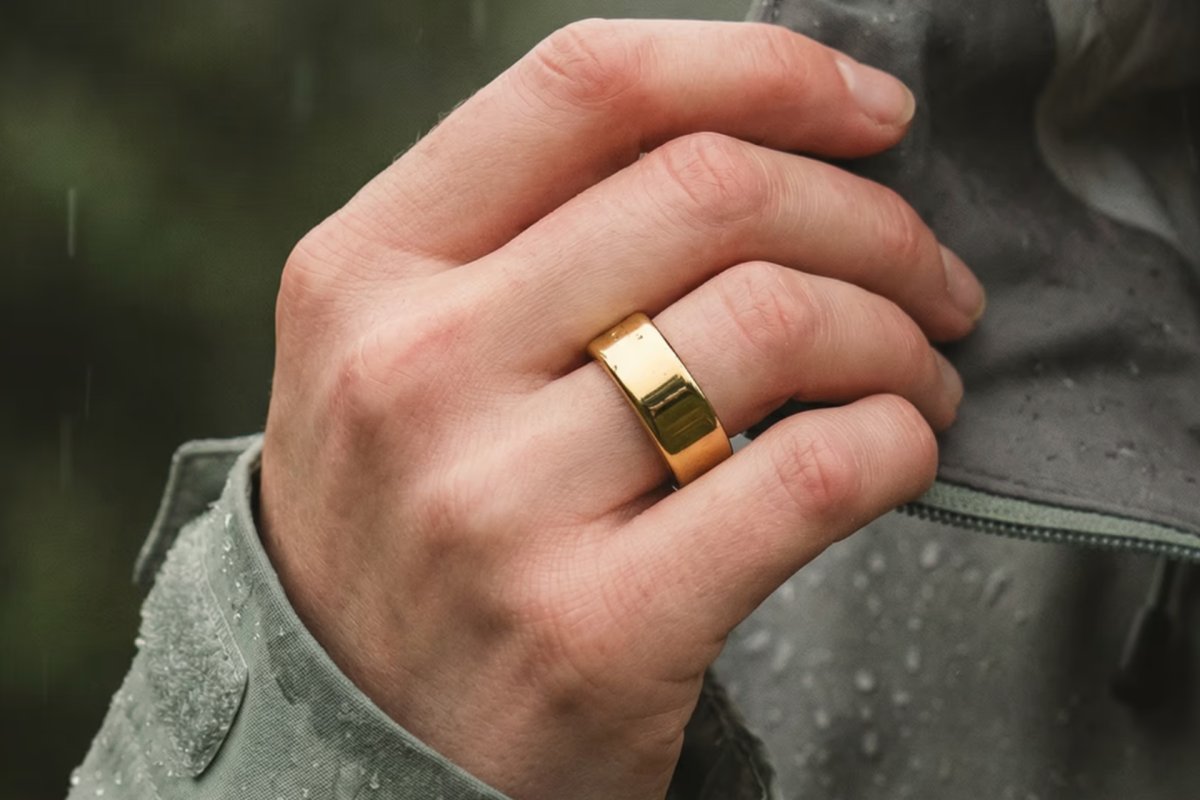
The Ring Pro’s redesigned unibody metal structure helped the company secure U.S. clearance and will be central to a comeback, with improvements, it says, including longer battery life and enhanced on-device processing.
Techcrunch event
San Francisco, CA
|
October 13-15, 2026
Ultrahuman has opened U.S. pre-orders for the Ring Pro, with shipping set to begin on May 15, according to the company. The device starts at $399, with early pre-orders priced at $349 for the first 1,000 customers.
Kumar said the Ring Pro was already in development as part of a broader product upgrade, but also helped address the patent dispute. “We believe the Ring Air is a non-infringing model, and we are fighting that in federal court in the U.S.,” he said, adding that the new design was intended to resolve the issue more definitively.
India emerges as next battleground
While Ultrahuman plans to ramp up its efforts in the U.S., rival Oura entered Ultrahuman’s home market, India, last week with the launch of its Ring 4, setting the stage for broader rivalry across key markets.
Kumar was upbeat on the competition, saying Ultrahuman remains focused on long-term growth in India even as new players enter the market. He added that increased competition could help expand awareness in what remains a nascent category in the country.
Smart ring shipments in India declined 30.6% year-over-year in 2025, even as Ultrahuman led the market with a 30.4% share, followed by Gabit at 18.3%, per a recent IDC report. Average selling prices fell 8.7% to $160, highlighting both growing competition and pricing pressure.
IDC expects the smart ring market to continue growing at a double-digit pace in the U.S. and globally, though growth in India is likely to remain more muted, Ubrani told TechCrunch. Oura’s international brand recognition could help it gain traction in the country, where early local competitors have already faded, leaving room for established global players to move in, he added. Many early entrants in India had largely focused on repackaged hardware with limited differentiation and have since scaled back their efforts.
The U.S. accounts for about 45% of Ultrahuman’s roughly 700,000 daily active users globally, Kumar said, underlining its importance to the company. The U.S. user base also skews more female, with women accounting for about 73–74% of users there, compared with roughly 68% globally, up from about 65% a year earlier.
Kumar also hinted at plans beyond smart rings, saying Ultrahuman is working on a new wearable device focused on a different biomarker, as the company looks to expand its product portfolio. Ultrahuman currently tracks a range of biomarkers including heart rate, heart rate variability, skin temperature, sleep stages, movement, and blood oxygen levels.