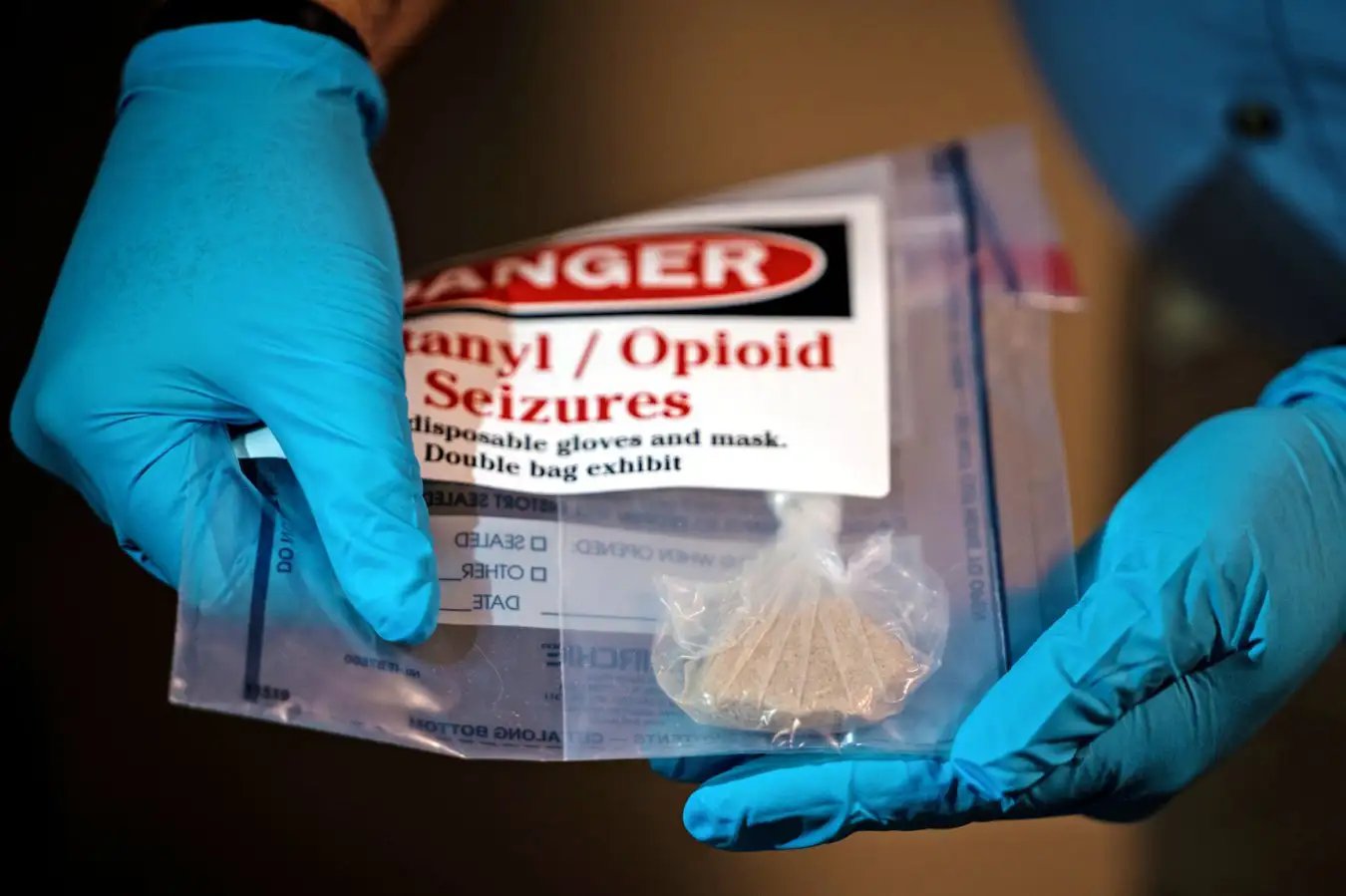
Deaths related to the opioid fentanyl have rapidly declined in the US
Thomas Simonetti/Bloomberg/Getty Images
Drug overdose deaths have plummeted in the US, which can be traced to illegal supplies of fentanyl becoming less pure, and therefore less potent. The question is: does this mark a turning point in the opioid epidemic or just a temporary lull?
Since 1999, the US has reported more than 1 million deaths from a drug overdose. Besides a small dip in 2018, the toll rose nearly every year until 2023, when deaths fell by nearly 3 per cent. They then nosedived, falling a further 26 per cent the next year.
To understand what is driving this shift, Joseph Friedman at the University of California, San Diego, and his colleagues have analysed overdose deaths from 1999 until 2024. They collected the data from the National Vital Statistics System, which records every death in the US, and the US Centers for Disease Control and Prevention’s WONDER database, which tracks any substances involved.
The team found that fentanyl-related deaths fell from nearly 73,000 to fewer than 48,000 – a 34 per cent drop – between 2023 and 2024. In contrast, deaths from stimulants, such as cocaine and methamphetamine, without the presence of fentanyl grew by more than 4 per cent, from about 18,000 to nearly 19,000.
This suggests that a less potent fentanyl supply is behind the trend line. “If it was about increasing broad access to harm reduction and treatment services, you might be expected to see more of an effect on other drugs,” says team member Chelsea Shover at the University of California, Los Angeles.
Fentanyl deaths also declined across races, sexes, regions and in nearly age group. “If we saw a decline in a certain age group primarily, or we saw different trends in different parts of the country, I would think it might be a policy difference,” says Shover. “But since we saw it across the board, that makes me think it is something in the drugs themselves.”
Daniel Busch at Northwestern University in Illinois came to the same conclusion in his recent analysis of overdoses deaths. Across five drug categories – cocaine, methamphetamine, prescription opioids, heroin and methadone – deaths that involved fentanyl and another one of these drugs fell the most between 2023 and 2024. For instance, deaths involving both cocaine and fentanyl plunged by more than 35 per cent over this period, while those from only cocaine rose nearly 5 per cent.
What’s more, the US Drug Enforcement Agency found that the purity of seized fentanyl powder peaked at around 25 per cent by weight between March and July 2023. This means that bulking agents – such as flour, baking soda or other drugs – accounted for the other 75 per cent. The purity then declined to about 11 per cent by the end of 2024.
This may be the result of China squeezing the supply chain, says Busch. The country, which is the primary producer of fentanyl precursors, began cracking down on manufacturers in November 2023 after talks with the US. But not everyone is convinced. “I think the timing of when restrictions happened, and enforcement of such restrictions, doesn’t line up very cleanly [with falling overdose deaths],” says Shover.
Regardless, this shift could represent a turning point in the opioid epidemic, which researchers view as having four waves. The first two, made up of overdose deaths involving prescription opioids and heroin, began declining about a decade ago. The third wave, driven by fentanyl, didn’t peak until 2020. Now, it appears that the fourth wave – overdoses involving both fentanyl and stimulants – is rescinding. “All the distinct waves that we’ve seen are now in decline,” says Friedman.
But it is too soon to say whether this marks a true turning point in the crisis. “We do not yet have good evidence that the changes in the supply we saw in 2023 and 2024 are durable,” says Shover. “Preliminary overdose data suggests that declines have kind of levelled off.”
Deaths from other drugs – including cocaine, methamphetamine and xylazine, a veterinary sedative added to fentanyl – are also starting to tick up. This probably reflects the substances’ availability on the illegal drug market, says Friedman. “We can’t just celebrate this [fentanyl] victory,” he says. “We still need to pay attention to the way things are shifting.”
Overdose deaths aren’t the only measure of the drug crisis either, says Sam Stern at Temple University Hospital in Pennsylvania. Another veterinary sedative, medetomidine – first detected in the US drug supply in 2022 – causes more severe withdrawal than opioids. In 2024, Stern and his colleagues began admitting people to intensive care for medetomidine withdrawal. “Historically, that wasn’t necessarily a thing we would do, and now we do it routinely and [in] high numbers,” he says.
And while overdose deaths may be declining, they still claimed nearly 80,000 lives in the US in 2024. “The fact it is coming down doesn’t mean that we’ve solved the crisis,” says Busch. “We are still losing so many people.”
Topics: