The flags of Canada, France, Germany, Italy, Japan, the United Kingdom, the United States, and the European Union ahead of the Group of Seven (G-7) Leaders’ Summit in Banff, Alberta, Canada, on Saturday, June 14, 2025.
Bloomberg | Bloomberg | Getty Images
The war in Iran will present the G7 countries with one of the most significant diplomatic tests in modern history.
The group – comprising the United States, Canada, France, Germany, Italy, Japan and the United Kingdom – has come under strain during both of U.S. President Donald Trump’s tenures.
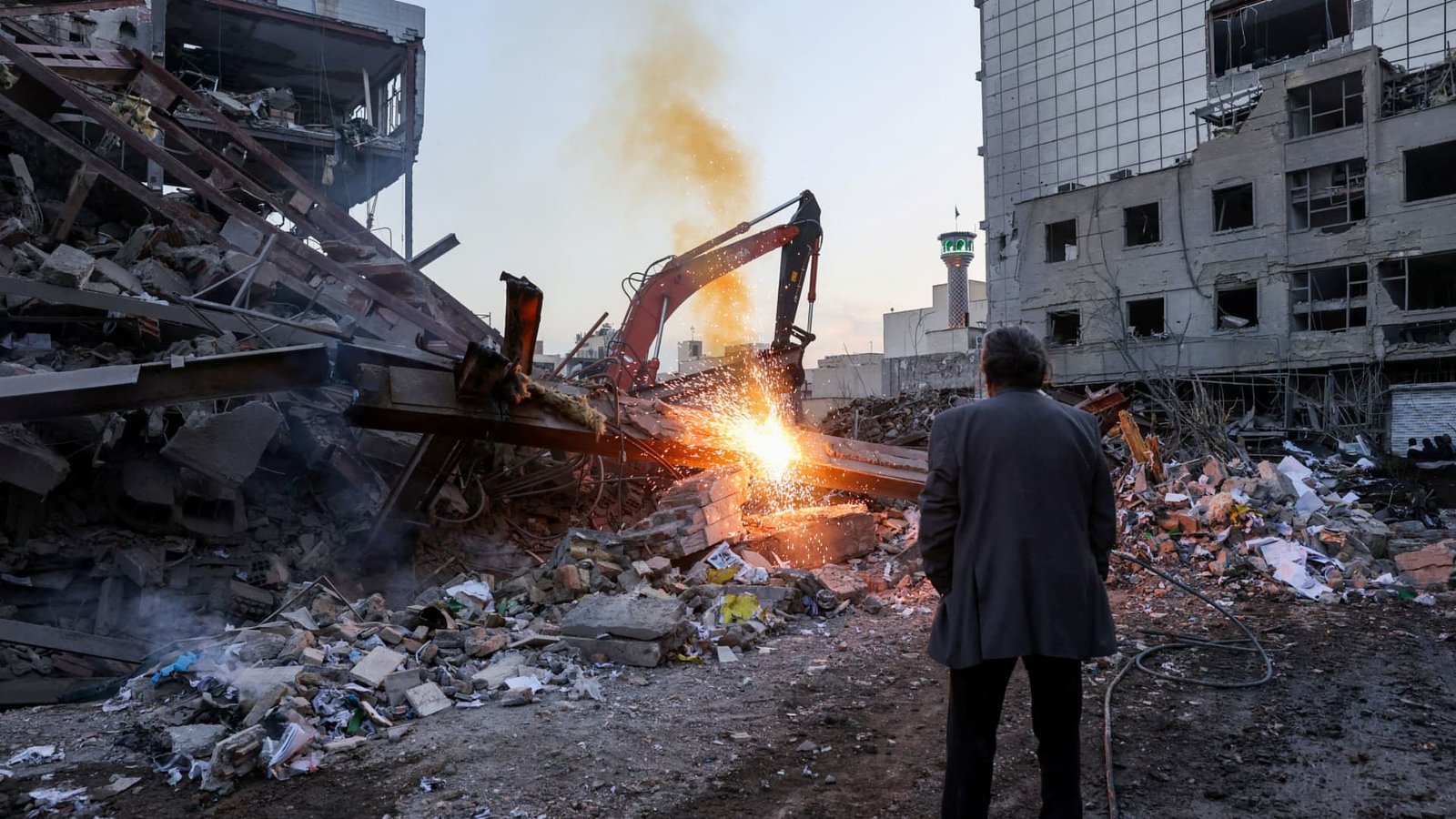
However, the decision by Washington and Tel Aviv to attack Iran on Feb. 28 and trigger a widespread wave of strikes across the Middle East and international military bases in the region, will test the alliance under extreme circumstances.
Aftermath of an Israeli and the U.S. strike on a police station, amid the U.S.-Israel conflict with Iran, in Tehran, Iran, March 2, 2026.
Majid Asgaripour | Via Reuters
France, which currently holds the G7 presidency, has called an emergency meeting to address the Middle East. Finance Minister Roland Lescure said he and his counterparts, as well as G7 central bank governors, will meet over the coming days.
Speaking to Franceinfo radio, he said: “I have spoken to various counterparts, in particular [U.S. Treasury Secretary] Scott Bessent … to discuss the state of the situation, so we can assess any responses that might be needed.”
Diplomacy in tatters
The dispute between the U.S. and Spain will be a particular source of tension. Madrid’s refusal to allow the U.S. military access to its bases has led Trump to threaten to “cut off all trade with Spain”, while Bessent told CNBC that “the Spanish put American lives at risk.”
European leaders have rallied around Spain’s Prime Minister Pedro Sanchez, in a bid to protect Europe’s sovereignty. However, each G7 nation is also navigating their own path through this international dispute.
France First
With an election year just around the corner, France is walking a particularly high-stakes line.
President Emmanuel Macron branded the U.S.-Israel led attacks as “outside the framework of international law”, while also pledging to strengthen its nuclear arsenal to protect Europe, sending an aircraft carrier to the Mediterranean for deterrence.
But the prospect of how persistently higher energy prices could impact inflation at home at a sensitive time for the economy is also influencing Macron’s response. Finance Minister Roland Lescure, who will lead the G7 meeting, said “in a conflict that has global repercussions, it is obviously essential that we coordinate.”
Emmanuel Macron spelled out a pivot in France’s nuclear strategy. Here’s why it’s so significant
Germany’s grip on Europe
Germany has taken a more diplomatic tack, with Chancellor Friedrich Merz saying “now is not the time to lecture our partners and allies,” ahead of his meeting with President Trump in Washington D.C. last week.
However, the economic reality of a prolonged war in the Middle East is already of concern to Bundesbank President Joachim Nagel, who is expected to attend the G7 talks this week. He told CNBC’s Annette Weisbach that “this war is a burden for the economy in Germany, in Europe and for the whole world.”

Starmer’s special relationship
In the U.K., Prime Minister Keir Starmer has been criticized for his cautious response to the attack on Iran.
Speaking last week, he said that Britain’s so-called ‘special relationship’ is in “operation right now,” but stood but his decision not to join any strikes on Tehran.
For his part, Trump sent Starmer a scathing message over the weekend.
“The United Kingdom, our once Great Ally, maybe the Greatest of them all, is finally giving serious thought to sending two aircraft carriers to the Middle East. That’s OK, Prime Minister Starmer, we don’t need them any longer,” Trump said in a Truth Social post.
“But we will remember. We don’t need people that join Wars after we’ve already won!,” Trump added.
U.K. Finance Minister Rachel Reeves, who is expected to join the G7 meeting over the coming days, was made to defend her Spring Statement as the “right economic plan in a world that has become yet more uncertain” despite surging energy costs.
The Market View
With such a complicated diplomatic picture, the markets have ridden out a volatile period with their focus firmly on the energy sector. As investors brace for more headlines during the upcoming trading sessions, here are some key takeaways on what to expect for markets:
Goldman Sach: “Energy supply disruptions have led to an unfavorable combination of higher energy prices and weaker risk sentiment, with the sharp rise in European natural gas prices especially in focus for European currencies. Higher gas prices will add incremental near-term inflation pressure in European and Asian economies, impacts on the US would likely remain limited given reliance on domestic supply.”
Barclays: “Despite the rise in tensions, most non‑U.S. equity indices remain close to their highs, leaving markets exposed to any further deterioration in the situation. If Brent crude moves toward $100 per barrel due to supply concerns, the Stoxx 600 could fall by roughly 8% to around 550.”
Deutsche Bank: “The Iran situation is the focal point for markets right now, but so far at least, we are not at thresholds that have historically been consistent with a recession or a bigger market downturn.”