Brendan Carr, chairman of the Federal Communications Commission, has told CNBC that Paramount’s bid to buy Warner Bros. Discovery is “cleaner” than Netflix’s, adding he expected it to be approved “pretty quickly.”
“There’s a lot of concerns when Netflix was the potential buyer there,” Carr said on the sidelines of the Mobile World Congress in Barcelona, Spain, on Tuesday. “That particular combination raised a lot of competition concerns.”
Paramount Skydance put in a revised offer to buy the entirety of WBD last week at $31 per share, up from $30 per share, which the WBD board deemed superior to an existing Netflix proposal.
Netflix had been set to buy the media giant’s studio and streaming businesses for $27.75 per share, but said this was “no longer financially attractive” in light of Paramount’s offer.
Carr spoke with CNBC’s Arjun Kharpal in a wide-ranging discussion about the WBD-Paramount merger, which requires regulators’ sign-off.
Carr told CNBC that Netflix “would have a very difficult path” getting regulatory approval, adding that Paramount’s was “a lot cleaner, does not raise at all the same types of concerns.”
“I think there’s some real consumer benefits that can emerge from it,” he added.
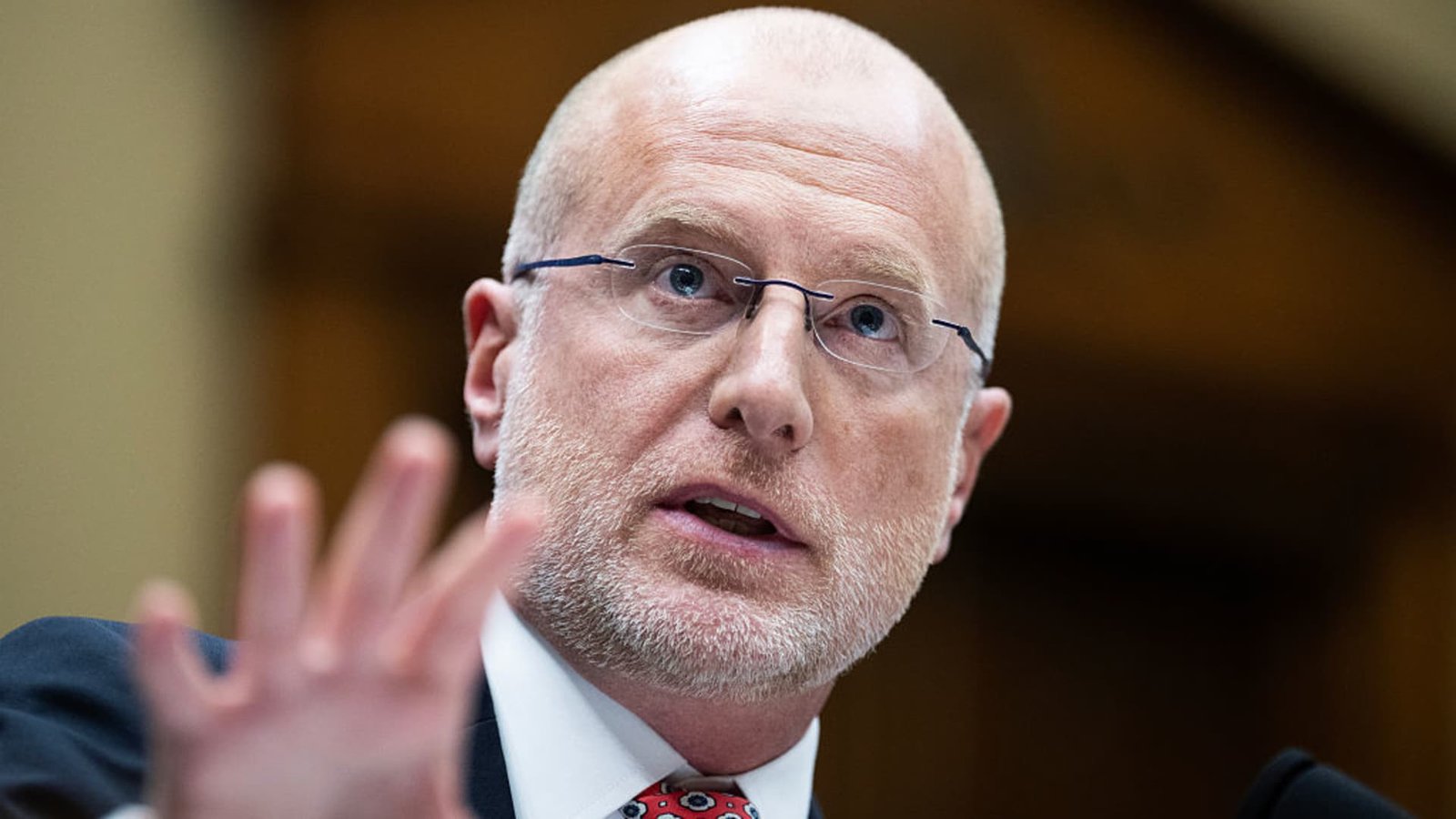
FCC Chairman Brendan Carr testifies during the House Energy and Commerce Subcommittee on Communications and Technology hearing titled “Oversight of the Federal Communications Commission,” in Rayburn building on Wednesday, January 14, 2026.
Tom Williams | Cq-roll Call, Inc. | Getty Images
Both deals raised antitrust questions around the U.S. theatrical industry, prompting concerns over potential job losses or smaller film slates in Hollywood. Netflix’s proposed combination also spurred questions around streaming dominance, as it would have brought together two of the most popular streaming services in Netflix and WBD’s HBO Max.
On Monday, Paramount said it planned to release at least 30 films annually, or 15 per studio. Executives also said it would combine its streaming service Paramount+ with HBO Max into one service once the transaction was complete.
It’s unclear what the regulatory process for Paramount and WBD will entail. The FCC typically reviews deals that include one of the nation’s broadcasts, including Paramount’s CBS, and backed Paramount’s merger with Skydance last year.
“If there’s any FCC role at all, it’ll be a pretty minimal role. And I think this is a good deal, and I think it should get through pretty quickly,” Carr added.
Unlike Netflix’s proposed deal, Paramount’s bid encompasses WBD’s pay TV networks, such as CNN, TBS and TNT.
Paramount has offered a $7 billion breakup fee if the deal doesn’t gain regulatory clearance. It also already paid the $2.8 billion breakup fee that WBD owed to Netflix because that deal was canceled.
‘Meaningfully easier’
Some of the concerns around a Netflix-WBD deal included higher consumer prices and reduced competition.
U.S. President Donald Trump said in December that the potential deal “could be a problem” because of the increased market share it would give Netflix. He walked back those comments a month later, saying the deal would be solely reviewed by the Department of Justice.
In a statement, Democratic Sen. Elizabeth Warren of Massachusetts called the Paramount and WBD merger “an antitrust disaster threatening higher prices and fewer choices for American families.”
Analysts from investment bank Raymond James said last week that a Paramount-WBD deal was “meaningfully easier” than the Netflix deal.
“There are new challenges with this deal around news, cable networks, international linear networks, etc., but we still feel the WBD/PSKY deal is more palatable all-in,” the analysts wrote.
“And, particularly following the reaction to the WBD/NFLX agreement, we believe PSKY’s political standing with the current U.S. administration is much stronger than Netflix’s.”
However, Paren Knadjian, a partner at advisory firm EisnerAmper, said last week that the Paramount-WBD deal isn’t necessarily a done deal, with the path forward looking more nuanced.
The Netflix-WBD deal focused primarily on library content, but Paramount’s deal is a “horizontal consolidation” between cable TV, sports, streaming and news, he said.
“I think the biggest thing we’re going to focus on is the concentration of intellectual property under one roof,” Knadjian told CNBC. “What power does that give this new entity in terms of the ability to charge more?”
“The regulatory pressure, the political pressure, those are the things that will certainly delay the deal and will make it more complicated, and I think there’s going to have to be significant concessions for it to go through,” Knadjian added.
There’s also the outstanding question of whether the Committee on Foreign Investment in the United States would find issue with the structure of the deal. Paramount’s offer included roughly $24 billion from Gulf state sovereign wealth funds.
— CNBC’s Lillian Rizzo and Alex Sherman contributed to this report.