Massive Saharan dust storm brings risk of ‘blood rain’ and fiery skies to southern Europe
Known as “La Calima,” this desert dust plume could hit Spain, Portugal and France, bringing with it grit-laden, rust-colored rainfall
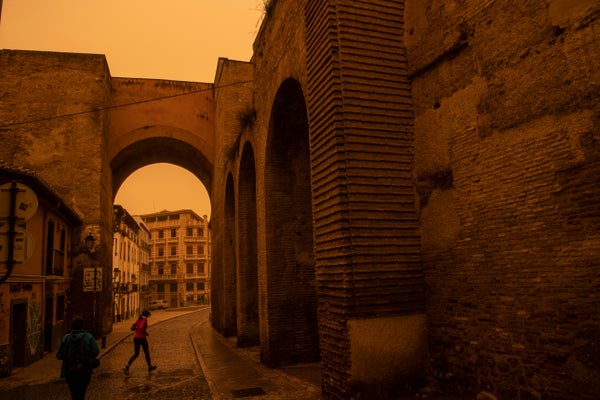
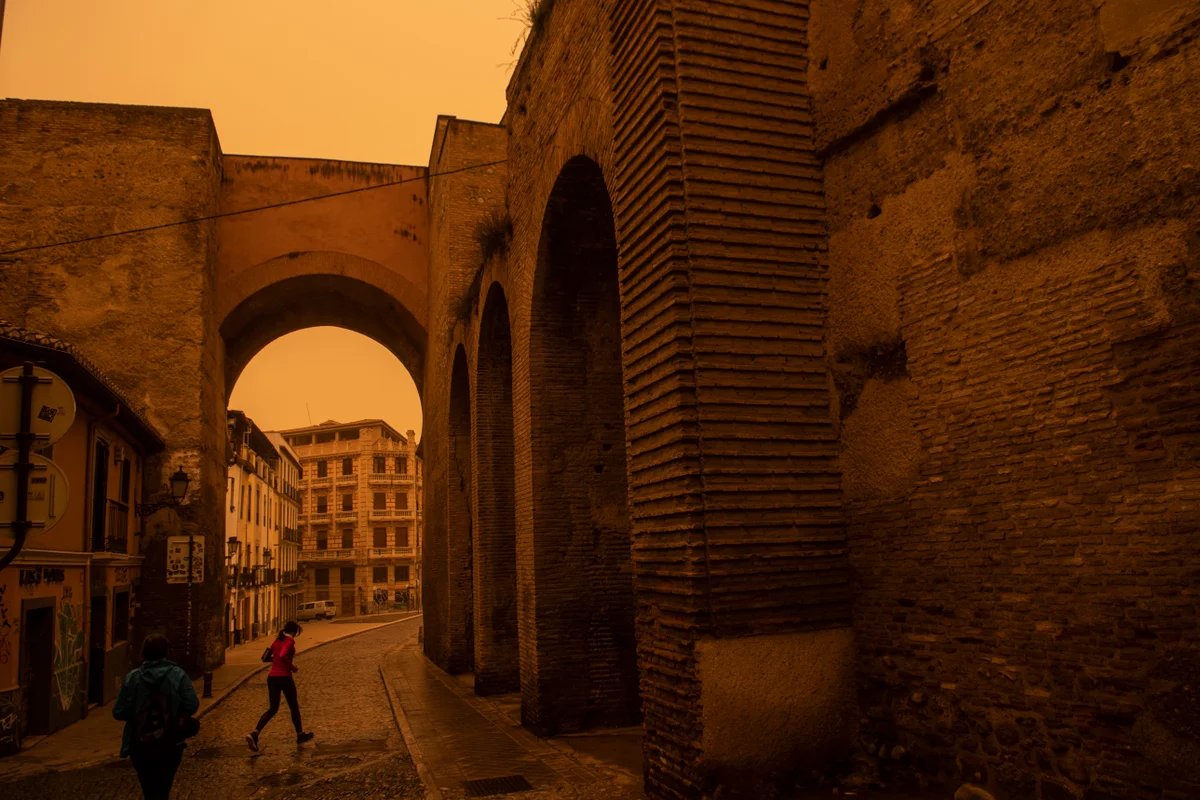
Saharan dust turns the sky orange in Spain in 2022.
Carlos Gil Andreu/Getty Images
A hard rain is going to fall. Dust plumes, whipped up by winds over the Sahara Desert, are moving over western Europe. This annual phenomenon—known in Spanish as “La Calima,” which literally translates to “the haze”—means a plume of dust and sand is threatening an area covering Spain, Portugal and France.
“Blood rain”—essentially falling red mud created by the sand and precipitation mixing together—is expected, as are hazardous air conditions and, of course, a red haze. The conditions could last days, according to some forecasts. The rain, despite its name, is not harmful in itself. But public health authorities are urging older people, children and people with respiratory issues to limit their time outdoors so as not to inhale the dust.
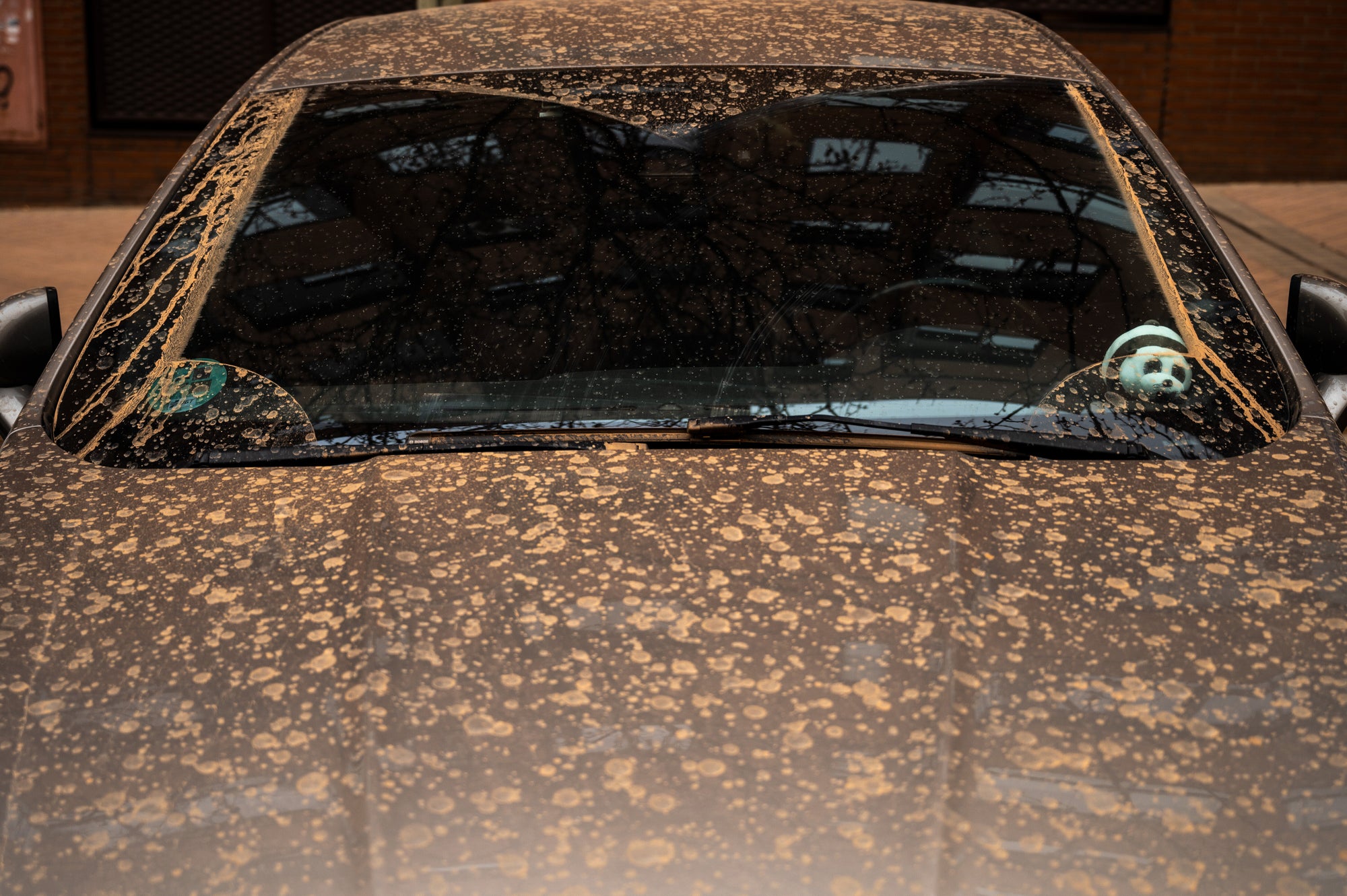
Dust from the Sahara covers a car in Madrid in 2022.
Marcos del Mazo/LightRocket via Getty Images
On supporting science journalism
If you’re enjoying this article, consider supporting our award-winning journalism by subscribing. By purchasing a subscription you are helping to ensure the future of impactful stories about the discoveries and ideas shaping our world today.
Every year tens of millions of tons of particulate matter from the Sahara is swept up into the air and dispersed across the globe, with some dust even reaching the Americas.
This plume appears to be driven by a local weather phenomenon known as DANA (an acronym for “isolated depression at high levels” in Spanish), which is an isolated high-altitude depression that forms when cold air meets warm air above the Mediterranean Sea, causing hotter air to rapidly rise and form dense clouds. When a DANA and La Calima combine, they can create severe and even dangerous weather conditions over the region.
It’s Time to Stand Up for Science
If you enjoyed this article, I’d like to ask for your support. Scientific American has served as an advocate for science and industry for 180 years, and right now may be the most critical moment in that two-century history.
I’ve been a Scientific American subscriber since I was 12 years old, and it helped shape the way I look at the world. SciAm always educates and delights me, and inspires a sense of awe for our vast, beautiful universe. I hope it does that for you, too.
If you subscribe to Scientific American, you help ensure that our coverage is centered on meaningful research and discovery; that we have the resources to report on the decisions that threaten labs across the U.S.; and that we support both budding and working scientists at a time when the value of science itself too often goes unrecognized.
In return, you get essential news, captivating podcasts, brilliant infographics, can’t-miss newsletters, must-watch videos, challenging games, and the science world’s best writing and reporting. You can even gift someone a subscription.
There has never been a more important time for us to stand up and show why science matters. I hope you’ll support us in that mission.