Why Does Life Keep Evolving These Geometric Patterns?
A global catalog shows how creatures across the tree of life balance rigidity with flexibility in remarkably consistent ways
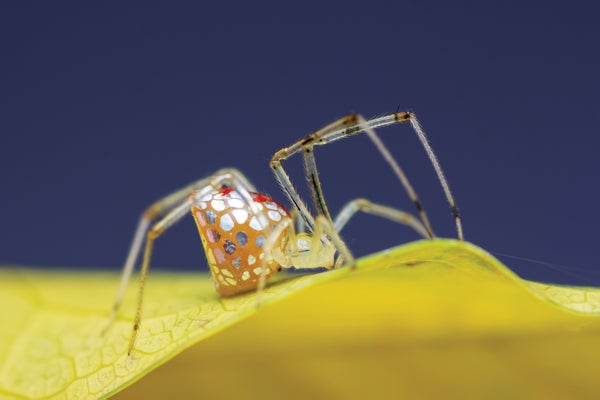
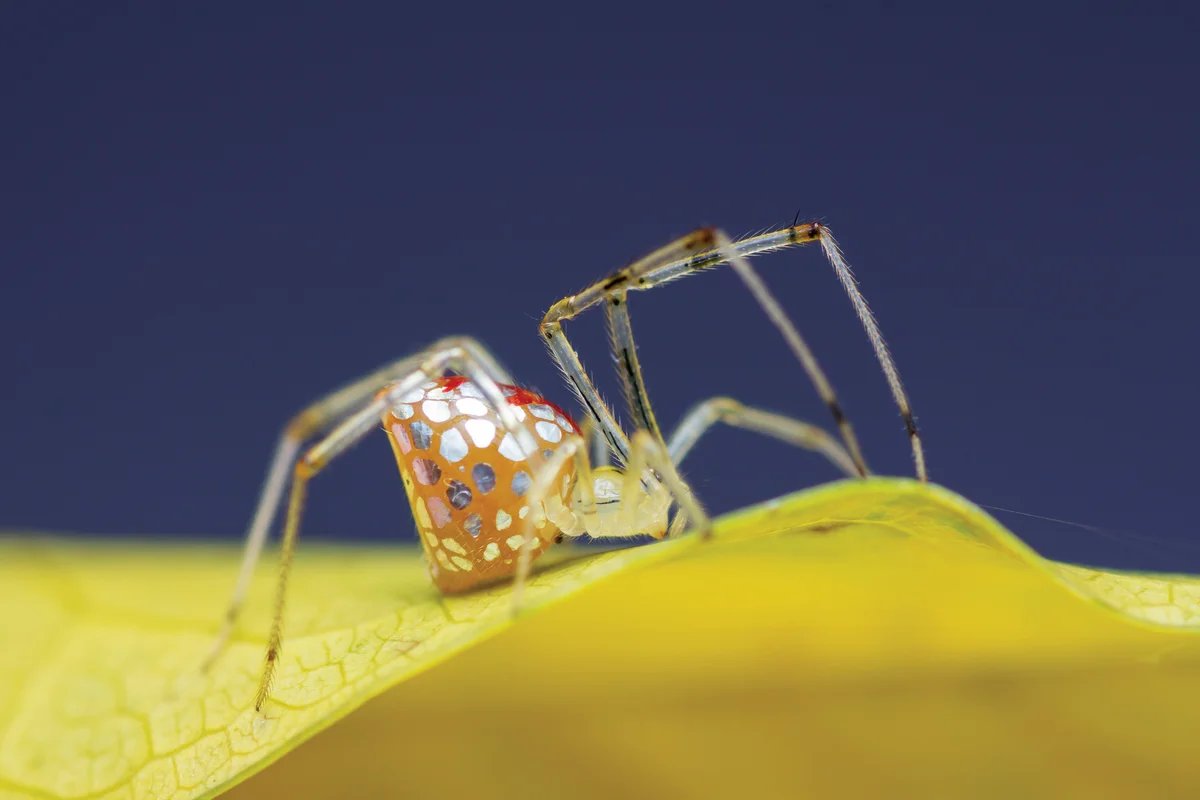
The same tile structures with soft joints between are found across the tree of life, including on mirror spiders’ abdomens.
Manoj Kumar Tuteja/Getty Images
The mirror spider can rapidly shift a patchwork of minuscule reflective plates underneath its abdomen’s outer surface, altering the pattern of mirrorlike flashes. This uncommon display comes from common building blocks: Similar tilelike arrangements of plates and soft joints appear throughout the tree of life, from turtle shells to tropical fruit peels. Researchers have now compiled 100 examples of this pattern across animals, plants, microbes and viruses, which they describe in PNAS Nexus.
Study co-author Mason Dean, a biologist at City University of Hong Kong, first noted a regular tiled pattern in micro computed tomography scans of a ray skeleton. He was surprised to find that what looked like pixelated graininess was actually a mosaic of tiny hexagons and pentagons packed edge to edge across the cartilage. Humboldt University of Berlin zoologist Jana Ciecierska-Holmes, also a co-author, began looking for tile examples and was similarly surprised to spot intricate interlocking plates on the outer coating of millet seeds. They and their colleagues set out to determine just how widespread such tiling patterns were.
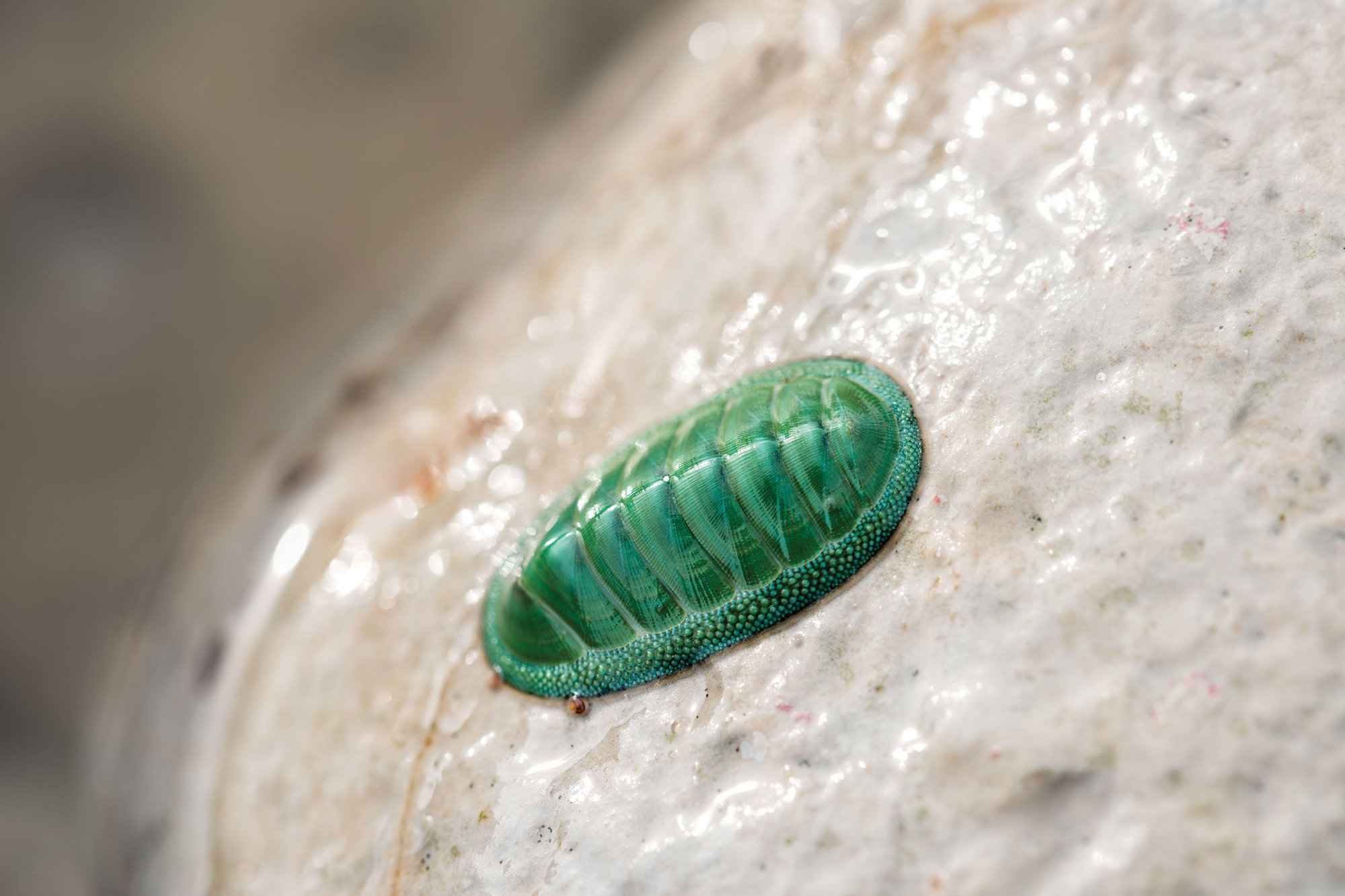
Chitons’ shell plates and girdles.
On supporting science journalism
If you’re enjoying this article, consider supporting our award-winning journalism by subscribing. By purchasing a subscription you are helping to ensure the future of impactful stories about the discoveries and ideas shaping our world today.
The researchers focused on true tessellations, in which geometric tiles are discrete structural pieces separated by softer seams, rather than purely visual or hollow patterns such as animal coloration or honeycombs. To compare such systems across very different organisms, they created a framework describing what different natural tiles are made of, how they’re shaped, how they connect and what they do. The results reveal structural parallels across many organisms without any shared ancestry.
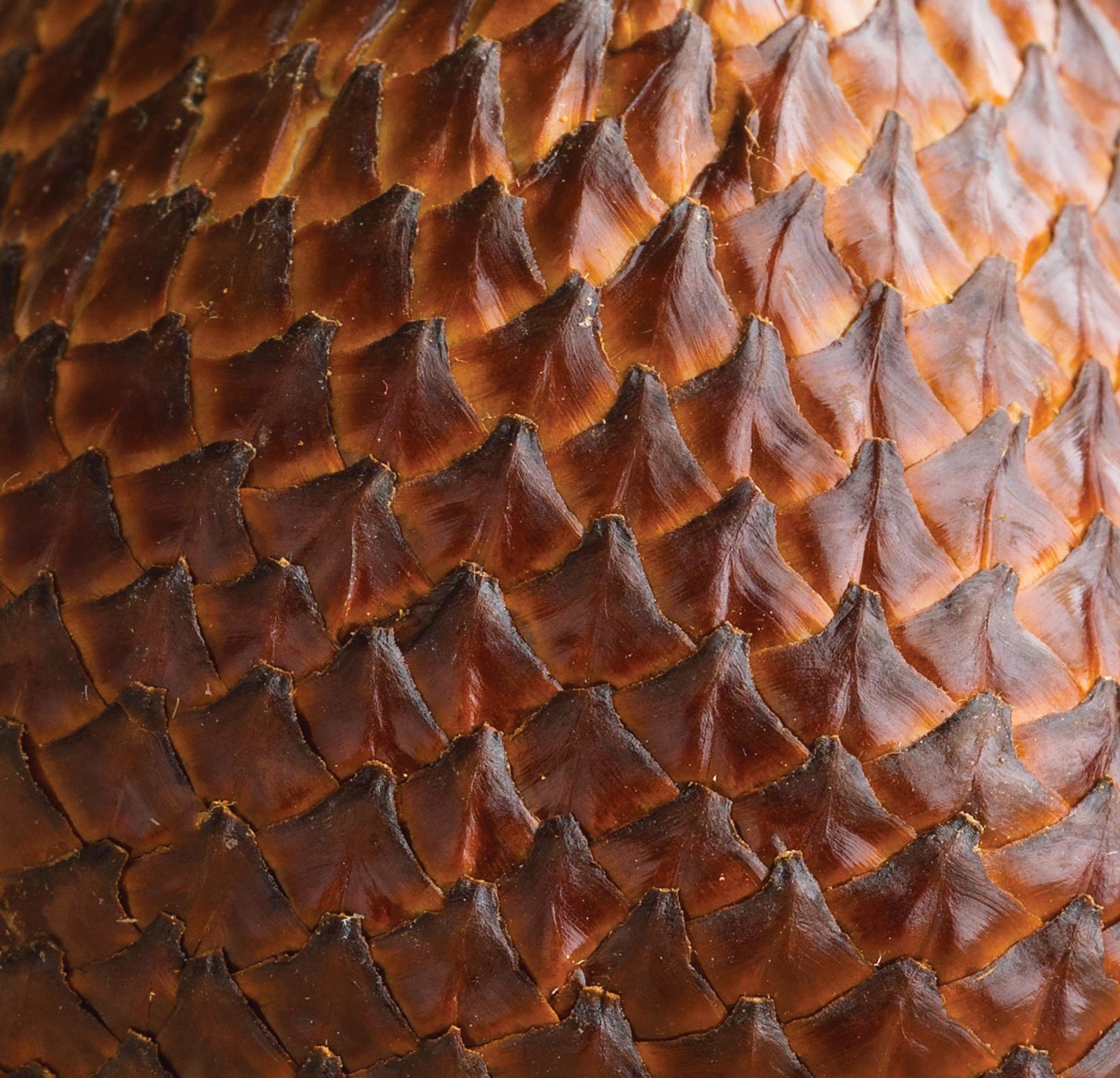
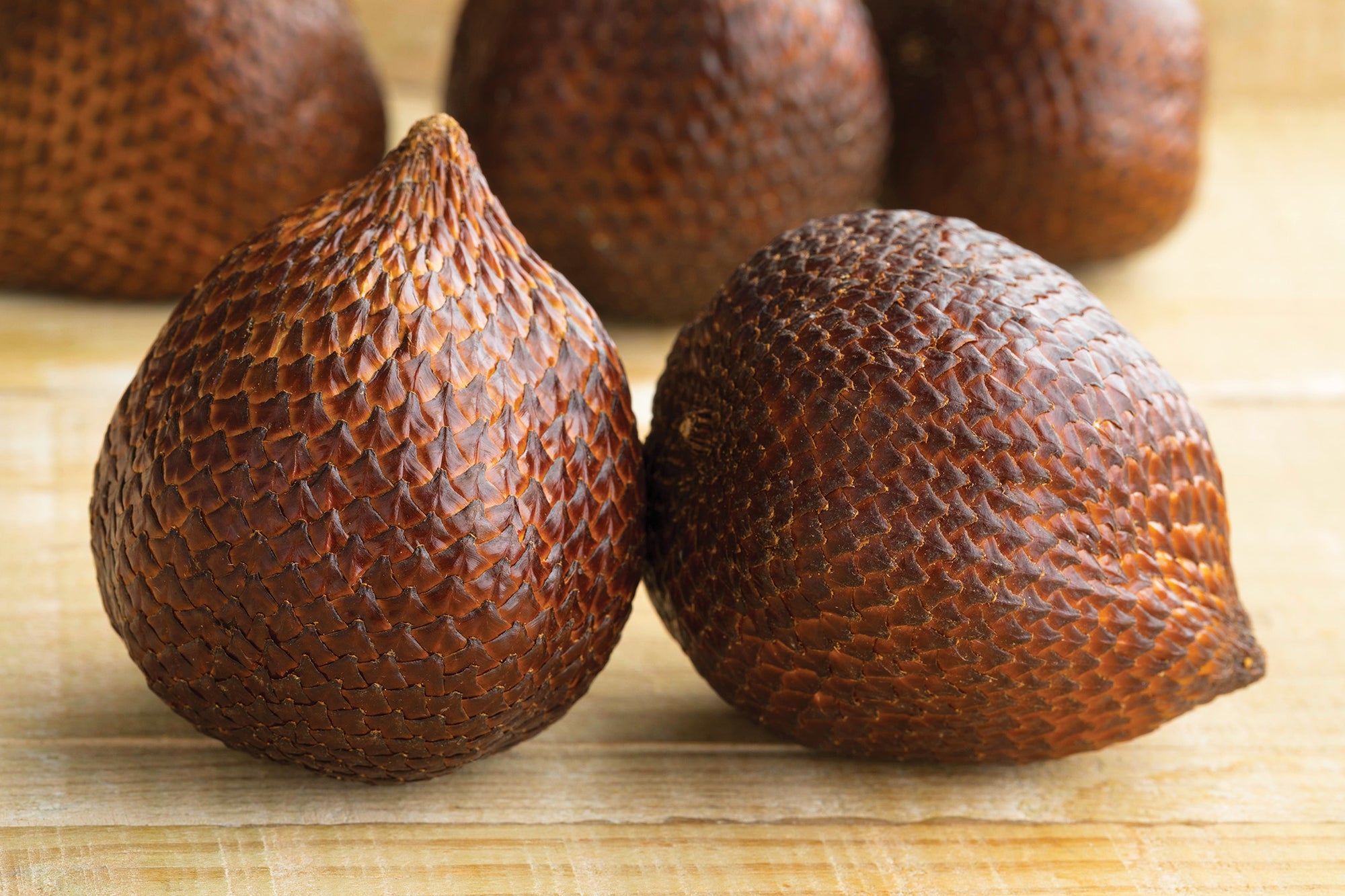
Salak fruit’s outer covering.
Chitons evolved articulated shell plates, whereas sharks developed tessellated cartilage—two tiled structures that arose independently in distant evolutionary lineages, the researchers found—and microscopic amoebae build architecturally similar protective casings from scavenged mineral tiles. Other variants tile the lenses of insect eyes and form corky plate patterns in the elephant’s foot plant. Across kingdoms, the same basic layout helps animals see, move and protect their bodies.
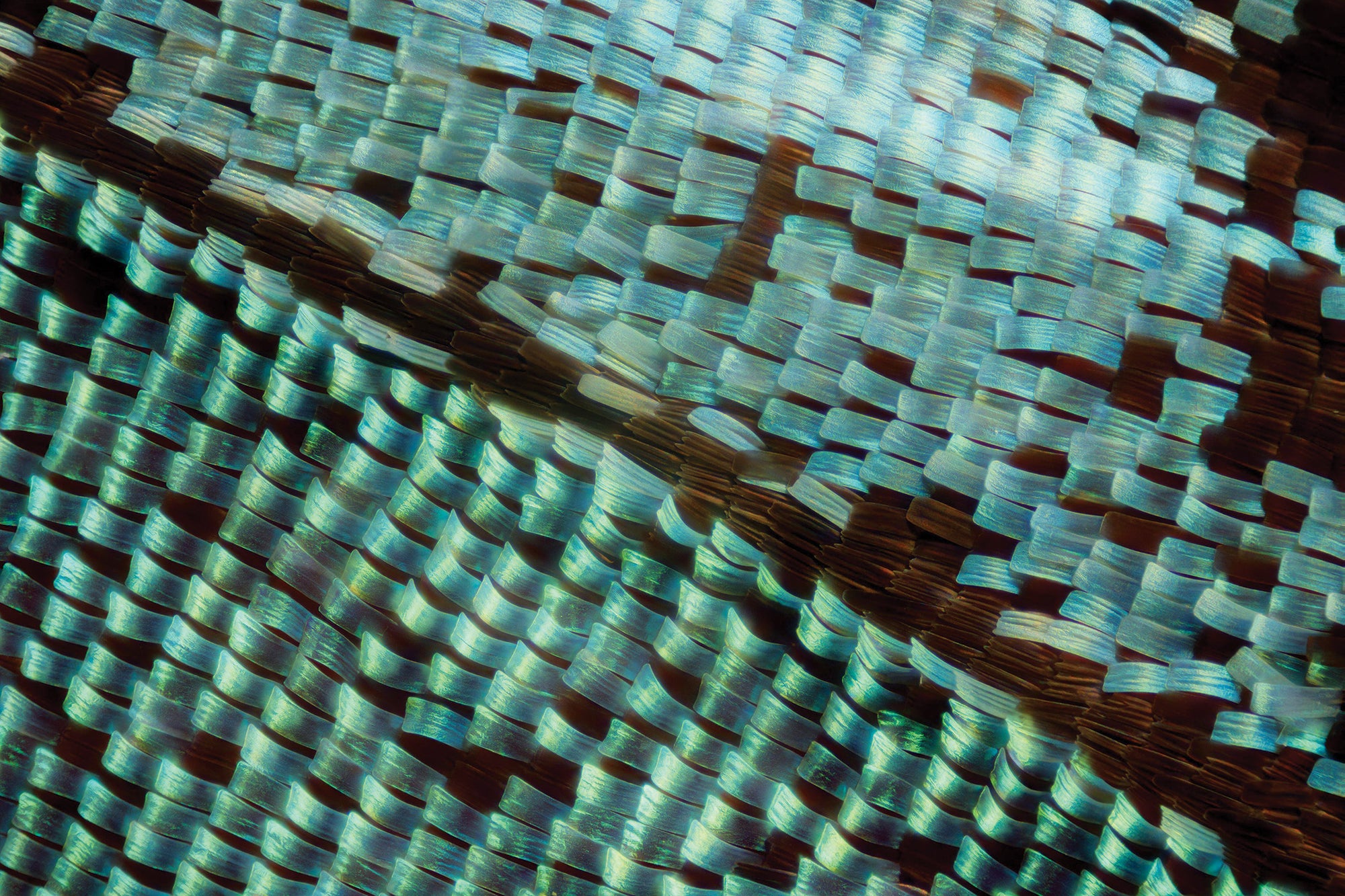
The recurrence reflects how geometry and growth push organisms toward the same solutions. Predominantly six-sided patterns such as those on sharks and rays are a classic way to efficiently cover curved surfaces, for instance. Dean also notes that tile borders often align with regions where new cells are added during growth, allowing tissues to function as they expand. Plus, pairing hard tiles and softer seams balances stiffness and flexibility, adds Kiel University zoologist Stanislav Gorb, who was not involved in the study. “Too rigid a structure is good for resisting forces but poor for generating motion.”

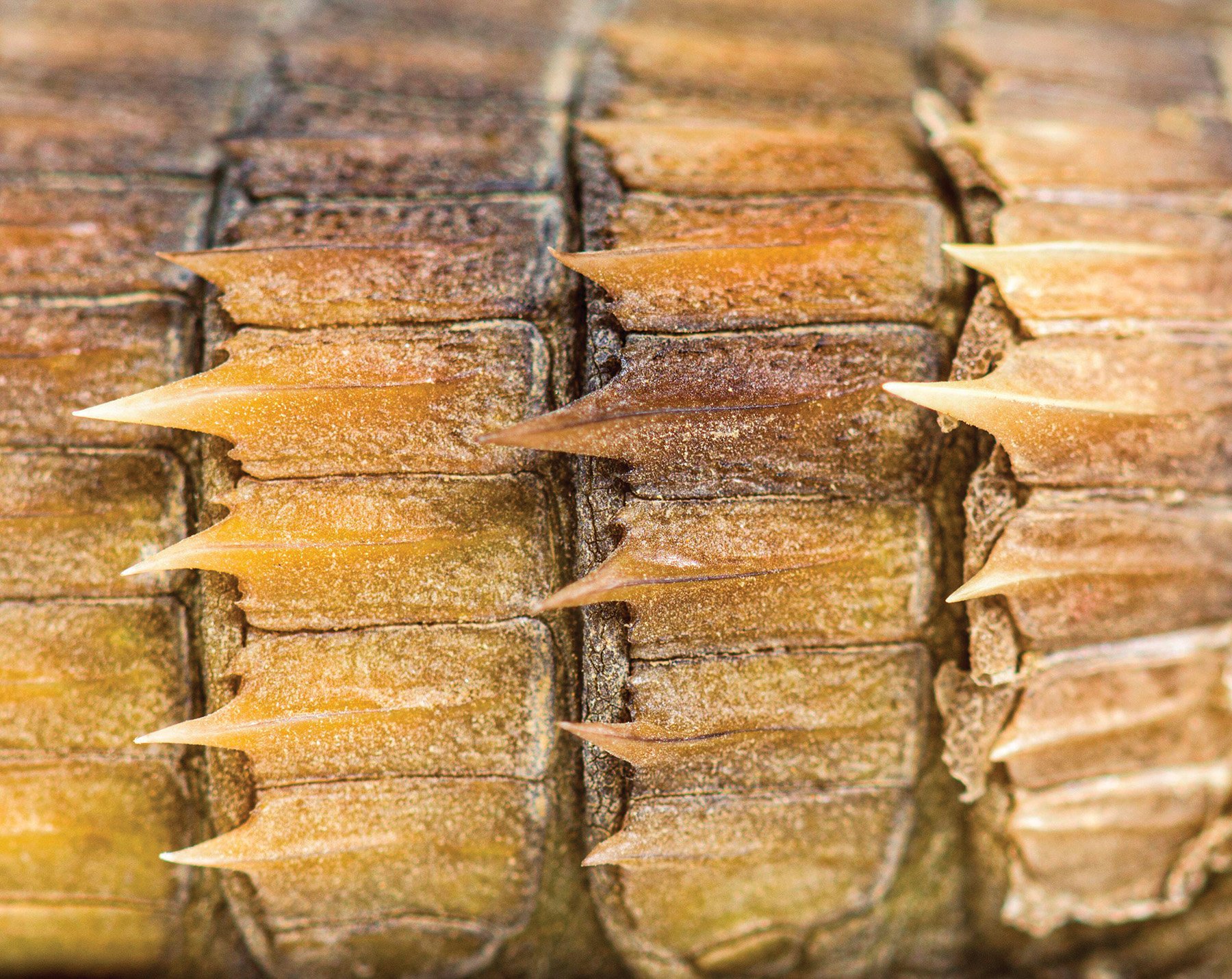
Armadillo lizards’ bony plates.
Nature Picture Library/Alamy (top); Life on white/Alamy (bottom)
The authors hope their online catalog becomes a living resource to help people recognize these patterns in the organisms and structures they study. “Once you start paying attention to that, you see it everywhere,” Dean says. Ciecierska-Holmes agrees: “You kind of go into the tessellation world.”
It’s Time to Stand Up for Science
If you enjoyed this article, I’d like to ask for your support. Scientific American has served as an advocate for science and industry for 180 years, and right now may be the most critical moment in that two-century history.
I’ve been a Scientific American subscriber since I was 12 years old, and it helped shape the way I look at the world. SciAm always educates and delights me, and inspires a sense of awe for our vast, beautiful universe. I hope it does that for you, too.
If you subscribe to Scientific American, you help ensure that our coverage is centered on meaningful research and discovery; that we have the resources to report on the decisions that threaten labs across the U.S.; and that we support both budding and working scientists at a time when the value of science itself too often goes unrecognized.
In return, you get essential news, captivating podcasts, brilliant infographics, can’t-miss newsletters, must-watch videos, challenging games, and the science world’s best writing and reporting. You can even gift someone a subscription.
There has never been a more important time for us to stand up and show why science matters. I hope you’ll support us in that mission.