
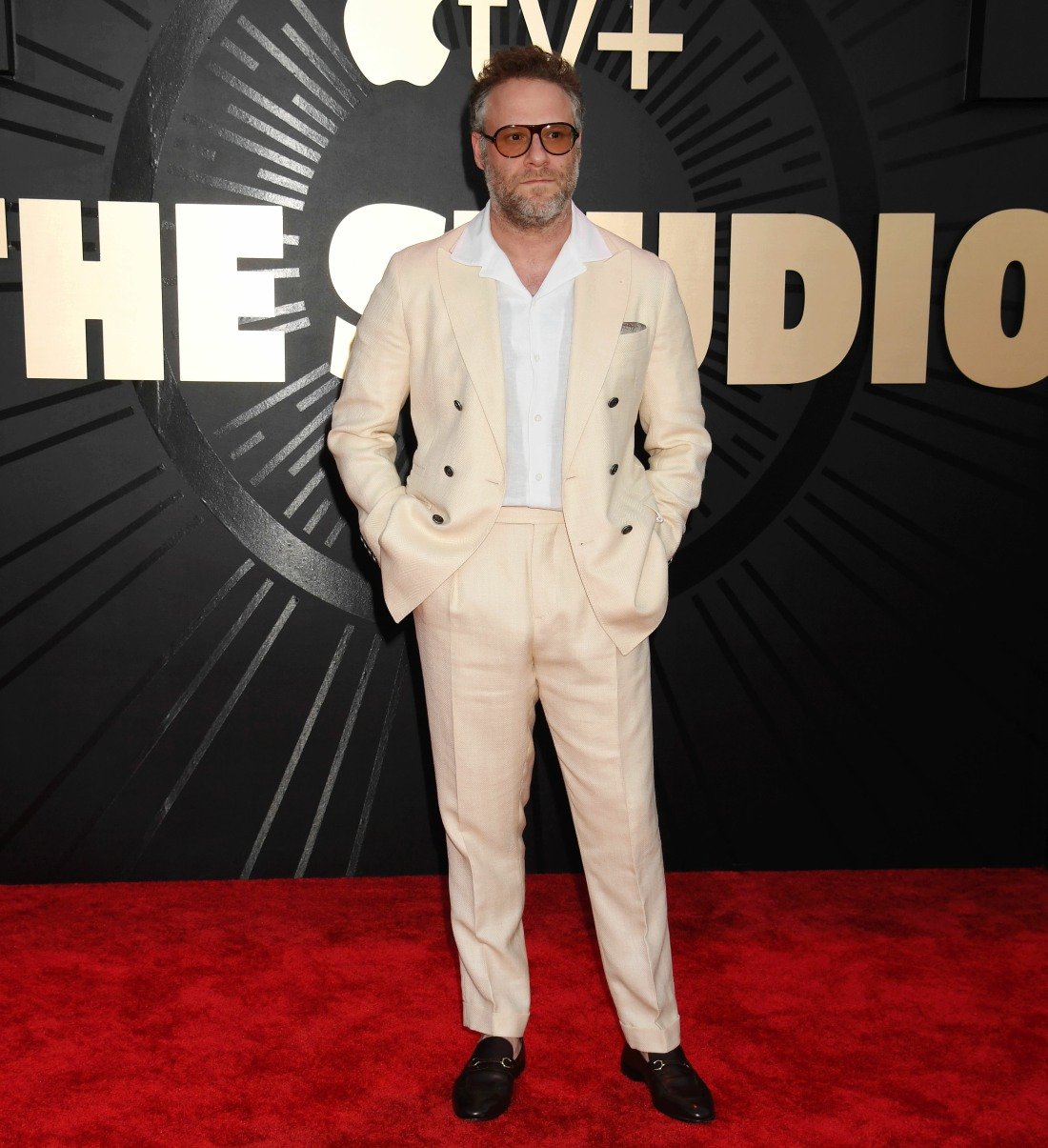
Before now, I hadn’t paid much attention to the buzz and promotion for Seth Rogen’s new AppleTV series, The Studio. I saw the trailer and I thought it looked cute, and I wondered why Seth “signed on” to an AppleTV show. As it turns out, this was a project Seth developed with Evan Goldberg, and they’ve written and directed every episode. AppleTV gave them A LOT of money to make it and make it with long, single-camera continuous takes. The show is a major send-up of the way Hollywood studios work nowadays, but it’s all based in reality and Seth’s experiences as an actor/writer and producer. Rogen chatted with Variety about the show and about what it’s like to develop projects and be a creative in today’s Hollywood.
Rogen is not sympathetic to studio heads. “They could make good movies instead of bad movies, and a lot of them choose to make the bad ones because they think it’ll make their lives personally more secure. We asked a lot of them, ‘Do you view yourselves as artists?’ And you could tell a lot of them wanted to say yes. Some of them straight-up said yes. That was a debate we were having throughout the whole time filming the show. What is art? Are they artists? It was very eye-opening to see how much creative ownership and pride they have over the movies that they’ve made.”
Studio executives are not evil tycoons: The studio executives in “The Studio” aren’t evil tycoons but rather movie nerds who want to be invited to celebrities’ parties and praised by the trades. Above all, they’re self-preservationists who cling to their jobs like a buoy. “The games that are constantly being played by people at the studios is ownership versus distance — how to navigate having ownership over something if it does well and distance from something if it does poorly.”
Milking everything they can from every IP: A line in the first episode of “The Studio” about dreaded meetings with “the Jenga people” and Rubik’s Cube pokes fun at Hollywood’s obsession with milking movies out of just about any piece of IP. “Evan and I had a meeting for Monopoly like 15 years ago, and Ridley Scott was attached to direct it. It was a fancy Monopoly movie. That’s where part of the joke came from.” (That film obviously never happened, but that didn’t stop Margot Robbie and the producing team behind “Barbie” from rolling the dice on their own adaptation.)
On Hollywood’s new “performative progressivism”: “The thing that we’ve been caught up in over recent years is people genuinely not caring if they were doing something good, but caring as to whether they were being perceived as doing something good.”
The Studio’s cameos: With scripts including roles for Charlize Theron, Paul Dano and Netflix co-CEO Ted Sarandos — and dozens more — Apple’s main concern was that Rogen and Goldberg wouldn’t be able to secure all the cameos written intotheir first drafts. “Apple was very skeptical and worried. They said early on, ‘You will never be able to get all the cameos you need to make this show.’ They could not have said it more definitively than that. That’s the moment we were like, ‘Oh, we have to prove these motherf—ers wrong.’”
How Hollywood should change: “There are ways for studios to be a little more open to risk without breaking the whole model.” He believes the biggest issue facing moviemaking is actually something “The Studio” doesn’t directly address: the decimation of in-house development at studios. It’s an unsexy dilemma that nonetheless determinesthe types of movies that get made. With so few films developed internally, it’s agents who have filled the void, building projects at the packaging stage. “That’s not how it should be. When I was young and we were making films like ‘Superbad,’ Sony bought the script, they hired a director, they believed in this movie. If that movie existed now, we would have to get the director and the entire cast attached beforehand.”
That last part is so interesting, and he’s right, it’s not a sexy, easy answer for “what needs to change” or “how to fix Hollywood.” But it would help everyone in the industry if studios simply brought back… in-house studio development, executives who believed in a script or project and worked to put it all together in-house. Studios only do that kind of thing now on their biggest, most expensive projects and it becomes “too many cooks in the kitchen.” This is also very true: “They could make good movies instead of bad movies, and a lot of them choose to make the bad ones because they think it’ll make their lives personally more secure.”
Photos courtesy of Avalon Red.
-

- LOS ANGELES, CALIFORNIA – MARCH 24: Seth Rogen attends the World Premiere of Apple TV+’s Series “The Studio” at Academy Museum of Motion Pictures on March 24, 2025 in Los Angeles, California.,Image: 980060661, License: Rights-managed, Restrictions: , Model Release: no, Pictured: Seth Rogen, Credit line: Jeffrey Mayer/Avalon
-

- LOS ANGELES, CALIFORNIA – MARCH 24: Seth Rogen attends the World Premiere of Apple TV+’s Series “The Studio” at Academy Museum of Motion Pictures on March 24, 2025 in Los Angeles, California.,Image: 980063517, License: Rights-managed, Restrictions: , Model Release: no, Pictured: Seth Rogen, Credit line: Jeffrey Mayer/Avalon
-

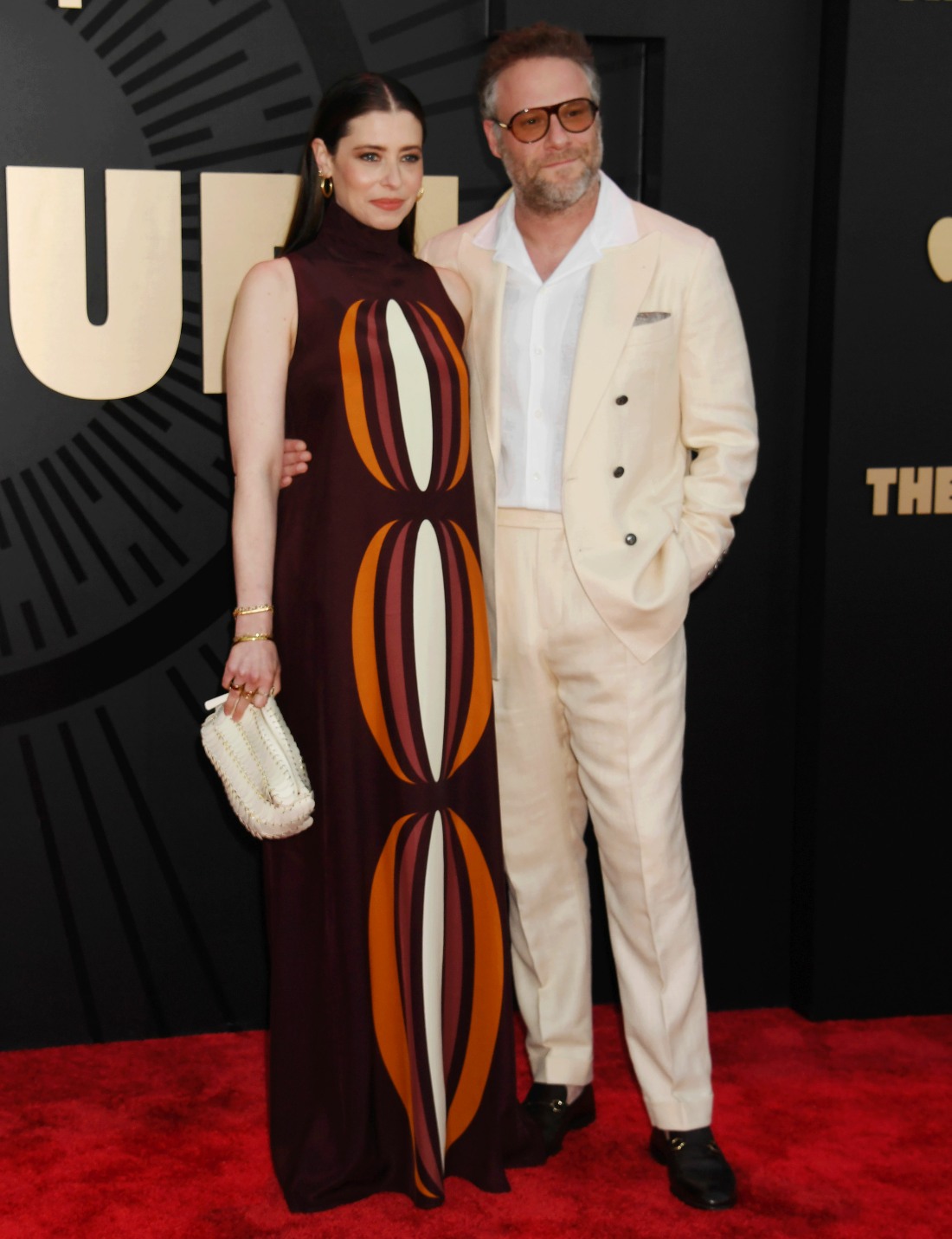
- LOS ANGELES, CALIFORNIA – MARCH 24: Lauren Miller Rogen and Seth Rogen attend the World Premiere of Apple TV+’s Series “The Studio” at Academy Museum of Motion Pictures on March 24, 2025 in Los Angeles, California.,Image: 980063626, License: Rights-managed, Restrictions: , Model Release: no, Pictured: Lauren Miller Rogen and Seth Rogen, Credit line: Jeffrey Mayer/Avalon


