
England were stifled creatively against Ghana as the Three Lions’ second-game curse struck again in perhaps its most frustrating iteration – but do Thomas Tuchel’s biggest worries lie at the other end of the pitch?
England have given away just 0.87xG across their opening two games and faced only a solitary shot on target against Ghana on Tuesday night.
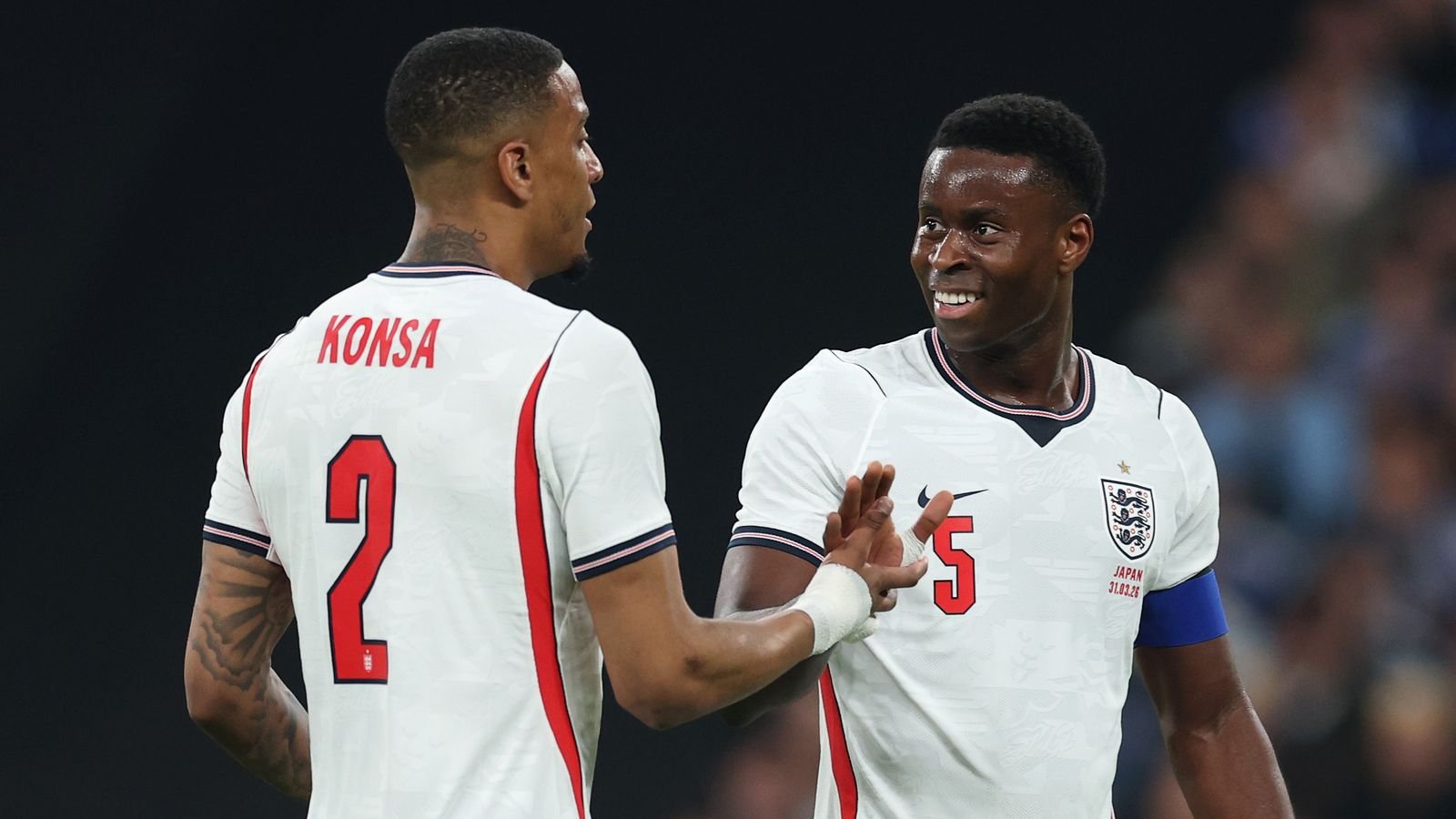
However, on another night the Three Lions could, and in reality should, have conceded a penalty for Ezri Konsa’s rash challenge on Prince Adu which was inexplicably ignored by the officials. The error was so glaring, it led Ghana boss Carlos Queiroz to sarcastically question whether VAR had been working at the time.
That after England had been somewhat rattled for 45 minutes against an ageing Croatia side before finding their feet through Thomas Tuchel’s half-time Churchillian team talk, though even then a few holes remained at the back. Without some injury-time Harry Kane heroics, they could have faced a nervy last few minutes in Dallas too.
From a team who did not concede a single goal in qualifying, the vulnerability against two sides no one is expecting to pull up too many trees at these finals is of concern, especially with time running out before tougher tests follow.
The injury to Reece James only adds to England’s issues, with the right-back potentially out for the rest of the tournament due to a hamstring issue.
The phrase ‘offence sells tickets, defence wins championships’ was originally coined as an American football idiom but in the homeland of this summer’s World Cup it is just as relevant to any knockout tournament.
Going back to the first 32-team World Cup in 1998, five of the seven winners since have kept five clean sheets and let in only a single goal in their remaining two matches. In 2010, Spain won each of their four knockout games 1-0 and scored only eight times in the entire tournament, conversely to their reputation at the time.
There is another way, with holders Argentina shipping eight goals in 2022, the most of any World Cup winner since West Germany in 1954 – but they did have arguably the best player of all time to call upon at the other end.
Defence has been the question mark hanging over England long before the tournament. The Three Lions’ world-class options are front loaded at the other end of the pitch and while there is individual quality at the back, there are undoubted limitations.
Tuchel knows the constraints of his backline picks and it was interesting that is where he made his two changes for the draw with Ghana in a game England were always likely to dominate with the ball.
“Djed Spence and Marc Guehi deserve to play, we have a little bit more speed and a little bit more profile in the players,” was the manager’s explanation.
While Guehi was assured over 90 minutes, Spence lacked the attacking presence Tuchel wanted. He was then hooked after 66 minutes for Nico O’Reilly, who could offer that offensive outlet but lacked the same pace and defensive awareness – directly leading to the counter-attack which should have seen Konsa punished. Most of Tuchel’s options in defence present that same kind of trade-off.
More concerning is that Konsa, alongside Reece James as the only defender to start both games and one of England’s more established regulars, has had shaky moments in both matches.
The Three Lions will, of course, defend differently if and when they come up against a bigger nation but, against Tuchel’s wishes, they spent much of that first half against Croatia sat in a low block – and found life tough going across defence and midfield.
Attacking-wise, playing without the ball can suit England by hurting opponents through rapid transition and quick vertical play, as the whirlwind second 45 minutes against Croatia showed.
But it does pose a problem of exposing a weak underbelly. “[Declan] Rice and [Elliot] Anderson are going to have to be outstanding and protect our defence,” said Sky Sports’ Gary Neville during England’s nervous opening game.
The head coach’s selections show he is still trying to find that right balance, though don’t do much to help build a settled backline.
But there are reasons for England, and Tuchel, to retain optimism that things can click. Of those previous seven World Cup winners, all have failed to keep a clean sheet in at least one group game and five conceded half or more of their entire tournament goals against before the knockouts.
This is the moment to fine tune things, iron out those early teething problems and, hopefully, begin to build that understanding at the back.
If England do the business against Panama and win Group L, they will face a third-placed team in the last 32 and have another opportunity to gel. But should a trip to Mexico follow in the last 16 and a match-up with Brazil in the quarter-finals, the time for testing will be over.
Ultimately, those question marks about England’s quality against the world-class frontlines they will face later in the tournament will remain regardless – and provide Tuchel some serious food for thought.


