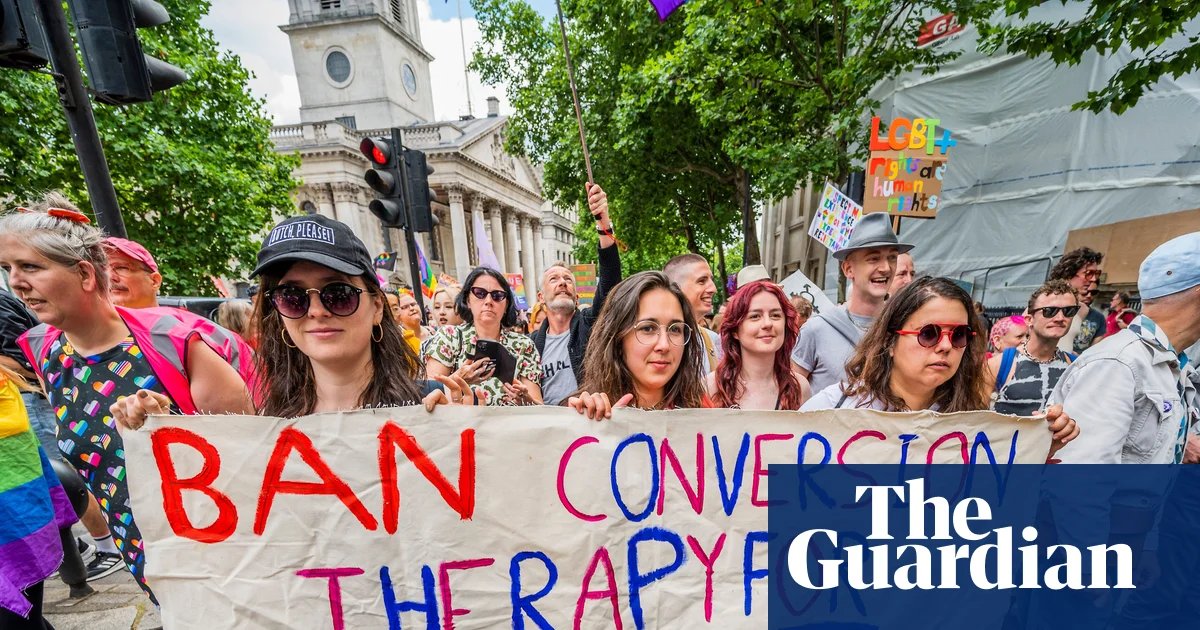
Perpetrators of “conversion therapy” against LGBTQ+ people could face up to five years in prison under proposals hailed as a “historic and long overdue” milestone by campaigners.
The government has published its draft conversion practices bill, which would ban abusive practices that aim to change someone’s sexual orientation or gender identity in England and Wales.
People found guilty of such abuse could face an unlimited fine and up to five years in prison.
Simon Blake, the CEO of Stonewall, said it was a “historic and long overdue step forward on the journey towards LGBTQ+ equality”.
He said: “LGBTQ+ people are not broken or in need of ‘fixing’. At a time when we’re seeing increased hostility towards the LGBTQ+ community, this draft bill is crucial in creating a safer and more inclusive future.”
It has been eight years since Theresa May first vowed to introduce anti-conversion practice legislation, but progress has been hampered by political dispute and U-turns.
Boris Johnson’s government planned to scrap the ban entirely, before announcing it would go ahead with only sexual orientation – not gender identity – included. This caused a big backlash and forced the government to cancel its international LGBT conference.
Opponents of the legislation say it could encroach on free speech and prayer, and prevent parents from discussing these issues openly with their children.
The plans were delayed under successive prime ministers, but Labour said in its manifesto that it was committed to pushing ahead with a ban.
The party said the criminal threshold under the new law would be “conduct that aims to change someone’s sexual orientation or transgender identity through abusive acts that seriously harm the victim”.
It also vowed that the legislation would include safeguards to protect “legitimate healthcare and therapy […] open conversations and free speech”.
Dr Hilary Cass, the author of the Cass review into gender identity services for children, said: “It is important healthcare professionals providing much needed holistic care to young people feel confident they are able to do their job without fear of litigation, and the minister has kept that important issue in mind at the same time as the need to protect vulnerable young people.”
The bill will also create a new civil conversion practice protection orderto pre-emptively support victims at risk of abuse – similar to protection orders for forced marriage and female genital mutilation.
Matthew Hyndman, a contestant on The Traitors earlier this year who is originally from Northern Ireland, said he had been told to “publicly repent” for being gay or leave his evangelical Christian community.
after newsletter promotion
“My vocation, my community, everything was so intertwined, particularly when you have a faith,” he said. “So for me to say no was to reject the belief of my entire community and walk away. I did, thankfully. I consider myself one of the lucky ones.
“A ban sends a really clear signal. Anyone who is currently experiencing this, anyone who has, they’re hearing from the highest point that this is wrong and that it should not be happening to you. You’re not broken, you don’t need to be cured.”
Galop, the anti-LGBT abuse charity, said it had identified 371 cases involving conversion practices between 2022 and 2025. Jasmine O’Connor, the co-CEO at Galop, said the charity “frequently witnesses the devastating impacts caused by conversion practices” and the ban was “urgently needed”.
The government said existing laws that cover domestic violence, coercive control and communications offences do not adequately address the unique nature of abusive conversion practices.
Olivia Bailey, the minister for equalities, said: “Legal loopholes have left LGBT+ people vulnerable to these harmful acts which is why we must legislate.”