Our green and pleasant land is sizzling. This week, millions of us across the UK are baking in unprecedented heat. The Met Office has issued a rare red weather warning from 9am today in parts of southern Wales, and central and southern England. The temperature record for June of 35.6C is almost certain to be broken; Bristol is forecast to hit an alarming 39C tomorrow.
In the heat, the country’s infrastructure is straining: millions of homes are overheating, rail operators have warned against all but essential travel, and hospital admissions are set to surge. The Climate Change Committee concluded last month the UK is built for a climate that no longer exists – and warned today on the country’s policies towards achieving net zero.
But it is not just humans who are struggling. The UK’s landscapes and wildlife have been shaped by – and have adapted to – thousands of years of predictable, moderate weather patterns. Now, Britain’s temperate rainforests, chalk streams, moorlands and broadleaf forests are facing extremes.
For today’s First Edition, I spoke with Craig Bennett, CEO of the Wildlife Trusts, about the pressure rising temperatures are placing on nature in the UK, and what we can all be doing to support wildlife during the heatwave. But first, the headlines.
Five big stories
-
UK news | Searing heat has swept the UK with schools, hospitals, transport networks and water companies struggling to cope with the extreme temperatures caused by climate breakdown.
-
UK politics | Keir Starmer has met Andy Burnham for the first time since the Makerfield byelection in what sources said was a “frosty” meeting to thrash out a transition of power.
-
US news | Marco Rubio is to meet Gulf allies in an attempt to reassure them that the US remains committed to their security and the 60-day ceasefire deal struck with Iran last week will not embolden Tehran.
-
Europe news | Forty people have drowned while swimming in unsupervised areas across France in recent days, as people across the country sought respite from a record-breaking heatwave.
-
UK politics | Nigel Farage has said his £5m gift from a crypto billionaire is “not any of your business” as it was given unconditionally to be spent on anything from Ferraris to gambling on horses.
In depth: ‘If we think this is bad now, we ain’t seen nothing yet’
Last week, The Major oak – one of the UK’s most famous trees – was pronounced dead. The enormous, sprawling oak has stood in Sherwood forest in Nottinghamshire for between 800 and 1200 years, and is fabled to have sheltered Robin Hood and his outlaws. Its cause of death is complex, say experts: well-intentioned conservation efforts to help the tree likely contributed to its demise. But the RSPB, which managed the ancient tree, said that extreme heat and drought are also to blame. It’s a symbol of the challenges native species are facing nationwide.
“If we think this is bad now, we ain’t seen nothing yet,” says Bennett, who represents a federation of 47 independent wildlife conservation across the country.
A single mature oak tree can support more than 2,300 insect, fungi, bird and mammal species. But not when it is dead, and worrying preliminary research on Britain’s forests found evidence that many ancient woodlands are failing to regenerate. While the causes are still being studied, climate change is believed to be a major driver.
Says Bennett: “Climate change is causing stress for all kinds of species. Most have not evolved in the conditions we are now experiencing.”
Climate change is by no means the only threat to native biodiversity, but there are already clear signs of disruption to the seasonal patterns upon which wildlife relies. Nature needs predictable cycles: birds hatch their eggs in time for plentiful insects, small mammals rely on autumn fruit to get them through winter. If this does not happen, they do not survive.
Met Office scientists are now predicting we’ll be seeing 45C by 2056. We are already seeing the consequences. When temperatures surpassed 40C for the first time in the UK in July 2022, there were reports of swifts falling from the sky in London. Dehydrated fox cubs, baby birds and hedgehogs were brought to the RSPCA, while many nature reserves “went silent” as insects and other species took shelter, which is only the most temporary of salves. The lack of water that year meant that many trees dropped their leaves during the summer instead of the autumn.
Changing landscapes
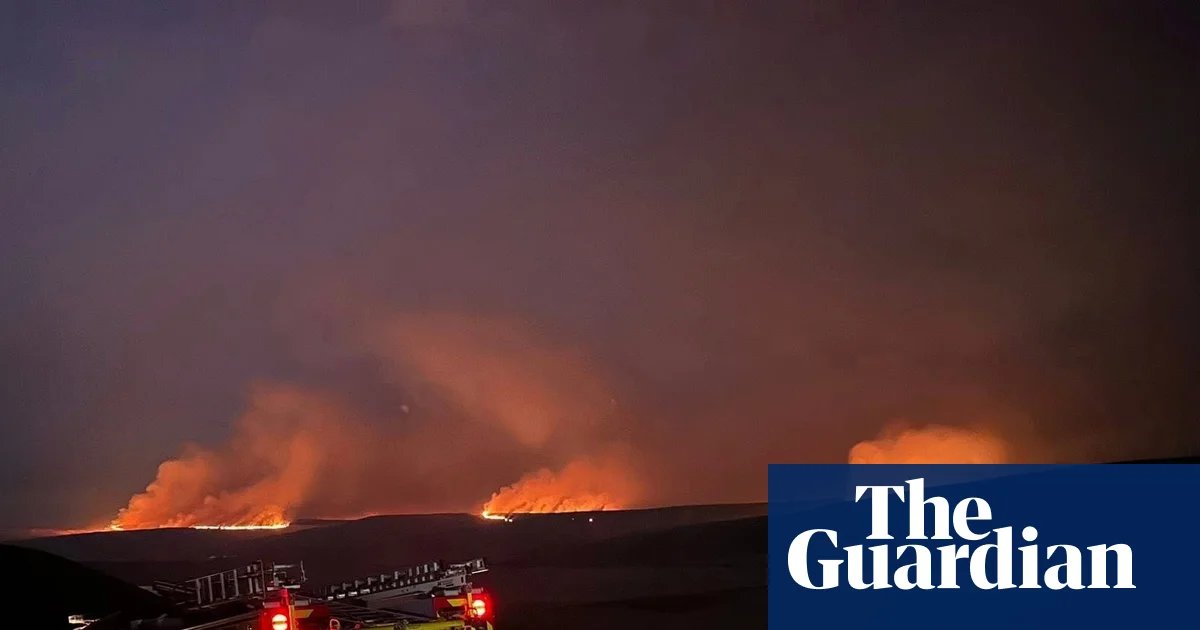
Wildfires have become more regular in recent years. British landscapes have been shaped by rain and mild temperatures, forming a mosaic of peat bogs, heathland, forests and farmland. Our climate has traditionally fed a lush, green land, and wildlife that lives among it. As hotter and drier conditions become more common, this is set to change. Without rain, formerly verdant landscapes turn brown and yellow – primed to burst into flames.
2025 was a record year for blazes, with the largest around Dava in the Scottish Highlands – later described as the country’s first ever megafire. Wildfires are devastating for flora and fauna, burning through habitat, destroying seed banks in the soil, and killing species that cannot escape.
“It’s really hard for wildlife to recover after a blaze, particularly in areas that are seeing repeated fires”, says Bennett. “If you got a heatwave like the one we are having this week and it lasted two months, what would happen? The countryside would be tinder dry.” It hasn’t always been this way.
Britain has lost 90% of its wetland habitats in the last 500 years. To protect against wildfires, far more energy needs to be put into keeping water within British landscapes by restoring and creating new wetlands, argues Bennett. The reintroduction of beavers in parts of the UK have already helped to do this keeping flooded areas wetter for longer. In turn, the habitat protects native species and can help recharge aquifers in water-stressed regions. But this needs to be done at a much greater scale.
“The Westminster government is always very excited about creating new forests,” says Bennett. “But I want us to become obsessed with creating thousands of wetlands across the country and start getting politicians competing over how many they can create, not just trees they can plant.”
Species introduction
In the long term, some conservation groups believe that governments should consider more radical measures to enhance nature’s resilience: if a plant or animal species begins to struggle because their habitat becomes too dry or too hot, move it outside its historic range. The policy known as “assisted migration” is already in use in parts of the US and Canada: sensitive tree species are being planted higher up mountains to help them survive.
Alongside this, some environmentalists support the introduction of non-native species that are better adapted to the climate of the future. Forestry England have put together a list of species that they believe are likely to do well in the future climate, which includes some natives like the sycamore and rowan, and non-native species like the Corsican pine. But this could fundamentally change the country’s landscapes over time if it was done at scale and risks the introduction of invasive species that cause further harm.
“First and foremost, we should be doing everything we can to help our native species,” argues Bennett. “There are big debates in the conservation movement about whether we should begin introductions from Mediterranean climates. We might also need to consider helping species from southern England to move north, for example, and make habitats better connected to allow them to do that.”
In it together
Everyone can help wildlife in periods of extreme weather. Providing a source of water is absolutely essential, says Bennett, whether in the form of a garden pond or even in a bucket that birds and invertebrates can access. Trees and scrubland are important for shelter, providing areas that animals can use to hide from the heat until temperatures drop.
“Having vegetation on buildings is helpful. People have a love-hate relationship with ivy, but it actually helps cool buildings. And of course, it’s a habitat for bugs that live in it and then birds that feed on them. Also, not cutting your lawn too short is helpful. It will probably be more resilient in hot weather if it’s longer, and that’s good for lots of species,” Bennett says.
In prolonged heatwaves, some conservation groups suggest leaving food out for struggling animals to feed on. For example, slugs and snails are harder for creatures like hedgehogs to find in high temperatures.
Whether it is this heatwave or the next, Bennett says, it is time for the UK to get serious about the impact of rising temperatures on nature: “We’re heading to a much hotter future where heatwaves like this will become the new normal. We need to start planning now. Nature can be one of our greatest allies.”
What else we’ve been reading
-
Megha Mohan visited houses in Kerala designed entirely around the needs of women’s bodies for this fascinating piece. Libby
-
Leah Harper spent a week wearing different kinds of wigs to explore whether their glamorous rebranding is justified. Patrick
-
Former footballer and Euros 2024 tournament director Phillip Lahm has written about how the Tartan Army’s joyous takeover of the World Cup makes the case for an expanded tournament. Libby
World Cup 2026
On the pitch
England 0-0 Ghana | England failed to seize the initiative in Group L as they were held to a draw by a Ghana side whose progress is also all but assured.
Panama 0-1 Croatia | Luka Modric 200th cap for Croatia was a victorious one after Ante Budimir’s goal secured a 1-0 win over Panama, the solitary goal scored all day in Group L.
And the rest | Cristiano Ronaldo scored twice as Portugal rediscovered their goal scoring touch with a 5-0 trouncing of Uzbekistan, and in Mexico, Colombia secured their passage from Group K with a well-deserved 1-0 win against DR Congo.
Off the pitch
Racism | Pundit and former Yugoslavia international Rade Bogdanovic has caused outrage after saying that “Black players lack the concentration to last more than 60 to 80 minutes” during Belgium’s game against Iran on Sunday.
‘Overruled’ | The Guardian’s Matt Hughes reports that Fifa leadership vetoed US officials who opposed dynamic pricing for World Cup tickets. “Fifa is understood to have ruled that the tournament was a once-in-a-generation opportunity to maximise revenues,” he writes.
Take your pick | Tonight sees the start of the final round of group games, so here’s your reminder to try our Bracketology game and map out how you think the rest of the tournament will go.
Today’s Fixtures
Bosnia and Herzegovina v Qatar, 8pm on ITV
Switzerland v Canada, 8pm on ITV
Morocco v Haiti, 11pm on BBC
Scotland v Brazil, 11pm on BBC
Czechia v Mexico, 2am on BBC
South Africa v South Korea, 2am on BBC
Sport
Cricket | Ben Stokes returned to the England set-up on Tuesday after talks with Brendon McCullum before training. McCullum said they are still “very aligned” ahead of a third Test against New Zealand.
The front pages
“Schools, rail and hospitals suffer as heat engulfs UK”, is the Guardian’s splash today, while the i Paper says “Britain set to break 50-year heat record”, Metro has “Killer heat warnings” and the Mirror goes with “Meltdown”.
The FT leads with “Starmer risks clash with Burnham over defence investment blueprint”, the Times says “Starmer and Burnham at odds over defence plan” and the Telegraph’s take is “Burnham: I’ll boost cash for defence”.
The headline in the Express is “Don’t let them get away with Brexit sell-out”. And on the World Cup, the Sun splashes “Ghana be alright”.
Today in Focus: The Latest
Europe battles record-breaking heat: is this the new normal?
Europe is dealing with a debilitating heatwave, with schools closed, trains cancelled and France holding an emergency meeting after heat-related deaths.
António Guterres, the UN chief, is urging the world to act on fossil fuels as the continent braces for record-breaking heat.
Lucy Hough speaks to Europe environment correspondent Ajit Niranjan.
Cartoon of the day | Ben Jennings
The Upside
A bit of good news to remind you that the world’s not all bad
Among the modern dating landscape of myriad apps, turning to literature in your search for love may sound a distinctly dated concept. Inspired by newlyweds Dua Lipa and Callum Turner’s restaurant meet-cute (midway through the same novel, they started talking), other couples share how books brought them to the loves of their life, from book-club beginnings to intimate inscriptions.
“An attractive male who likes books – what was there not to like?” says Lisa Oakley, of her classroom crush turned husband, Andy Poplar.
Sam Fern and Clíodhna Conboye met at an under-attended Waterstones event. “He liked these books that were a huge thing to me,” says Clíodhna. For the next month they went to three book-based activities a week, and later set up a book club together.
Sign up here for a weekly roundup of The Upside, sent to you every Sunday
Bored at work?
And finally, the Guardian’s puzzles are here to keep you entertained throughout the day. Until tomorrow.