When Comet 3I/ATLAS entered our solar system last year—only the third known interstellar object to do so—astronomers took notice. And so did scientists involved in the search for extraterrestrial intelligence (SETI). These researchers were curious whether this particular interloper may have been linked to aliens.
When astronomers first discovered 3I/ATLAS in July 2025, the icy body was traveling at an impressive speed of about 137,000 miles per hour. Researchers later discovered that it was “bursting with methanol” and that its coma—the vapor envelope that formed as the icy object neared the sun—was full of frozen carbon dioxide. Both observations provided astronomers with clues about the comet’s cosmic origin. All signs suggested the interstellar object was natural, but some astronomers took the opportunity to look for so-called technosignatures, particularly radio signals that could be produced by something artificial.
“Eventually, our own Voyager spacecraft will be extraterrestrial artifacts in other stellar systems,” said Sofia Sheikh, a research scientist at the SETI Institute, in a statement, referring to the twin interstellar probes that NASA launched in 1977. “Given that, it is important that we understand the natural distribution of interstellar objects so that we will be able to identify any anomalies that could one day be signs of an artificial interstellar object.”
On supporting science journalism
If you’re enjoying this article, consider supporting our award-winning journalism by subscribing. By purchasing a subscription you are helping to ensure the future of impactful stories about the discoveries and ideas shaping our world today.
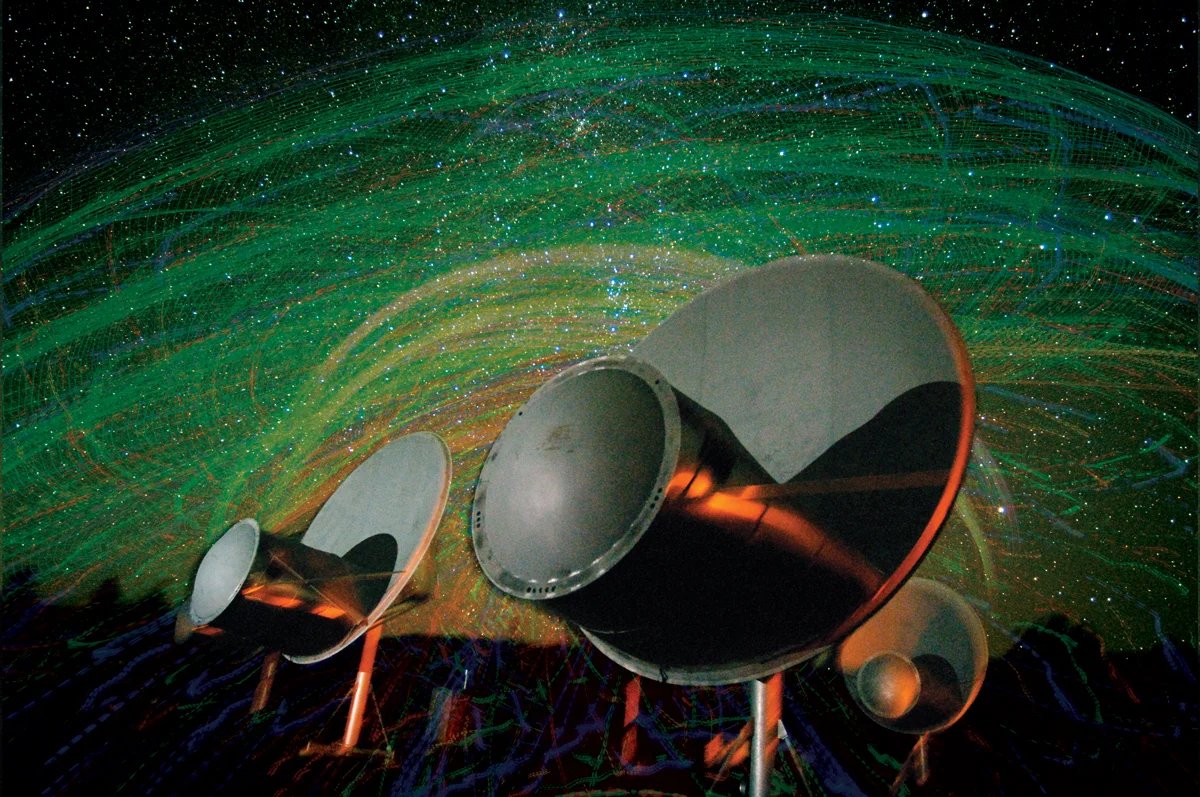
To help rule out the possibility that 3I/ATLAS contained some kind of alien technology, Sheikh and her colleagues tracked the comet with a radio telescope, the Allen Telescope Array (ATA), and looked for narrowband radio signals—“the kind that can only come from technology,” Sheikh says. “After analyzing several hours of data across the full frequency range of the ATA,” Sheikh and the team did not see any signals, or technosignatures, associated with 3I/ATLAS, she says.
Sheikh wasn’t surprised by the results. “All of the evidence that the global scientific community had found before, during and after our observations indicated that 3I/ATLAS was an icy rock from another solar system—extremely cool from a planetary science perspective but not in any way a technological artifact,” she says.
That doesn’t mean the study wasn’t valuable. For one, null results—in this case, findings that are not unusual or revelatory—are still useful. And Sheikh notes the investigation was good practice for the next interstellar object.
“By better understanding natural objects like 3I/ATLAS and practicing our methodologies on real-world events, we are better prepared to observe and analyze other interstellar objects, including potentially artificial objects, in the future,” she says.
The new study was published on Wednesday in the Astronomical Journal.
It’s Time to Stand Up for Science
If you enjoyed this article, I’d like to ask for your support. Scientific American has served as an advocate for science and industry for 180 years, and right now may be the most critical moment in that two-century history.
I’ve been a Scientific American subscriber since I was 12 years old, and it helped shape the way I look at the world. SciAm always educates and delights me, and inspires a sense of awe for our vast, beautiful universe. I hope it does that for you, too.
If you subscribe to Scientific American, you help ensure that our coverage is centered on meaningful research and discovery; that we have the resources to report on the decisions that threaten labs across the U.S.; and that we support both budding and working scientists at a time when the value of science itself too often goes unrecognized.
In return, you get essential news, captivating podcasts, brilliant infographics, can’t-miss newsletters, must-watch videos, challenging games, and the science world’s best writing and reporting. You can even gift someone a subscription.
There has never been a more important time for us to stand up and show why science matters. I hope you’ll support us in that mission.