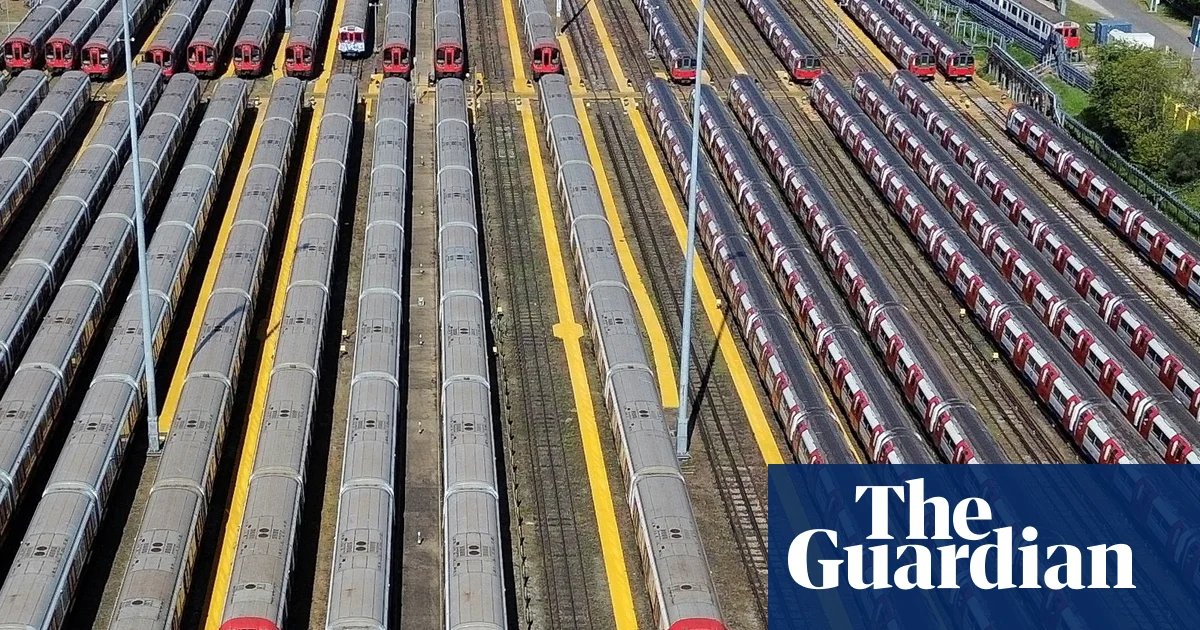
The strike on the London Underground will go ahead on Tuesday after a day of talks failed to avert industrial action.
About half of London’s tube drivers will take action, bringing widespread transport disruption to the capital. A second strike is planned for Thursday.
Hopes of a resolution were high after previous threatened action was suspended in May. However, despite 11th-hour negotiations at Acas between RMT union representatives and Transport for London (TfL), RMT drivers will strike on Tuesday and Thursday in a dispute over the introduction of a four-day working week.
TfL urged customers to check before travel, although it hopes to run about half of all tube services. Drivers in Aslef, a slight majority of those working on the tube, have welcomed the four-day week proposals and will not be on strike, limiting the impact of the RMT’s action.
Nonetheless, no service is expected on the Circle or Piccadilly lines, or in central sections of the Metropolitan and Central lines, during the strike. Tube services will also finish earlier and later than usual on functioning lines.
Other rail services, including the Elizabeth line, the London Overground and the Docklands Light Railway, will run as normal. Buses will operate as usual but are likely to be very busy and slowed by additional traffic on the roads.
The RMT union blamed TfL’s “refusal to engage meaningfully” with concerns over the proposed working patterns. A spokesperson said: “Despite our best efforts in ACAS talks, TfL have failed to provide assurances on our members deeply held concerns around fatigue, reduced flexibility, shift lengths and the impact these proposals could have in a safety-critical role like tube driving.
“We remain available for meaningful talks, but strike action tomorrow will now go ahead.”
A TfL spokesperson said: “It is bitterly disappointing that despite five hours of meetings with the RMT at ACAS and repeated assurances that the four-day working week proposals will remain voluntary, RMT has chosen to continue with its disruptive strike action. We will do all we can to provide as much service as possible during this action.”
TfL’s chief operating officer, Claire Mann, said: “Our proposals are, and have always been, clear. The completely voluntary four-day week has been designed to improve work-life balance and any of our tube drivers who do not wish to take up the new proposed way of working and associated changes to working arrangements can remain on a five-day working pattern.”
The strikes will take effect for 24 hours from 00.01 on both Tuesday and Thursday – potentially slightly less disruptive than the previous walkouts that ran over two 24-hour periods starting from midday, affecting four days in April.
Business groups said that even the threat of strikes had already been disruptive. Ed Richardson of BusinessLDN said: “For many businesses that rely on people visiting in person, the impact of these strikes will have already been felt through cancelled bookings and people changing their plans.
“We urge both sides to reach a sustainable agreement to put an end to the damaging uncertainty hanging over businesses and London’s economy.”