Things are bad out there.
Despite 2026 shaping up to be a great year when it comes to actual games, it couldn’t really be worse for the people that make them or the industry as a whole. Hardware prices keep going up, layoffs have shown no signs of stopping, and even big-budget titles backed by large corporations can feel precarious.
That all makes it a somewhat awkward time for Summer Game Fest, a weeklong spectacle of events that kicks off on Tuesday. Splashy announcements won’t do much to stem the negative sentiment around the industry. But given the challenging state of console gaming in particular, both Microsoft and Sony have an opportunity to show players just why they should buy these increasingly expensive boxes.
Let’s start with Sony. On June 2nd, the company will livestream its latest State of Play with “over 60 minutes of news and announcements for games coming to PS5,” headlined by Insomniac’s Wolverine, which launches in September.
Sony is dealing with two major issues at the moment. One is that the PS5 is simply too expensive: A base console cost $499 at launch, and it has since jumped to $649, while the most expensive model is a whopping $899. That steadily rising price has had a major impact, with PS5 sales dropping by nearly 50 percent year over year. Sony has recently shifted its strategy back to focusing on console exclusives, after a few years of dabbling in PC gaming, and it’ll need a few big ones to sell people on a PS5 at its current price point.
The other issue is the games themselves. Like much of the industry, Sony made a big bet on live-service games in an attempt to emulate the enduring, lucrative success of online behemoths like Fortnite. But the results have been disastrous for the industry at large and Sony in particular. The company’s largest live-service investment was spending $3.6 billion to acquire Destiny developer Bungie in 2022. Since then, Bungie has been hit with multiple rounds of layoffs, the studio announced plans to end support for Destiny 2, and it released Marathon, a hardcore online shooter that’s struggling in a market so volatile that even Fortnite is having issues.
The problem is not just that there is only so much room for games in the live-service space. It’s also that Sony largely built its modern reputation on lavish single-player titles. People buy a PlayStation to play God of War or The Last of Us, not the ill-fated Concord or whatever Fairgames is. The State of Play needs to make it clear that Sony has moved on from those mistakes, and is ready to focus on what it does best. A Wolverine game from the team behind Spider-Man is a good start, and we already know The Last of Us studio Naughty Dog is working on a new sci-fi universe. But Sony will need more than that to reestablish PlayStation as the home of these premium experiences.
Xbox, on the other hand, has more existential concerns. Yes, it has had to contend with price hikes like everyone, both for its hardware and its Game Pass subscription service. (Though that recently got a rare price cut.) But the main issue with Xbox is that nobody really knows what it is. Microsoft spent years diluting the brand through ill-conceived marketing campaigns, multiplatform launch strategies, and confusing hardware initiatives.
After an unexpected executive shakeup in April, things seem to be changing — we just don’t know how much yet. New Xbox CEO Asha Sharma has been doing and saying the right things so far, scrapping things players hate and seemingly listening to what they want out of the brand. Many of these changes, like an all-caps rebrand of the word Xbox, are entirely superficial. But they at least seem to signal that a bigger, positive shift is coming.

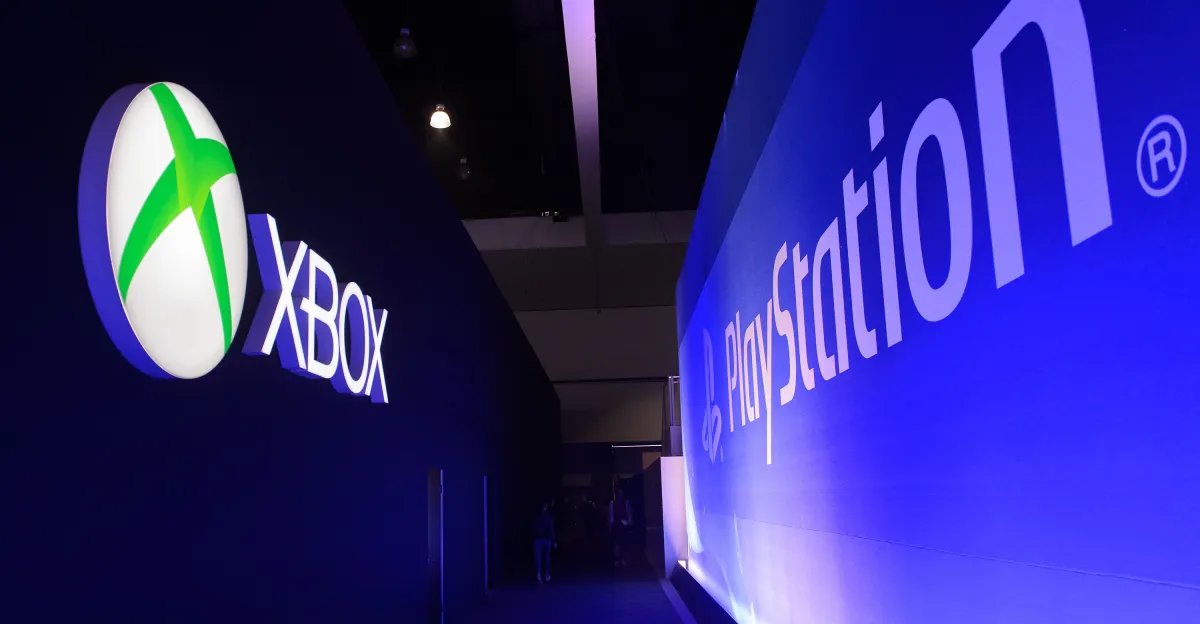
Photo by Vjeran Pavic / The Verge
SGF would be an ideal place to show that. Microsoft’s event — dubbed the Xbox Games Showcase, and airing on June 7th at 1PM ET — quite simply needs to have games, and games that you can only play on an Xbox. The company has actually been on a fairly strong run recently, launching everything from the open-world racer Forza Horizon 6 to the goofy competitive game Kiln. But if you’re going to hail this moment as the “return of Xbox,” which Sharma has done, you’re going to need a lot more than that to make a statement. That means the big games we already know about — Fable, Gears of War: E-Day, the Halo remake — as well as surprises.
Xbox and PlayStation aren’t the only ones struggling right now. Virtually everyone, from major publishers to indie studios, is feeling the crunch in some way. Nintendo, which often operates in its own parallel universe, has had to alter its approach to deal with these outside forces, while Valve has similarly seen its grand hardware plans disrupted. And I would be remiss if I didn’t mention the elephant in the room, Grand Theft Auto VI, which launches in November and will likely lead to some kind of surge of console sales, which is a temporary relief.
But the stakes are particularly high for Sony and Microsoft. We’re six years into the current generation of game consoles, which is typically when those devices have hit a stride and people start wondering what comes next. And while there has already been talk of a PS6 and Xbox’s “Project Helix,” there’s also very little buzz around either, which is not a surprise given how things are going right now. Just thinking about how much a next-generation game console might cost is enough to scare off anyone.
That’s why the console makers need to spend their brief windows at SGF focused on the here and now: There’s no getting around the fact that everything is more expensive, but there’s at least a chance to prove that those prices are worth it.