The 26-man squad has been confirmed. The disappointing emails and uplifting WhatsApp videos have been sent. And so, the US men’s national team’s World Cup campaign begins in earnest.
Much about the co-hosts’ impending tournament feels unrefined, although that may have been inevitable. Hosting the World Cup ensures a spot in the 48-team field, but robs a team of the qualifying gauntlet that can clarify who can handle the pressure and identify a group’s core. These issues were further compounded by the mid-cycle appointment of Mauricio Pochettino, with his initially thin grasp on his player pool leaving most of his tenure to assess individuals before he could refine a collective.
We’re unlikely to see an A-team start both friendlies against Senegal (Sunday in Charlotte, North Carolina) and Germany (6 June in Chicago), and Pochettino won’t want to reveal his entire gameplan before the group-stage opener against Paraguay on 12 June.
“I’ve thought of it a little bit,” Pochettino said Thursday when asked if he knows his best lineup. “I am honest. The only thing that can change is that sometimes watching them in training, I think, ‘Oof. I was thinking in that but now I don’t see.’ [I have had the XI in mind since] before March. But we’ll see. I will let you know.”
These shifts will be closely studied by the rest of Group D as they finalize their preparation. Still, a team’s final tune-ups can be crucial for refining rotations and building momentum.
Can Christian Pulisic break through?
This is arguably the top priority. Pulisic is in a stretch of scoring futility that would make Job blush.
From 1 January onward, Pulisic took 38 shots for Milan without a goal. In the USMNT’s March friendlies, he tried another six attempts without rippling the net. All told, he has played 1,164 consecutive minutes for club and country without scoring – just shy of 13 full matches.
Surely, his dry spell has to snap before the tournament commences. And surely, it can be done without a second ill-advised experiment like the one against Portugal, when Pochettino gave Pulisic a half-time hook after he struggled in a rare start at center forward.
Although Pochettino alternates between deploying a pair of wingers or two attacking midfielders in the channels, either approach can suit Pulisic. He has been a mainstay at left wing for the US, scoring most of his 32 international goals in that role. Since joining Milan, he’s been a threat as the right-sided attacking midfielder, getting more looks in width of the goal without needing to set up a shot with his dribble.
He’s one of very few players who could start both games – unless he scores against Senegal, at which point rest may be more important if the slump has ended.
What’s the plan for Alex Freeman?
While Pochettino contends that wing-backs are hardly defenders – a based take, having watched many wing-backs struggle when retreating to a full-back’s station – US Soccer listed 10 defenders in its squad announcement. Initial reactions (including this author’s) assumed that was a sign that this team will play with three center-backs and a pair of wing-backs rather than the program’s decades-long preference for a back four.
In reality, both base shapes have operated very similarly under Pochettino.
In possession, the team advances upfield in a 3-2-5. Both wide defenders are given license to join the attack. In a back four, this usually means one of the defensive midfielders drops deep to provide defensive cover, while a nominal winger or attacking midfielder withdraws slightly to accommodate the overlap. Out of possession, the US usually shift to a 4-4-2 or a 5-3-2, with Pulisic staying level with his striker and the other winger or attacking midfielder joining the holding midfielders to fortify the center of the field.
By and large, nine of the selected defenders have obvious roles to fill in these shapes: six among the stay-back brigade, and three upfield advancers. The sole exception is Freeman, who has proved dependable in both approaches to transition phases.
At last summer’s Gold Cup, Freeman mostly worked the overlap on the right, playing all but three minutes of the USMNT’s six-match campaign. That role is the natural fit for Sergiño Dest, who has reached the World Cup in good form after logging more than 2,000 league minutes for just the second time in his eight-year career. Freeman started three of Villarreal’s final La Liga games at right-back.
Uncapped at this time last year, Freeman has since become one of Pochettino’s most trusted charges. He’s one of just four players to appear in all eight post-Gold Cup friendlies, along with Max Arfsten, Cristian Roldan and Folarin Balogun.
That utilization could prove handy as Pochettino and his staff continue to assess Chris Richards. The lead US center-back suffered an ankle injury in Crystal Palace’s penultimate match, an unused sub in their midweek Conference Final triumph. If Richards is unable to play, Freeman will almost certainly be more valuable as a wide center-back than as Dest’s deputy.
Who’s the super-sub?
The expanded 26-man squad affords teams greater flexibility to pick specialists or players who are unlikely to be 90-minute options. Game situations always have the most outsized influence on who and when checks in from the bench, but these friendlies may show a player or two who’s primed to serve as a super-sub.
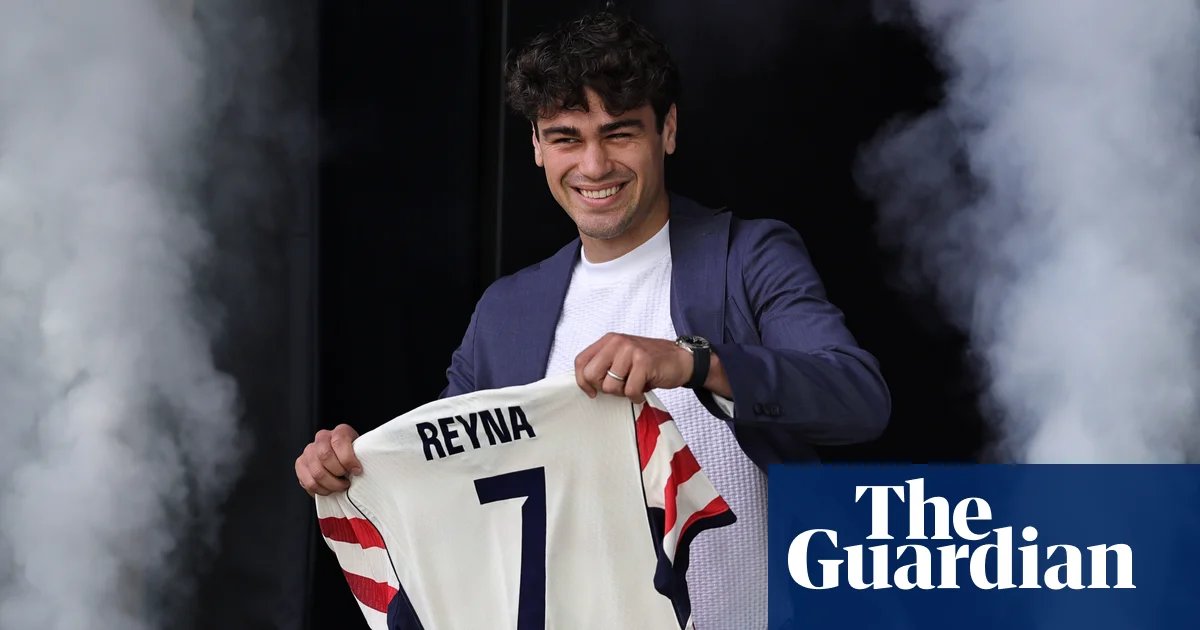
The most obvious candidate is Gio Reyna. His late-summer move to Borussia Mönchengladbach did little to help his playing time: he logged 520 Bundesliga minutes across 19 games (four starts). That’s narrowly ahead of how Borussia Dortmund deployed him in 2024/25 (350 minutes).
The last time Reyna exceeded 625 league minutes in a season: 2020-21, when he earned 1,976 minutes playing alongside Erling Haaland, Jude Bellingham and Jadon Sancho.
There’s a scenario in which Reyna logs more minutes in a hypothetical quarter-final run – remember, there’s a round of 32 now – than he did in a club season. But it’s more likely he’ll be among the first options off the bench to change a game against tiring defenders.
Striker is another area to watch, with Balogun likely to start whenever available. The Monaco forward has rare quick-turn-and-shoot accuracy and can maneuver in transition at a similar pace to his most fleet-footed teammates. Without Patrick Agyemang, who logged the most minutes up top of any player under Pochettino but missed out on the World Cup with an achilles injury, Ricardo Pepi and Haji Wright will jockey to be the chief alternative. Wright saw more action after the Gold Cup, with 132 minutes to Pepi’s 37, but Pepi’s pressing led to a consolation goal against Belgium.
Entering the friendlies, Wright has scored seven goals from 20 caps; Pepi arrives with 13 international goals from 35 caps. Neither is unproven nor a wild card for this level. A timely goal or thankless work in buildup could earn them more minutes when crunchtime comes.