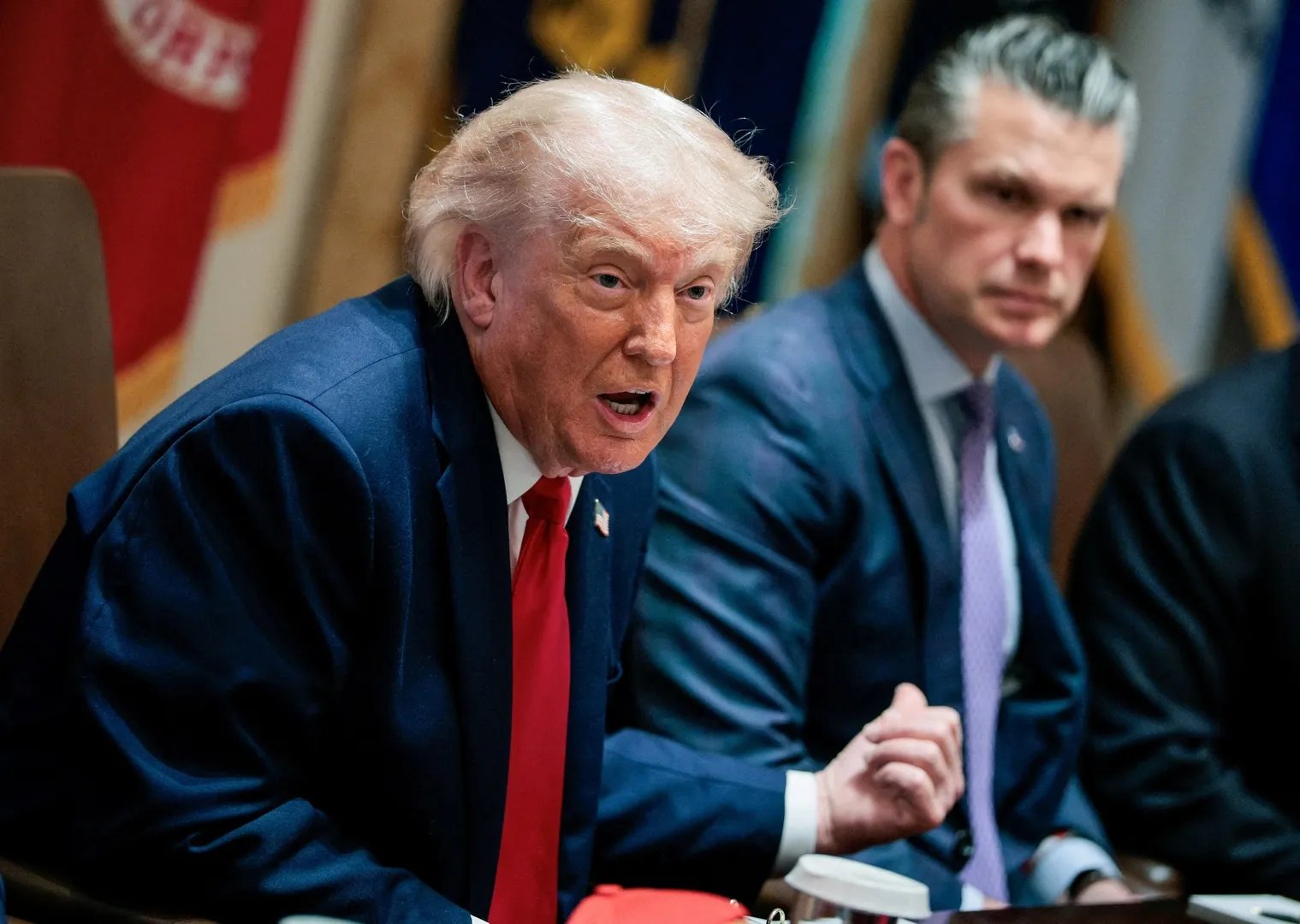
A United States federal judge has temporarily blocked President Donald Trump’s nearly $1.8bn “anti-weaponisation fund” to compensate victims of alleged government “lawfare”.
On Friday, US District Judge Leonie Brinkema of the Eastern District of Virginia blocked the Trump administration from “taking any further action” to set up or operate the fund while she hears legal arguments.
Recommended Stories
list of 4 itemsend of list
The judge, who was nominated to the bench by President Bill Clinton, scheduled a June 12 hearing about whether to extend the order blocking payouts.
The Department of Justice announced the fund last week as part of an agreement to settle a lawsuit brought on behalf of Donald Trump, in his personal capacity, against the Internal Revenue Service (IRS).
He had initially sought $10bn in damages, stemming from allegations that Charles Edward Littlejohn, a former government contractor, leaked his private tax records to journalists. Though Littlejohn was not an IRS employee, Trump had argued that the tax agency should nevertheless be held accountable for the contractor’s actions.
The lawsuit and its settlement have raised concerns about conflicts of interest within Trump’s government, as the president was suing an agency under his oversight, represented by lawyers in his administration.
Friday’s ruling came in response to a lawsuit filed by Democracy Forward, an advocacy group representing those who believe they would be perceived “by the Trump-Vance administration as ideological or political opponents”.
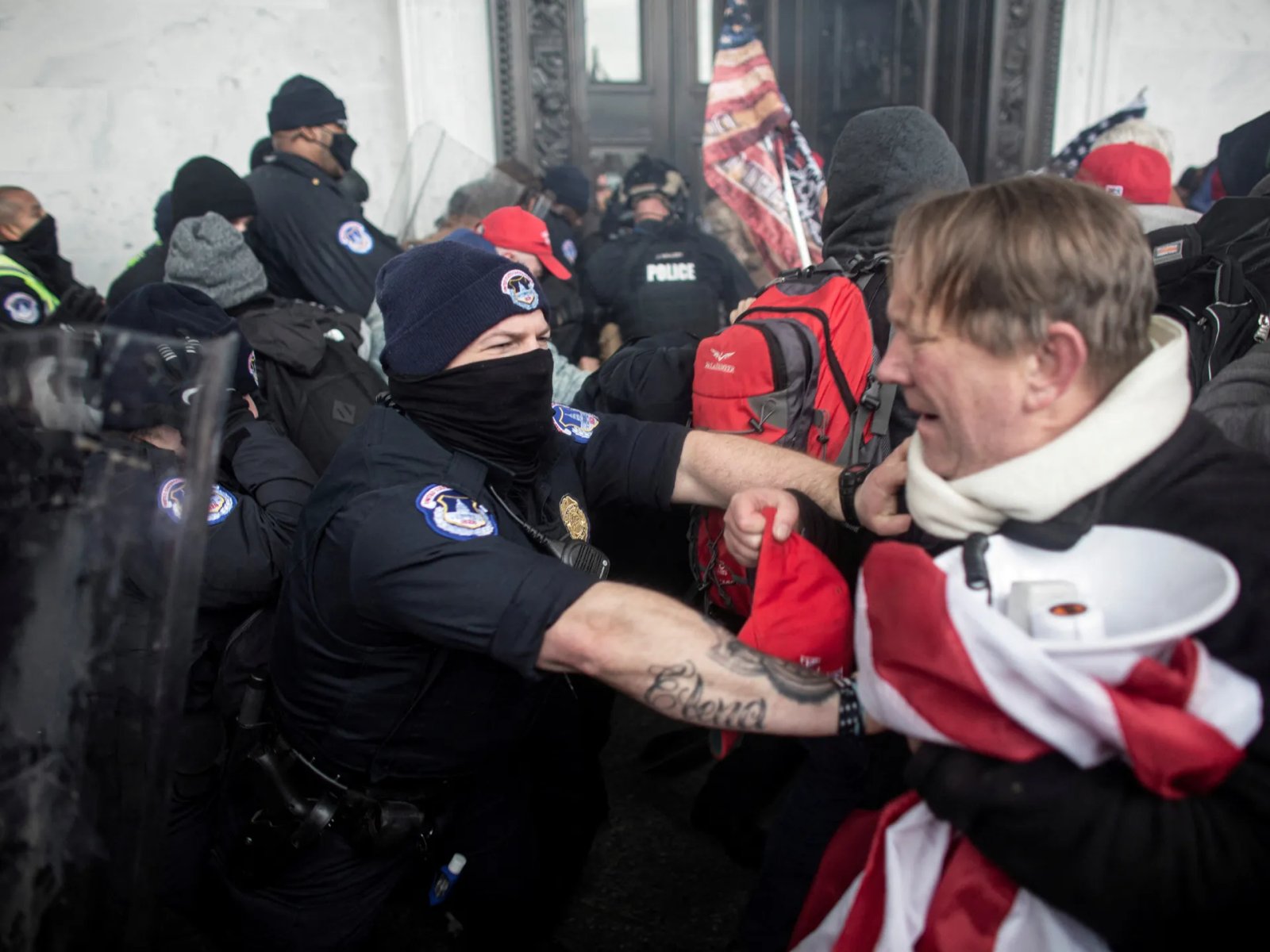
Among the group is a former assistant US attorney, Andrew Floyd, who served as a prosecutor on cases related to the riots on January 6, 2021, when Trump supporters stormed the Capitol.
The suit claimed that the fund is a partisan tool designed to award payouts to Trump supporters and not those who are seen as adversarial to the president.
Following suit
Floyd’s lawsuit is not the only legal challenge to the “anti-weaponisation fund”. There are at least two other complaints.
One was brought by former Capitol Police officer Harry Dunn and Metropolitan Police Department officer Daniel Hodges, who alleged that Trump created a “taxpayer-funded slush fund to finance the insurrectionists and paramilitary groups that commit violence in his name”.
Meanwhile, the watchdog group Citizens for Responsibility and Ethics (CREW) also filed a lawsuit in Washington to block the fund. Both cases are being processed in federal courts in Washington, DC.
“Over and over again, Trump has acted illegally without regard for Congress, the courts or the public, and treated the public’s money like his personal piggy bank. This slush fund is just the latest example,” Donald Sherman, CREW’s president, said in a news release.
Under the terms of the settlement, the fund will be overseen by a five-member commission which will release money to applicants who can show that they were victims of “lawfare” and “weaponisation”, terms Trump and his allies have used to describe investigations and criminal cases against them.
The Justice Department has yet to form the commission, so there has been no money paid out yet or claims accepted.
Questions about eligibility
The fund spurred a backlash, even from some lawmakers in Trump’s Republican Party. Many expressed anger that rioters who attacked the Capitol on January 6, 2021, would receive taxpayer-funded payouts.
During a congressional hearing earlier this month, acting Attorney General Todd Blanche did not rule out the possibility that January 6 participants could be eligible, even if they attacked police.
Nearly 1,600 people were charged with federal crimes after the January 6 riot. More than 1,200 were convicted and sentenced before Trump handed out pardons, commuted prison sentences, and ordered the dismissal of every pending January 6 criminal case last year.
Questions have also arisen over whether public figures Trump targeted with investigations and criminal charges might also be eligible for payouts under the “anti-weaponisation” fund.
The fund comes amid reports this week that the Department of Justice is launching an investigation into E Jean Carroll, the writer who accused Trump of sexual assault.
The Justice Department has also launched investigations into Trump’s perceived political opponents, in some cases seemingly at the president’s request.
Last September, for instance, Trump posted on social media a message directed at then-Attorney General Pam Bondi, appearing to pressure her to file criminal charges against critics like former FBI director James Comey and New York Attorney General Letitia James.
“We can’t delay any longer, it’s killing our reputation and credibility,” Trump wrote. “JUSTICE MUST BE SERVED, NOW!!!”
Comey was subsequently charged with lying to Congress, while James faced an indictment on mortgage fraud. Both cases were ultimately dismissed, but the Justice Department has since filed new charges against Comey, alleging he threatened the president with a message written in seashells.
Comey and James have denied the charges against them, arguing that the cases are evidence of Trump using the power of the government for personal aims.
In addition, the Justice Department launched an investigation into former Federal Reserve Chairman Jerome Powell, as Trump pressured the then-head of the central bank to lower interest rates. That investigation was ultimately dropped as well.
The White House did not respond to Al Jazeera’s request for comment.