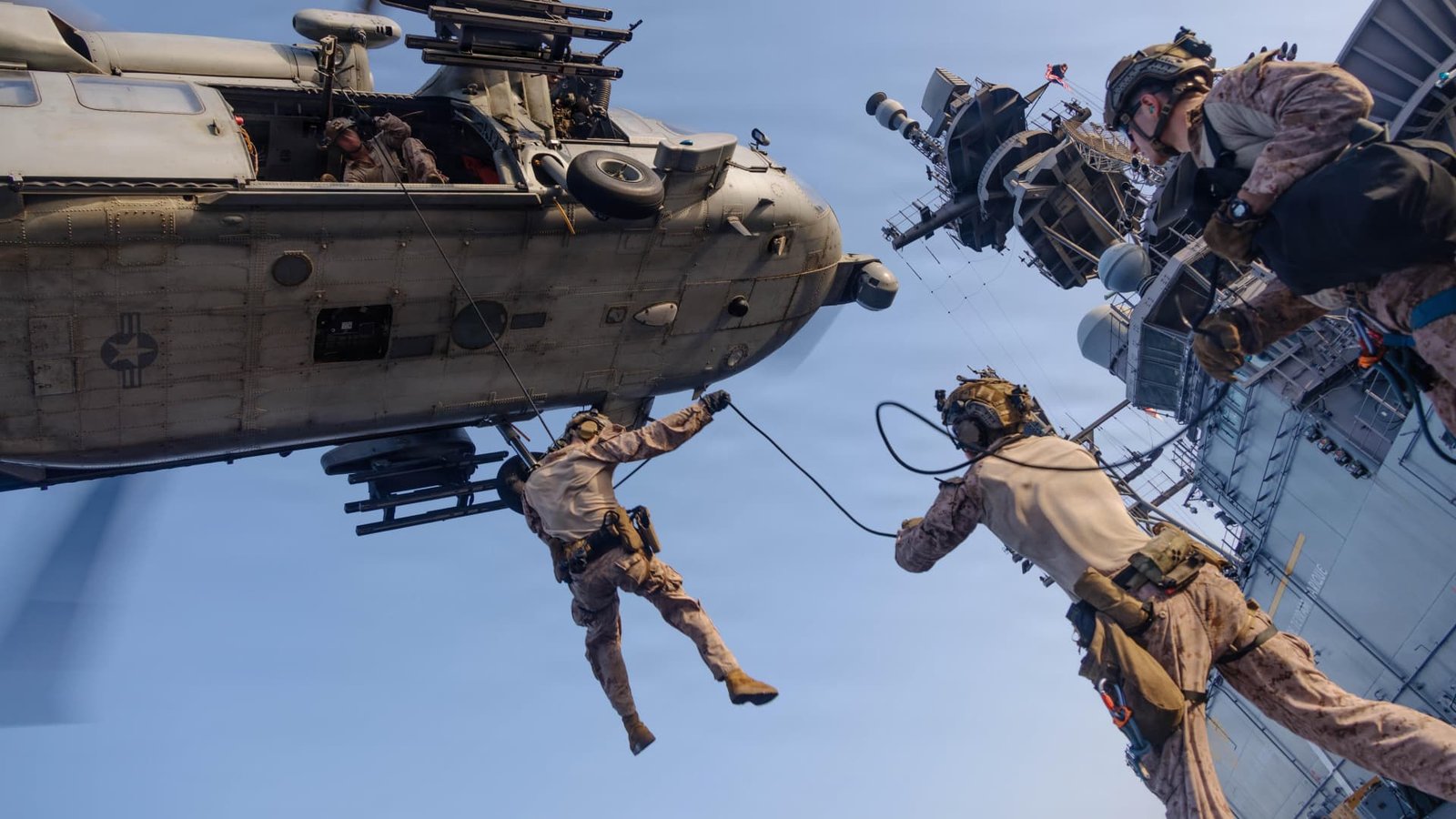
U.S. Marines with Maritime Raid Force, 31st Marine Expeditionary Unit, rappel out of an MH-60S Sea Hawk, assigned to Helicopter Sea Combat (HSC) Squadron 25, during helicopter and roping sustainment training aboard the forward-deployed amphibious assault ship USS Tripoli (LHA 7) in the U.S. Central Command area of responsibility, May 8, 2026.
Courtesy: U.S. Marine Corps
Hello, this is Leonie Kidd writing to you from London. Welcome to today’s edition of the Daily Open newsletter.
The war in Iran is once again the dominant market force today, with whipsaw trade in Asia across stocks and oil prices.
Officials insist the ceasefire still holds, but how long can that last as the frequency of attacks from both sides increases?
What you need to know today
A significant escalation in tension between the U.S. and Iran has sparked a risk-on reaction in early trading across Asia and European futures.
Oil prices are driving higher after American forces launched fresh strikes in Iran against a military site believed to threaten U.S. troops and commercial shipping through the Strait of Hormuz, a U.S. official told MS NOW. They also reportedly intercepted and downed several Iranian drones.
Following that, Iran’s Revolutionary Guards said on Thursday that they had targeted a U.S. airbase at around 4:50 a.m. local time, according to the Islamic Republic’s semi-official Tasnim news agency.
Meanwhile, Kuwait activated its own air defenses in response to what it described as “hostile missile and drone threats.”
In a set of exclusive interviews, CNBC spoke with Federal Reserve governors Neel Kashkari and Austin Goolsbee about the inflationary impact of the conflict in the Middle East. Kashkari said the fight against price pressures is taking priority as the labor market is “in decent shape,” while Goolsbee said the energy inflation tied to the war was creating a “stagflationary shock” in Asia.
The EU is reportedly preparing a new plan to reduce its dependence on U.S. technology by backing European alternatives in several critical sectors. That’s according to the Financial Times, which cited a draft document. It says the bloc is looking to increase incentives to help with the construction of data centres, whilst also favouring homegrown cloud and AI tech firms.
CNBC spoke with Europe’s AI giant, Mistral AI, with the CEO Arthur Mensch saying: “Europe is starting to look at AI as a strategic asset and there is a realization by policymakers that something needs to be done.”
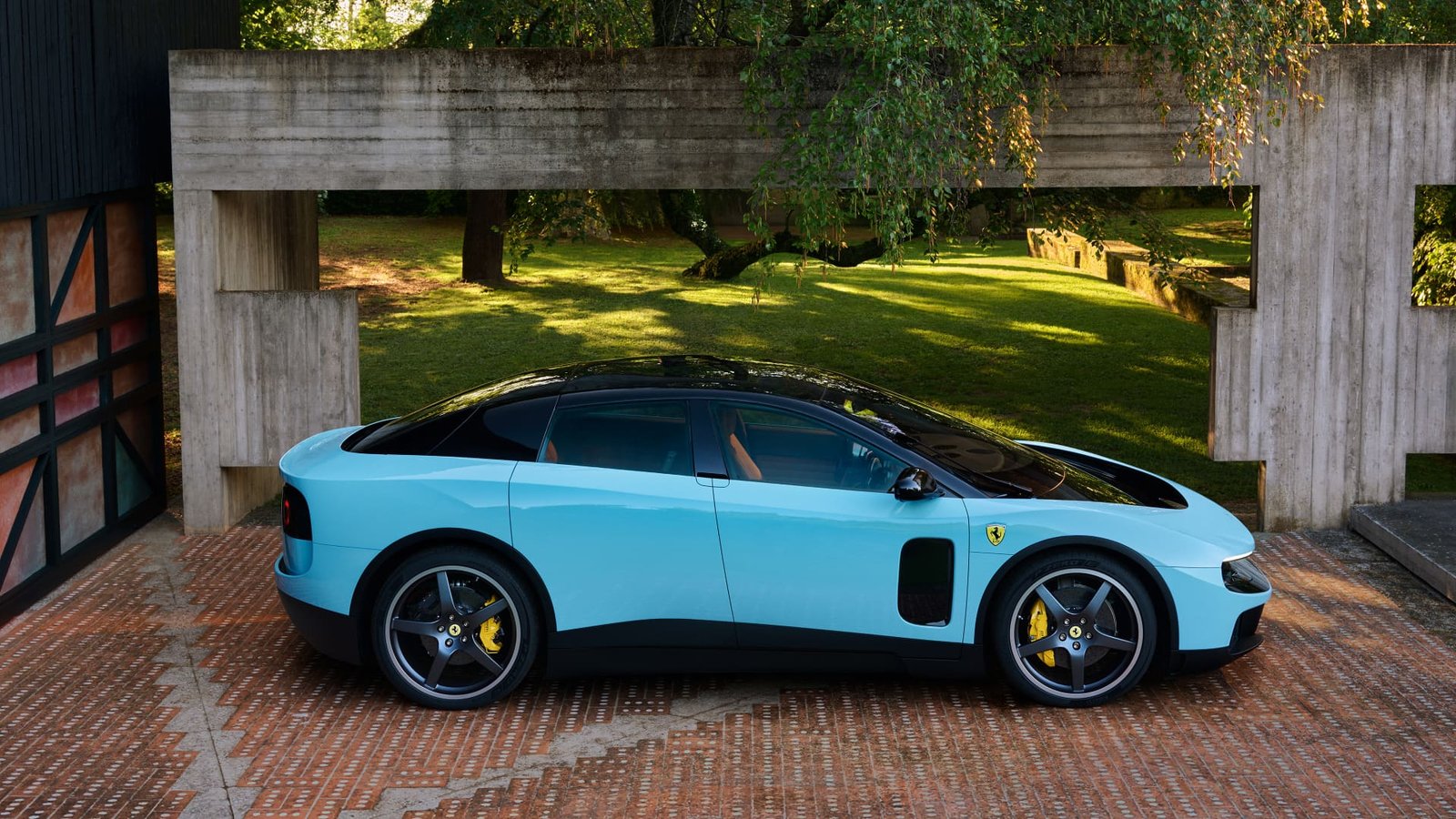
In other corporate news, the CEO of supercar group Lamborghini has told CNBC the company was right to cancel its own EV. His comments come amid the backlash to Ferrari‘s new EV, the Luce, which has wiped billions off the Italian car group’s market capitalization.
Staying in the EV space, Chinese group Nio has seen shares pop over 10% on the unveiling of its latest EV model, the first release in over two years. The company is pricing the car competitively despite Beijing’s efforts to curb excessive competition.
— Leonie Kidd
And finally…
Google employee charged with $1M Polymarket insider trading bet on search term
Federal prosecutors charged a Google employee with fraud on Wednesday, alleging that he made $1.2 million from bets using insider information on Polymarket.
Prosecutors claim that Michele Spagnuolo, a staff information security engineer at Google, used confidential information to place trades, correctly betting that singer d4vd would be Google’s most searched person in 2025.
Spagnuolo has been charged with money laundering, commodities fraud and wire fraud. The complaint, filed in the Southern District of New York, was unsealed on Wednesday.
ABC News first reported on the complaint. Spagnuolo was arrested Wednesday morning in New York, ABC reported.
— Davis Giangiulio