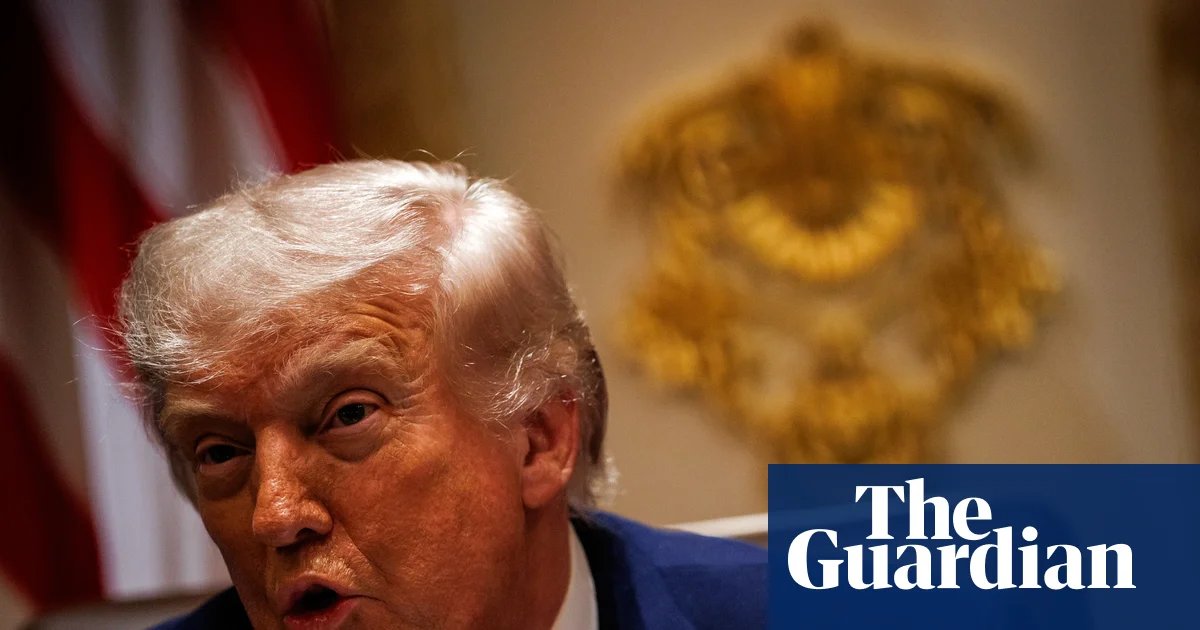
The day before Donald Trump’s first term ended in 2021, he inked a pardon for Elliott Broidy, a scandal-plagued Republican fundraiser and former Republican National Committee official who had pleaded guilty three months earlier to trying to illegally lobby Trump and his administration.
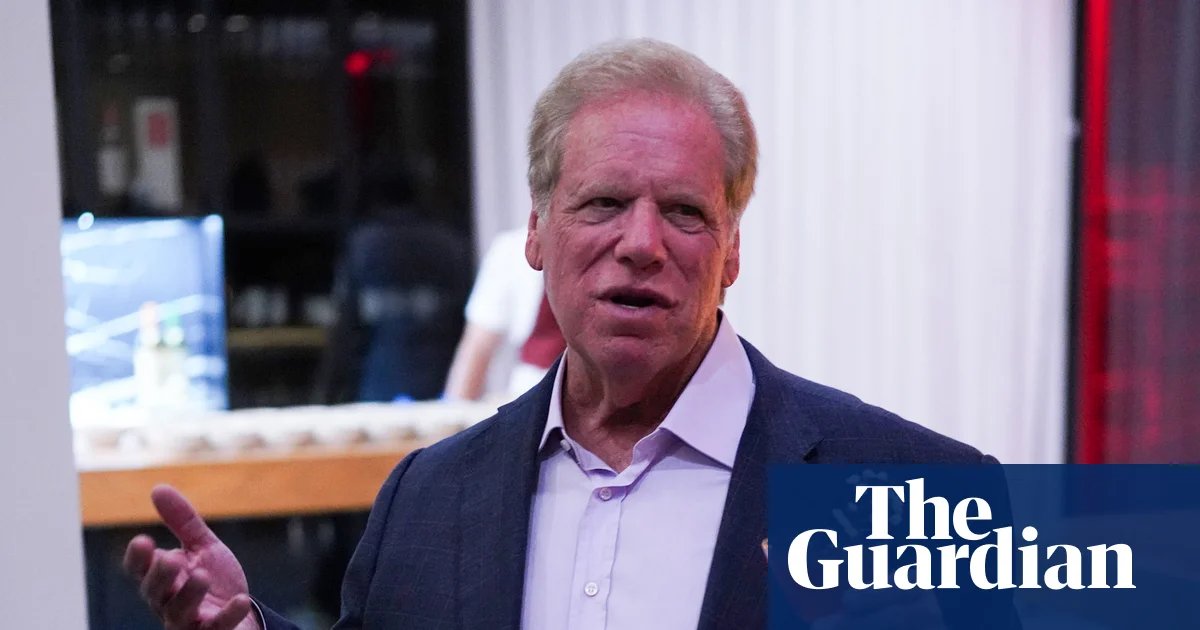
Last month, a company headed by Broidy won a $106m contract from the Department of Justice, according to federal contracting records.
Under the contract, awarded by the Bureau of Prisons to LEO Technologies, the company will use artificial intelligence to translate, transcribe and monitor prison phone calls. Broidy lists himself as the founder and CEO of LEO.
In a letter to the Guardian, LEO’s attorneys said Broidy sets the strategy of the company but does not run the day-to-day operations.
The company has previously won awards in state and local prison systems, but the new contract with the Bureau of Prisons marks the first time it is doing business with the federal government. On its website, the Texas-based company says that prisoners’ phone calls “represent the world’s largest concentration of criminally-minded activity – all on recorded lines, all legally accessible”.
Broidy is a longtime businessman, Republican backer and pro-Israel philanthropist. His 2020 guilty plea to one count of conspiracy to violate the Foreign Agents Registration Act, for secretly lobbying Trump’s White House on behalf of Chinese and Malaysian interests, came 11 years after a separate New York state criminal conviction for paying off state officials to get business for his investment company.
The Bureau of Prisons told the Guardian that LEO was one of six companies that responded to a solicitation for the contract. There is no evidence that Broidy’s past links to Trump helped earn his company the big contract. LEO’s statement said “Mr Broidy played no role in the competitive bidding process or its award”.
Broidy has been the subject of a dizzying series of colorful headlines over the years. In 2009, he pleaded guilty in a fraud case after prosecutors said Broidy paid almost $1m to New York state officials to secure business with the state’s pension fund. The payoffs included taking officials on luxury trips to Israel and Italy, and a secret $300,000 investment in a low-budget movie called Chooch.
In 2012, a judge reduced Broidy’s felony conviction to a misdemeanor of attempting to reward official misconduct.
Broidy soon emerged as a major Trump supporter and was named national deputy finance chair of the Republican National Committee in 2017.
In 2018, Broidy, who was married, stepped down from his official fundraising role when news broke that he had agreed to pay $1.6m to a former Playboy model who became pregnant during an affair with him and who had then had an abortion. In a statement he issued at the time, he wrote: “She alone decided that she did not want to continue with the pregnancy and I offered to help her financially during this difficult period. We have not spoken since that time.”
The payment to the model was facilitated by Trump’s combative then-lawyer Michael Cohen, who had arranged a similar deal for Trump to pay $130,000 to porn actor Stormy Daniels shortly before the 2016 election.
The next scandal to hit Broidy came after a hack of his emails.
The New York Times reported in 2018 that the emails exposed his work with United Arab Emirates adviser George Nader, in what the Times described as “an active effort to cultivate President Trump” on behalf of the UAE and Saudi Arabia. Nader had been convicted in 1991 in a federal child pornography case.
In a comment to the Times for a follow-up story based on the hacked emails, Broidy said: “This whole narrative is a fabrication driven by hackers who want to undermine me.”
In a recent lawsuit against an Israeli newspaper, Broidy’s lawyers wrote: “Mr Broidy never ‘promoted the interests’ of the UAE or Saudi Arabia or otherwise worked on behalf of either nation – conduct that would have been illegal absent registration under the Foreign Agents Registration Act – and the New York Times article in no way ‘revealed’ that he did.”
Just before Trump’s 2020 election loss, Broidy pleaded guilty to taking $9m in payments from a foreign national to try to lobby Trump and Trump’s justice department to end a criminal case and to push for the extradition of a Chinese businessman.
Trump’s own DoJ at the time wrote that “Broidy agreed to lobby the President of the United States, the Attorney General, and other high level officials in the Administration and the Department of Justice”.
According to his admission in a plea deal , Broidy personally asked Trump to play golf with Malaysia’s prime minister, Najib Razak, though the game did not take place.
The charges could have carried a sentence of up to five years in prison, but before he could be sentenced, Broidy was one of the last people Trump pardoned, on 19 January 2021.
Broidy’s profile has been considerably lower since the end of Trump’s first term.
On Broidy’s personal site, he unravels his personal philosophy, writing in one post last month that “life is sales”. He explains that “[t]he people who understand this move through the world with agency. They recognize that outcomes are rarely accidental and that influence is built, not granted.”