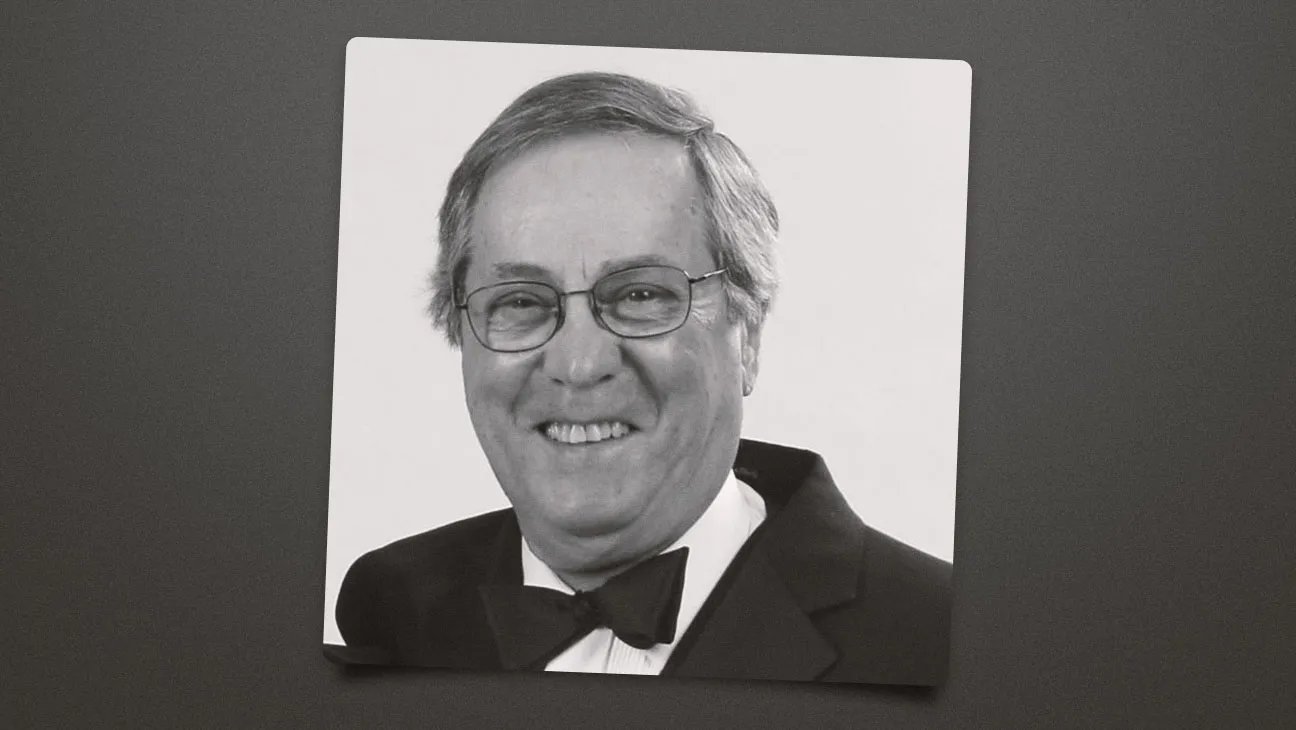
Howard Storm, who ditched a career as a stand-up comic to become a director who called the shots for such sitcoms as Rhoda, Mork & Mindy, Laverne & Shirley and Valerie, died Tuesday. He was 94.
Storm died of natural causes at his home in Beverly Hills, his son Anthony Storm told The Hollywood Reporter.
A member of Lucille Ball‘s Desilu Workshop in the late 1950s, the native New Yorker and son of a vaudevillian learned a lot about filmmaking from Woody Allen — another stand-up turned director — when he worked alongside him on Bananas (1971) and Everything You Always Wanted to Know About Sex but Were Afraid to Ask (1972).
Allen also acted in those films, of course, and after a scene that included him was shot, “the cinematographer would say, ‘Good for me, Woody,’ and the sound man would say, ‘Good for me,’ but there was no director to say anything,” Storm recalled in a 2008 conversation for the Television Academy Foundation website The Interviews.
“So [he and Allen] would make eye contact, and I’d say, ‘No, I think you should do it again, and maybe this time, try this or try that.’ So I was unofficially directing him.”
Storm made his official directorial debut on a 1975 episode of Rhoda, starring Valerie Harper, and handed five other installments during the CBS sitcom’s second season. He also helmed eight episodes of another MTM Enterprises comedy, Doc, in 1975-76.
He then directed episodes of the ABC comedies Laverne & Shirley (eight from 1976-78), Mork & Mindy (59 from 1978-91, including the one-hour pilot) and the Donna Pescow-starring Angie (three in 1979, including the pilot) as part of a long association with writer-producer Garry Marshall.
Storm also directed the feature Once Bitten (1985), starring Lauren Hutton and, in his first lead role, Jim Carrey.
The third of three kids, Howard Sobel was born on the kitchen floor of an apartment on the Lower East Side on Dec. 11, 1931. His father, Jack, worked in vaudeville and burlesque — he was a member of “The Crazy Kids” company that once featured Groucho Marx, Eddie Cantor, Georgie Jessel, Fanny Brice and Burt “The Mad Russian” Gordon, whom he would replace.
“I knew from the age of two that I wanted to be in show business,” he said. “My other friends wanted to be policemen, firemen, gangsters, and they all succeeded.”
With Lou Alexander, a friend from Edison High School in Miami, he launched a comedy act called Storm & Gale, and they did burlesque sketches in the Catskills and in clubs in Boston and Key West, Florida. When Alexander was drafted into the U.S. Marine Corps, Howie Storm went out on his own.
In 1959, he signed a contract with the Desilu Workshop, which Ball had launched a year earlier as a training ground for young actors who would appear in her projects. Also in the troupe at the time: his future first wife, singer Marilyn Lovell, and future THR columnist and TCM host Robert Osborne.
“Lucy didn’t like me,” Storm told Kliph Nesteroff in a 2013 interview. “She kept using the other actors in comedy sketches. I kept saying, ‘Lucy! I’m a comedian! Why aren’t you putting me in any of the comedy sketches?’ She said, ‘Don’t be an ingrate.’
“She was very strange. I loved Desi [Arnaz], but Lucy I found difficult. She would come up to direct you and she would want you to be like Lucy. I said to her, ‘Lucy, that’s what you do. I don’t do that.’ Anyway, that was Desilu.”
After appearing on a 1960 episode of the ABC-Desilu series The Untouchables, Storm honed his stand-up act at The Duplex in Greenwich Village and was signed by Jack Rollins and Charles Joffe, who were managing Allen, Dick Cavett and Mike Nichols & Elaine May at the time.
Soon, he was performing in such top-notch nightclubs as Mister Kelly’s in Chicago, the hungry i in San Francisco and the Copacabana in New York and sitting on the couch next to Johnny Carson on The Tonight Show. Sometimes, singer Andy Williams was his opening act. He also appeared often — and sometimes with his dad — on The Merv Griffin Show.
Storm, who had a small role in Allen’s Take the Money and Run (1969), said he never thought about directing until Everything You Always Wanted to Know About Sex. He served as a stand-in for Allen on the movie while keeping track of every shot and every lens that was used.
“I had to make a decision [about directing] because I felt my career as a comic would not go very far,” he said. “I thought I would be an opening act for a singer for the rest of my life, and that’s not what I wanted.”
Storm directed a production of Terrence McNally‘s Where Has Tommy Flowers Gone? that was seen by Rhoda co-creator Allan Burns, who then hired him for Rhoda when regular director Robert Moore exited to helm Murder by Death (1976).
(It also helped that Storm had known Harper from their days in the improv group The Committee and Rhoda producer David Davis from when their kids were in a playgroup together.)
Storm would also direct Harper during the first two seasons of NBC’s Valerie (before she was fired in a contract dispute) and on City, a midseason CBS series that aired just 13 episodes in 1990. He said he and the actress became pals after he pointed out that she was doing a Brooklyn Italian accent, not a Brooklyn Jewish one.
Storm knew after the second or third day on Mork & Mindy that Robin Williams “was a genius,” he said. “The trick I found with him was you could not sit on him, you could not stop him, you had to let him rehearse and do everything he wanted to do and get it out of his system. Then you could start to peel away.”
Storm left Mork & Mindy after three years to work on Taxi, an experience he found unpleasant. He also directed for Fernwood Tonight, Fish, Too Close for Comfort, Joanie Loves Chachi, Gimme a Break!, Amanda’s, Brothers, Faerie Tale Theatre, The Redd Foxx Show, Perfect Strangers, Full House, Good Grief!, Head of the Class, Daddy Dearest, Everybody Loves Raymond and Kenan & Kel.
With writing partner Paul Lichtman, Storm wrote episodes of All in the Family (“Archie Feels Left Out”), The Bob Newhart Show, The Partridge Family and Happy Days and acted on That Girl, The New Dick Van Dyke Show, Chico and the Man, Steelyard Blues (1973), Tunnel Vision (1976), American Hot Wax (1978), Broadway Danny Rose (1984) and Valentine’s Day (2010).
After actor Dick Yarmy was diagnosed with lung cancer, Storm and comics including Louis Nye, Tom Poston, Howard Morris, Ronnie Schell, Harvey Korman, Hank Bradford and Bill Dana took him out for dinner every week to make him laugh. They called their group “Yarmy’s Army.”
Yarmy died in May 1992, but “Yarmy’s Army,” with members coming and going, kept meeting and supporting other struggling actors and comics for years. Most recently, they had a table at Factor’s Famous Deli on Pico Boulevard.
Storm, who taught improv and managed boxers, published a memoir, The (Im)Perfect Storm. From Henry Street to Hollywood, in 2019. He also served on many DGA negotiating committees and was chairman of the DGA Awards from 1996-2012.
In addition to Anthony, survivors include another son, Casey; his daughter-in-law, Julia; and his grandsons, Leo and Sidney. His wife, Patricia Ridgely, a contributing editor at Town & Country, died in January.
“Directing Mork & Mindy was the most exciting time of my career, [but] I’m shocked with all the things I did. It just happened,” he said in his TV Academy Foundation chat. “It wasn’t like I’ll do this and then this and then this. Coming from my background, it’s amazing to me.”