“Obsession” is, well, the obsession of the box office.
That’s after the low-budget horror film earned $22 million from 2,655 North American theaters in its second weekend and a projected $28.2 million through the Memorial Day holiday. Those ticket sales are 30% above its debut (an impressive $17.2 million from 2,615 cinemas) — a virtually unprecedented increase for a movie that was already in wide release. It’s especially uncommon for horror, a genre that’s notorious for falling sharply after opening weekend.
“It’s really unheard of. I don’t know if I’ve ever seen a movie have a jump like this in weekend two,” says Comscore’s head of marketplace trends Paul Dergarbedian, who has covered the box office for more than 30 years. “It’s indicative of audiences embracing the film.”
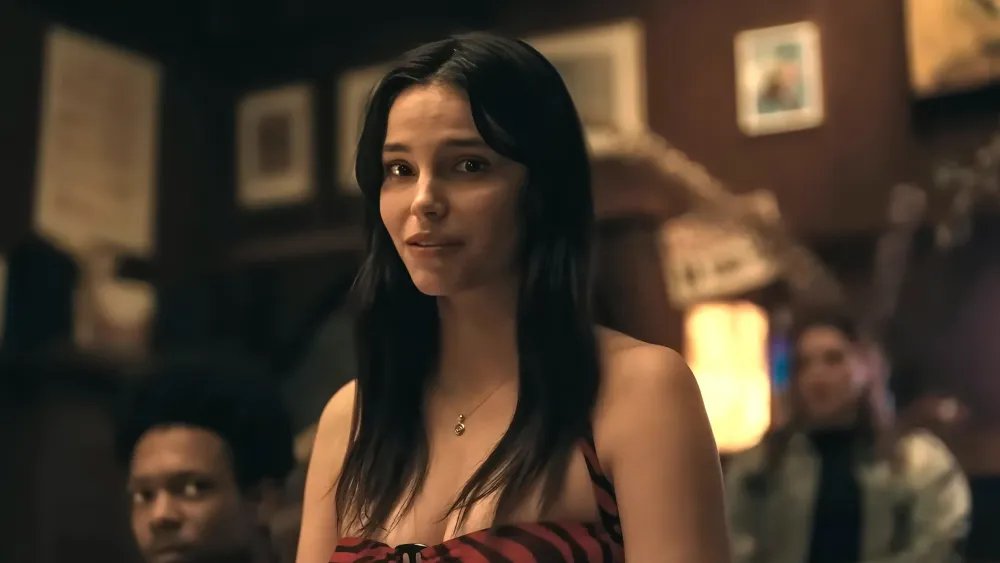
And a sign of exceptionally strong word-of-mouth. In another rarity for scary movies, audiences and critics have been enthusiastic about “Obsession,” evidenced by the film’s “A-” grade on CinemaScore exit polls and 94% on Rotten Tomatoes. Only five other horror movies, including last year’s breakout “Weapons,” have secured an “A-” grade or higher since 2019. The genre is prone to disappointing grades because moviegoers tend to leave the theater feeling deeply disturbed. YouTube breakout Curry Barker directed the R-rated “Obsession,” which follows a hopeless romantic named Bear who makes a twisted Faustian bargain to win his crush Nikki’s heart.
“We used to say that horror movies would open on Friday and die on Saturday,” Dergarbedian said. “Being in a movie theater has so much appeal, but a lot of prior horror movies were terrible. People would see them, realize they were awful and never go back.”
There’s been a recent shift with original horror hits, including Blumhouse’s “M3GAN” and “The Black Phone,” director Zach Cregger’s “Barbarian” and “Weapons,” Neon’s “Longlegs” and A24’s “Talk to Me” — all of which defied conventional wisdom by not falling off a cliff after opening weekend. Younger audiences have been key in the genre’s enviable hot streak. That was true in the case of “Obsession,” with 75% of audiences between 18 and 25 years old, according to PostTrak.
“There’s a new generation of moviegoers who are declaring a very specific taste for horror movies that is quite left-of-center,” says Jason Blum, whose backed many of those successes and produced “Obsession” through his company Blumhouse-Atomic Monster. “There’s a lot of concern about theatrical, and this is a real new growth area.”
Focus Features, which is distributing the film, opted against a platform release — a method that’s typically used for indies or original IP as a way to build awareness.
“It’s a more commercial play,” says Lisa Bunnell, head of distribution at Focus Features. Repeat business, particularly in Los Angeles, is behind the exceptional hold at the box office. She notes that unlike several recent big-budget blockbusters, “Obsession” is defying box office expectations without Imax or other pricer premium format screens. “This movie is doing it the old-fashioned, classic theatrical way.”
Before opening weekend, Focus stoked excitement by crafting a commercial to buy One Wish Willows, the magical device at the center of the film that grants Bear his terror-inducing wish — and the product sold out within hours. Then studio’s marketing department built on the buzz through cryptic billboards across Los Angeles and New York, featuring Nikki’s increasingly unsettling and obsessive texts, voice notes and deliveries, alongside a phone number inviting them to reach out.
Attendance tends to stall from Monday to Thursday, but “Obsession” managed to actually get people to theaters during the weekday. Despite the options of “Michael” or “The Devil Wears Prada 2” or other higher-profile releases, “Obsession” was No. 1 in North America on Monday ($2.9 million), Tuesday ($3.6 million), Wednesday ($3.2 million) and Thursday ($3.3 million) — before Disney’s “Star Wars” spinoff “The Mandalorian and Grogu” landed and, as expected, claimed first place over the weekend. So far, “Obsession” has generated $58.5 million in North America and $74 million worldwide.
“The movie has been outperforming any comps,” Bunnell says. “At this point, we’re optimistic of what’s going to happen but don’t have a set number in mind because it’s gone way beyond expectations.”
Blum doesn’t know how long “Obsession” will play in theaters before landing on digital platforms, but he mentioned it’s a “big topic of conversation at the moment.” Blum adds that he’s a “big believer in a long, consistent theatrical window.”
“It’s great the audience is aware of it. You would think they would say, ‘I want to buy it at home.’ But they’re actually cheering for the movie to stay longer.” he says. “People cherish the theatrical experience, and they’re willing to give up the convenience of seeing something at home to keep their local theater alive.”
“Obsession” was produced for less than $1 million and will easily become one of the year’s most profitable films. Focus Features acquired the movie at Toronto Film Festival for $14 million, which will make for scary-good profit margins for the studio, too. And exhibitors will be delighted to know that Focus is already on board to debut Barker’s next film “Anything But Ghosts.” The film, starring Aaron Paul and Bryce Dallas Howard, recently wrapped production; a release date hasn’t been set.
Barker, a first-time director, is part of a subset of YouTube creators who have achieved mainstream success at the box office. Earlier this year, YouTuber Markiplier (whose real name is Mark Fischback) directed, self-financed and distributed the horror film “Iron Lung,” which earned a stellar $50 million against a $3 million budget. And next weekend’s sci-fi thriller “Backrooms,” from YouTube breakout Kane Parsons and A24, is poised for breakout status.
“This is the dream scenario for movie theaters,” Dergarabedian says. “Rather than small screen being adversarial, it can be additive and complimentary. If these YouTube creators can bring the audience from their laptop to the movie theater, that’s huge. Everyone is asking: How can movie theaters build their audience? Maybe, ironically, it’s the small screen.”