Iran’s supreme leader and national security council still need to approve the proposed peace deal between Tehran and Washington, Iranian officials said on Sunday.
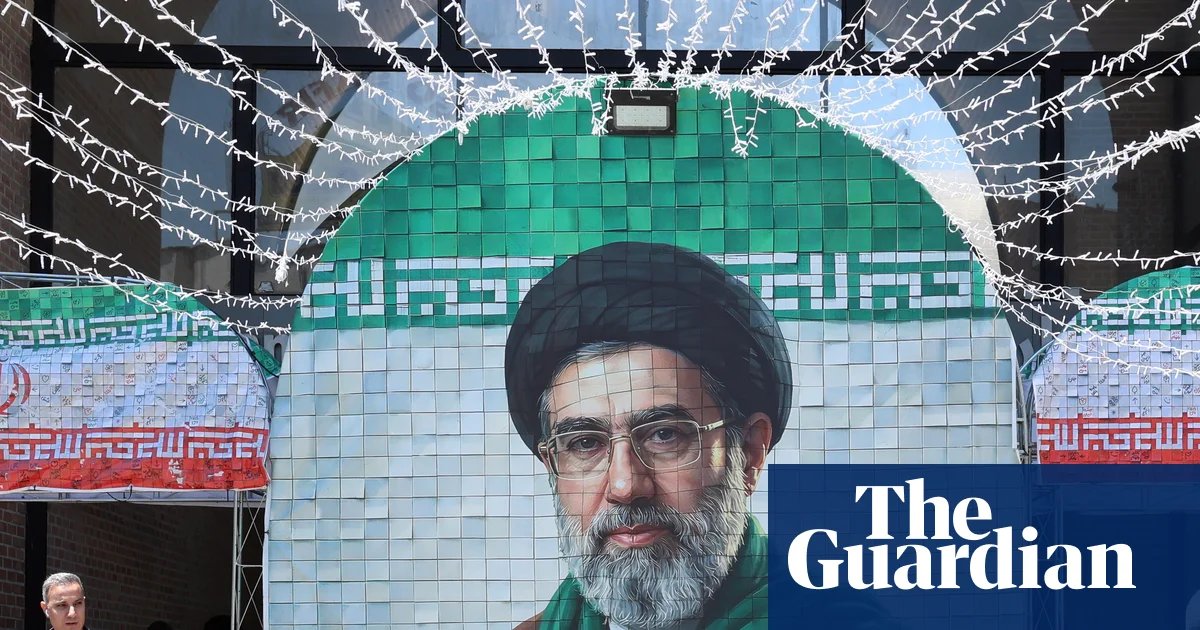
One or two clauses in the proposed peace deal between the US and Iran must be clarified to Iran’s satisfaction before the memorandum of understanding can be sent to Iran’s supreme national security council and the supreme leader Motjaba Khamenei for ratification, Iranian officials said on Sunday, adding this had been conveyed to the Pakistani mediators. Donald Trump claimed on Saturday that a peace deal with Iran “has been largely negotiated”, after calls with Pakistan, Gulf allies and Israel.
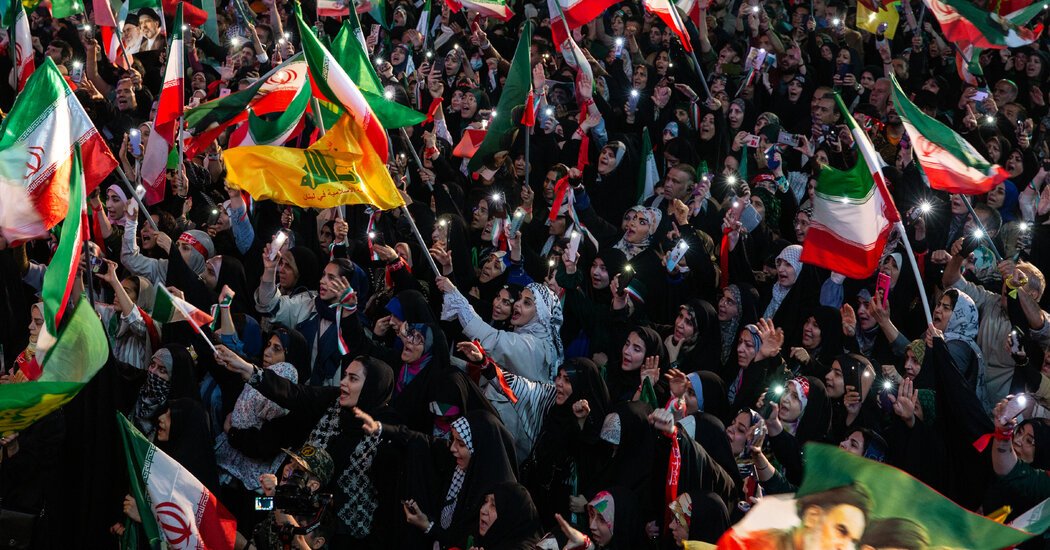
The Iranian government seemed to be in jubilant mood, preparing to claim a massive and historic victory over its two great foes, the US and Israel. Iran’s president Masoud Pezeshkian said: “What has guaranteed the preservation and stability of the country is the solidarity and empathy of the people.”
The deal reportedly offers Iran sanctions relief and the unlocking of as much as $20bn frozen assets in return for Iran reopening the strait of Hormuz and agreeing to negotiate on its nuclear programme over the next 60 days starting on 5 June in Pakistan. Details of the final points of dispute were not released. At least $12bn of the assets are in Qatar.
The deal also reportedly requires Iran and the US, and their allies, to cease fighting, and for Israel to end its offensive in Lebanon.
On Saturday, Trump spoke to the Israeli prime minister, Benjamin Netanyahu, the key original advocate of the war when it began in February, to try to reassure him on the ceasefire’s terms. Netanyahu is concerned by the postponement of the nuclear issue but has little option other than to accept Trump’s decision to end a domestically unpopular war that is crippling the world economy by injecting inflation and critical supply shortages.
Gulf States, as well as the Turkish president Recep Tayyip Erdoğan and the Egyptian president Abdel Fattah el-Sisi, had lobbied Trump on Saturday on the phone urging him to rule out returning to a bombing campaign inside Iran that they said would only bring Iranian reprisals and not topple an entrenched regime.
Trump – who said on Friday he would not attend his son’s wedding this weekend, citing Iran among the reasons for staying in Washington – wrote on his social media platform that “final aspects and details” of a “memorandum of understanding” were still being discussed and “will be announced shortly”, but said the strait of Hormuz would be opened as part of the deal.
“An agreement has been largely negotiated, subject to finalisation between the United States of America, the Islamic Republic of Iran and the various other Countries,” Trump posted.
The US and western countries have been insistent that Iran should not be allowed to impose tolls on shipping in the strait.
Iran’s Fars news agency, which is close to the powerful Islamic Revolutionary Guard Corps, stated that the strait would remain under Iranian control. It reported on Telegram that “the management of the Strait, determining the route, time, method of passage and issuing permits, will continue to be the monopoly, and at the discretion of, the Islamic Republic of Iran”.
On Saturday, the Iranian foreign ministry spokesperson said the future governance of the strait was a matter for negotiation between Iran on the north shore of the strait and Oman on the south, and not an issue in which the US could be involved.
Iran also said it had merely committed to negotiate all nuclear-related issues in talks due to last 30 days with a further 30-day optional extension, taking the timetable to late summer. No commitments on the outcome of those talks has been made, only the topics, meaning the US has largely reverted to the prewar position that held in Geneva on 26 February, two days before the war started.
The deal will reportedly allow Iran to resume the sale of oil and petrochemicals during the negotiation period without the risk of sanctions. The US will also lift its counter blockade of Iranian ports.
US secretary of state Marco Rubio, speaking in India, said: “We have made some progress over the last 48 hours working with our partners in the Gulf region on an outline that could ultimately – if it succeeds – leave us not just with a completely open strait … [but also address] some of the key things that underpin what have been Iran’s nuclear weapons ambitions in the past”.
Challenging the mounting domestic criticism of a deal that in no way meets the US original objectives, Rubio said: “The idea that somehow this president, given everything he has already proven he is willing to do, is going to somehow agree to a deal that ultimately winds up putting Iran in a stronger position when it comes to nuclear ambitions is absurd.
“That is just not going to happen. But our preference is to address this through a diplomatic means and that is what we are endeavouring to do here.”
News of the potential deal triggered dismay among Republican hawks, who had spent years calling for US military action against Iran, and deriding the 2015 deal to limit Iran’s nuclear enrichment in return for sanctions relief negotiated during the Obama administration. Trump withdrew from that international deal, known as the Joint Comprehensive Plan of Action (JCPOA), in 2018.
Mike Pompeo, who served as CIA director and secretary of state during Trump’s first term, denounced the current proposed agreement as too close to what Barack Obama’s negotiators had achieved and a boon to Iran’s Islamic Revolutionary Guard Corps.
“The deal being floated with Iran seems straight out of the Wendy Sherman-Robert Malley-Ben Rhodes playbook: Pay the IRGC to build a WMD program and terrorize the world,” Pompeo wrote on social media, referring to Obama’s chief negotiators. The alternative, Pompeo added, is “straightforward: Open the damned strait. Deny Iran access to money. Take out enough Iranian capability so it cannot threaten our allies in the region.”
Malley responded: “Not quite the path Wendy, Ben or I would have taken. But if this deal brings an end to an unlawful, unjustifiable war, to the senseless loss of life and destruction and to the cascading global economic fallout, I am quite sure we’d willingly accept it over the alternative.”
The White House director of communications, Steven Cheung, was somewhat less diplomatic in his response to the former secretary of state. “Mike Pompeo has no idea what the fuck he’s talking about,” Cheung wrote on X. “He should shut his stupid mouth and leave the real work to the professionals. He’s not read into anything that’s happening, so how would he know.”
After Republican senator Roger Wicker wrote the “rumored 60-day ceasefire – with the belief that Iran will ever engage in good faith – would be a disaster. Everything accomplished by Operation Epic Fury would be for naught!” Rhodes replied: “Nothing was accomplished by Operation Epic Fury except putting the IRGC in charge of Iran and the strait of Hormuz.”
Ted Cruz, Republican senator for Texas, warned if the war’s conclusion “is to be an Iranian regime – still run by Islamists who chant “death to America” – now receiving billions of dollars, being able to enrich uranium and develop nuclear weapons, and having effective control over the strait of Hormuz, then that outcome would be a disastrous mistake”.
Additional reporting by José Olivares and Robert Mackey