A billionaire Donald Trump donor could make millions from a deal being struck between the government and Thames Water.
The UK’s largest water company, ministers and creditors are at an impasse as they try to agree a rescue deal to stave off Thames’s collapse. The water company built up a £17.6bn debt pile in the decades after its privatisation.
Elliott Investment Management is one of the leading creditors, in a group that includes Silver Point Capital, BlackRock and M&G. The consortium of hedge funds – known as London & Valley Water – is attempting to take over Thames in a multibillion-pound restructuring.
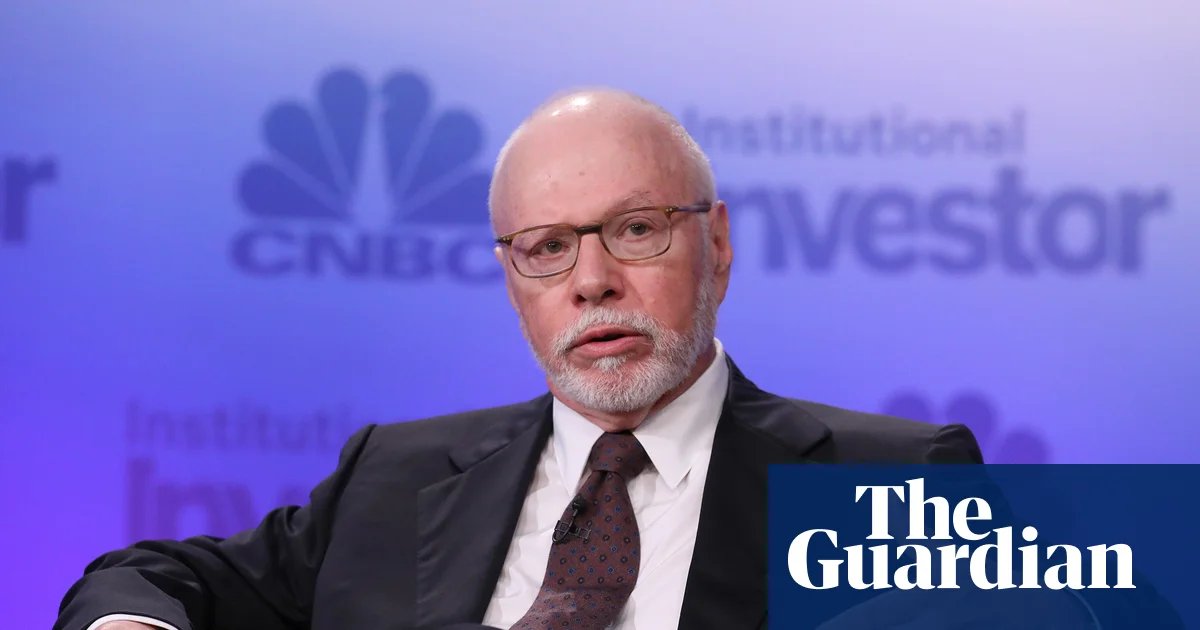
Elliott’s founder and co-chief executive, Paul Singer, one of finance’s most colourful characters, once ordered the impounding of an Argentinian navy ship after the country failed to pay its debts. His company is accused of catalysing Argentina’s bond crisis by aggressively pursuing the country’s debts.
The Thames bid appears to be a family affair. Sources close to the deal say the point person at Elliott for Thames Water is Singer’s son Gordon, who runs the firm’s London office. In 2024, Gordon attempted to donate nearly £2,000 to Robert Jenrick’s failed run for the Conservative party leadership; the money was returned and deemed “impermissible” by the Electoral Commission, reportedly because Gordon’s address was not up to date at the time.
Singer, 81, donated $5m (£3.73m) to Make America Great Again Inc, Trump’s Super Pac, and tens of millions more in 2024 to Trump’s allies, including $37m to support the election of Republicans to Congress.
Cat Hobbs, of the campaign group We Own It, said: “Trump wants control over NHS drug prices, and his mega donor Singer wants control over our water. ‘Absolutely not’ should be the answer of any government that considers itself patriotic.”
Elliott was part of a consortium that secured a winning bid for Citgo, the US-based subsidiary of Venezuela’s state-owned oil company, for $8.8bn two months before Trump arrested Venezuela’s president, Nicolás Maduro.
This sale was forced by a Delaware court and was reported to be at a “massive discount” as the Venezuelan government valued the company at $18bn. More money is expected to be made as US companies will control the oil produced, which is unlikely to be subject to sanctions.
If the Thames deal goes through, Singer, whom Bloomberg has called “the most feared investor in the world”, will be among those controlling the water of 16 million people in London and the Thames valley. He is used to a healthy return on his investments, with average annual returns of 14%.
As is Elliott’s style, the creditors’ demands of the government are typically aggressive, asking for the company to be let off fines for four years, which could be worth up to £1bn. They are also requesting leniency on environmental measures, including pollution, leakage and other performance targets imposed a year ago.
A tidy profit is already going to be made on the debt: the creditors gave Thames a £3bn loan with a high annual interest rate of up to 9.75%, to be paid for through customer bills.
Critics argue the deal could allow Thames to continue to pollute with impunity.
The deal is also under threat because of the uncertainty around the Labour leadership, with Andy Burnham, tipped to be the next prime minister should he win the byelection in Makerfield next month, saying he wants to bring water companies back under public control.
Lena Swedlow, the deputy director of Compass, a centre-left campaign group with close links to Burnham, said: “These people do not have any interest or business running a water company. They are not utility providers, they are vulture capitalists. They should be allowed nowhere near resources that are important for our health, our planet and our national security.”
Clive Lewis, the Labour MP for Norwich South and a leading advocate of returning the water industry to public ownership, said handing over Thames to the likes of Singer and Elliott Management would be like “throwing red meat to the wolves”.
“The fact that he is known as a vulture capitalist should tell you everything about how inappropriate this deal is … these kinds of people are there to suck the lifeblood out of our utilities and public services, and this deal should not be rushed through.”
The regulator, Ofwat, has been heavily criticised for opening the door after 2010 to allow private equity and international hedge funds to take over England’s water companies, enabling short-term profit at the expense of vital infrastructure upgrades and environmental protection. Seven out of 10 privatised water and sewerage companies are now controlled by private equity investors, and a similar number of English water companies are in foreign ownership.
Singer has a modus operandi to target underperforming public companies, overhaul the board, ruthlessly cut costs and force restructuring and often a sale of the company.
Government sources say negotiations with the creditors have been intense. Ministers are terrified of a Liz Truss-style bond market meltdown, which the negotiators say will happen if the deal fails and Thames Water falls into special administration. The chancellor, Rachel Reeves, is said to have been spooked, and government sources say she has been vehemently against such an outcome.
A spokesperson for the London & Valley Water consortium said: “Experienced turnaround investors have worked constructively and in good faith with regulators and officials to design an ambitious, long-term turnaround plan which holds Thames Water to account and delivers a step-change for customers and the environment.”
A government spokesperson said: “The government will always act in the national interest on these issues. The company remains financially stable, but we stand ready for all eventualities, including applying for a special administration regime if that were to become necessary.”
A Thames Water spokesperson said: “As we have previously stated and was upheld by the high court last year, customers will not pay the cost of the interest on the Super Senior Funding.”
Though the company claims customers will not directly pay the interest on the loan, a third of each customer bill currently goes towards servicing debt. The company aimed to use part of the funding to pay the interest, however this has not taken place and Thames is due to run out of funds in November, meaning customers could end up footing the bill.
Elliott Investment Management declined to comment.