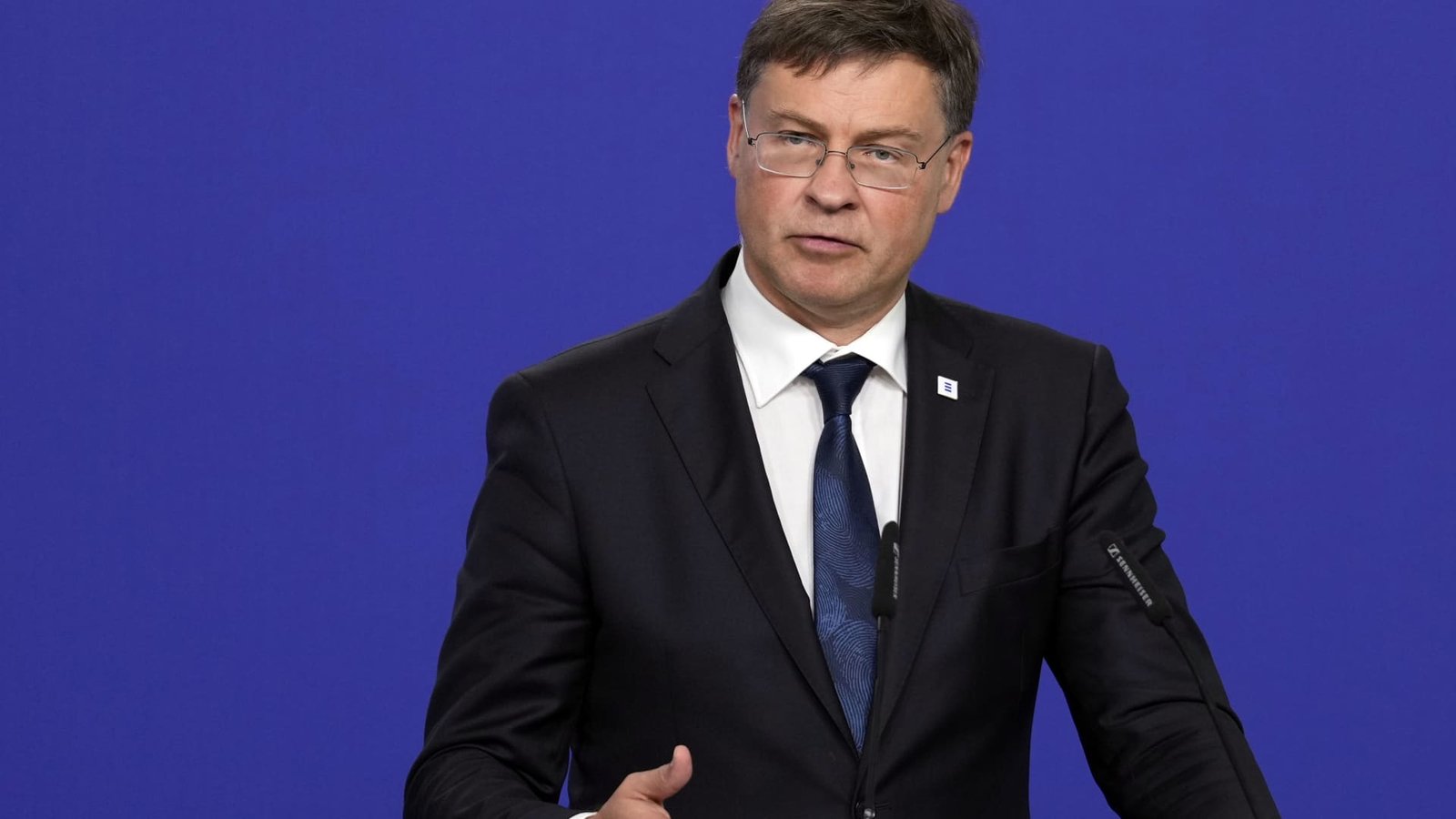
The EU will downgrade its growth forecast because of the “stagflationary shock” caused by the Iran war, the bloc’s commissioner for the economy told CNBC.
Valdis Dombrovskis, European Commissioner for Economy and Productivity, told CNBC’s Charlotte Reed that the spring forecast, released later this week, will see economic growth figures adjusted down and inflation figures up.
“We are facing a stagflationary shock,” he said on Monday, on the sidelines of the meeting of G7 finance ministers in Paris.
Fears of stagflation have risen in recent weeks. A lasting settlement to the war in the Middle East has proven elusive and with the vital Strait of Hormuz closed, oil prices remain above $100 a barrel.
Dombrovskis added that the margin of action by policymakers is “more limited now,” leaving little room for the kind of broad-based fiscal response seen during the coronavirus pandemic.
“We think it’s important that the support measures we take are temporary and targeted, not ones which actually sustain high demand for fossil fuels,” he added.
Strategists have warned that global oil stockpiles are plummeting and inventories may not recover until December 2027, with physical shortages potentially looming over Europe by the end of this month.
The International Energy Agency, in its latest monthly update, cautioned that oil inventories globally are depleting at a record pace. “Rapidly shrinking buffers amid continued disruptions may herald future price spikes ahead,” the IEA said.
Dombrovskis described the EU’s release of strategic oil reserves as “ongoing,” and added that there are some concerns of shortages in areas such as innovation fuels.
“The more protracted the conflict becomes, the more risk of some supply bottlenecks, which reinforces our message that policy response should not increase demand for fossil fuels,” he said.