Can hantavirus spread through the air? What we do and don’t know
The Andes type of the hantavirus is spread by “close contact,” but it’s unclear how much of that transmission occurs by inhaling airborne droplets or other means

The cruise ship hantavirus outbreak reveals serious gaps in scientific knowledge about whether and how the pathogen can spread through the air between humans.
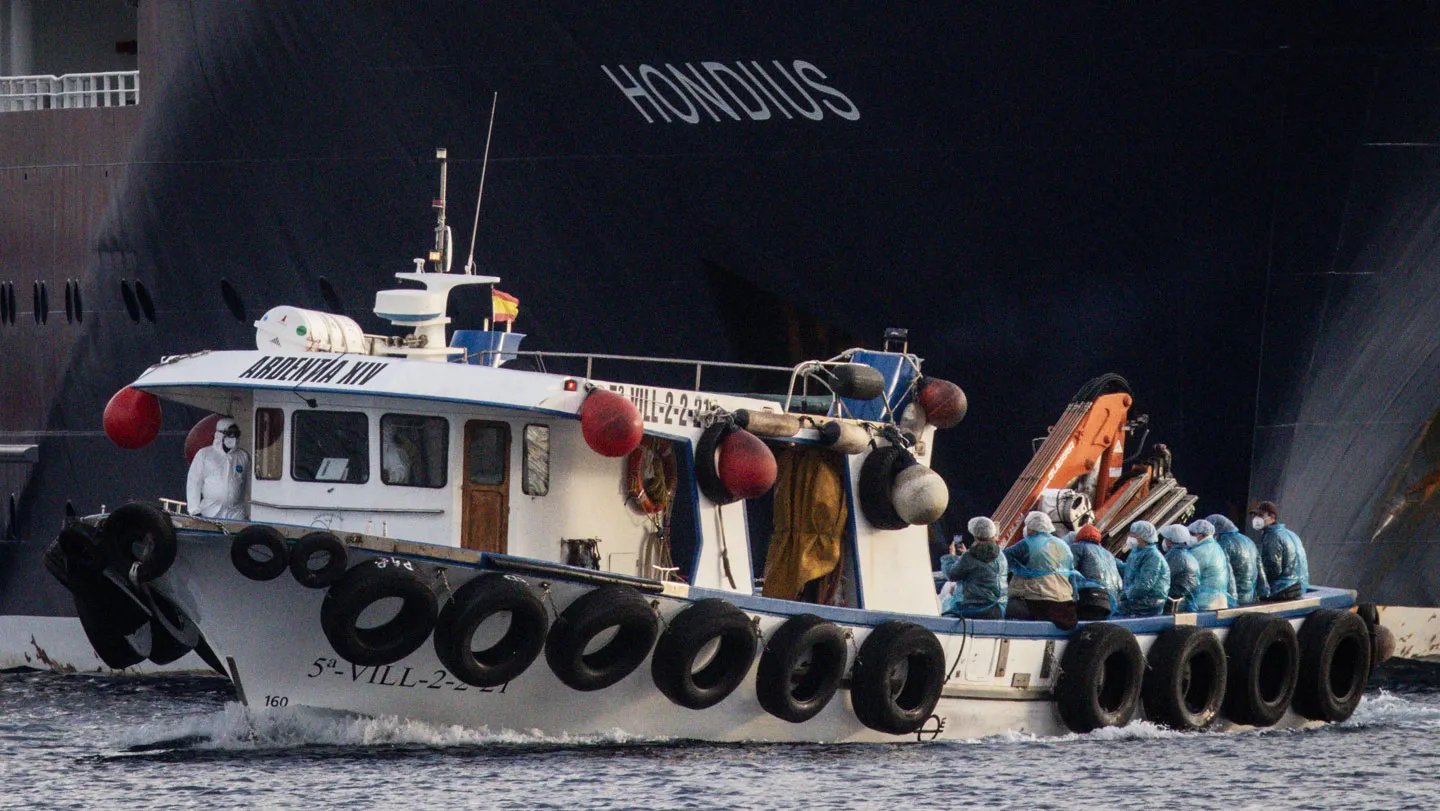
To date, the outbreak that began on the MV Hondiushas sickened up to 11 people and killed three of them. It is caused by the Andes type of the hantavirus—the only form of the virus known to be transmissible between people. Clues from past outbreaks and knowledge about how respiratory pathogens work could inform efforts to contain the virus as the ship’s passengers and others who may have been exposed are monitored for signs of infection for up to 42 days, the incubation period of Andes virus.
Hantaviruses are typically spread by rodents such as mice or rats. People become infected by inhaling aerosolized particles of feces or urine from these animals. So in that sense, the virus can be spread through the air.
On supporting science journalism
If you’re enjoying this article, consider supporting our award-winning journalism by subscribing. By purchasing a subscription you are helping to ensure the future of impactful stories about the discoveries and ideas shaping our world today.
“The fact that that is believed to be the main route of transmission from animals to humans implies that you can get the disease by inhaling the virus. That’s well established,” says Linsey Marr, an expert on aerosol disease spread at Virginia Tech. “The question, then, is if an infected human is releasing virus into the air.”
The Andes virus is different from other hantaviruses because it can spread from person to person. The World Health Organization (WHO) and U.S. Centers for Disease Control and Prevention have said this hantavirus type is transmitted by “close” and “prolonged” contact, but it’s not clear what that means. Close contact could mean touching or kissing; touching contaminated objects such as bedding or eating utensils; or breathing in large or small droplets that are emitted when a person nearby coughs, sneezes, breathes or talks.
Whether hantavirus spreads efficiently through the air depends on whether the virus is in people’s respiratory fluids—saliva or mucus in the upper respiratory tract or secretions from deep in the lungs. According to Marr, it is not clear whether the virus is present in this way or how long it might survive in respiratory particles. “I don’t think we have any information about that,” she says.
There are a handful of studies that have investigated how the Andes hantavirus spreads, and there have been past outbreaks where person-to-person spread was observed. Scientists confirmed human-human transmission in a cluster of three hantavirus cases in Argentina in 2014. And from late 2018 to early 2019, the country witnessed a super-spreader event that ultimately caused 34 confirmed cases and 11 deaths.
In the latter outbreak, a person who was likely infected by a rodent and had fever symptoms attended a crowded birthday party with around 100 other people for 90 minutes. Five people who sat near the infected person later developed symptoms between 17 and 24 days after the party. One of them likely infected six others before he developed symptoms. He eventually died, his spouse attended his wake while feverish, and 10 other people were sickened at the wake. Based on that pattern of transmission, researchers concluded that “the route of infection in secondary cases was possibly through inhalation of droplets or aerosolized virions,” or virus particles.
Experiences such as that outbreak suggest the Andes virus that circulated on the MV Hondius could be transmitted more easily than “close contact” might suggest. But that doesn’t mean it’s as transmissible as SARS-CoV-2, the virus that causes COVID. Still, if hantavirus can spread through the air, that’s important for containing the pathogen as the ship’s passengers return to their respective countries and quarantine. In the U.S., two people are being monitored at a specialized medical center in Atlanta, and another 16 people are staying at the National Quarantine Unit in Nebraska—a specialized facility where the rooms have negative air pressure and HEPA-grade (high-efficiency-particulate-air-grade) air filtration systems. Passengers of a cruise ship who were exposed to people with COVID were sent to this same facility in 2020.
Joshua Santarpia is a professor of medicine in the department of pathology, microbiology and immunology at the University of Nebraska Medical Center and an associate director of a center for health security that is affiliated with the quarantine unit. He says the unit’s rooms are like hotel rooms: they have TVs, exercise machines and other creature comforts. If a person becomes ill while they’re in quarantine, they will be transferred to the facility’s biocontainment unit, which is more like an intensive care unit (ICU).
The quarantine unit staff are treating the passengers with full airborne precautions—that means wearing high-level personal protective equipment such as N95 respirators, gowns and eye protection, Santarpia says. The decision to “step down” these precautions has been under discussion but has not yet been made, he adds.
Santarpia has studied a related hantavirus known as the Sin Nombre virus, which circulates in the U.S. Southwest and is transmitted by exposure to aerosolized rodent poop, not person-to-person. The human-to-human transmission seen with the Andes virus is rare, he says. “It does seem to be extremely close contact or continuing contact,” he says. “It’s plausible that there is some role for aerosols,” Santarpia adds, but the Andes virus doesn’t behave like SARS-CoV-2. “Even if there is an aerosol component, it doesn’t seem to have the same kind of situation as COVID-19.”
Still, the messaging around airborne transmission could be better, says Marr, who worked with a WHO committee that released an updated definition of the airborne spread of viruses following the COVID pandemic. With hantavirus, “I hope that one thing [health authorities] don’t say—because this happened for COVID—is that [it] is not airborne. Hopefully we’ve learned that lesson, and they do not immediately deny that route of transmission,” she says.
It’s Time to Stand Up for Science
If you enjoyed this article, I’d like to ask for your support. Scientific American has served as an advocate for science and industry for 180 years, and right now may be the most critical moment in that two-century history.
I’ve been a Scientific American subscriber since I was 12 years old, and it helped shape the way I look at the world. SciAm always educates and delights me, and inspires a sense of awe for our vast, beautiful universe. I hope it does that for you, too.
If you subscribe to Scientific American, you help ensure that our coverage is centered on meaningful research and discovery; that we have the resources to report on the decisions that threaten labs across the U.S.; and that we support both budding and working scientists at a time when the value of science itself too often goes unrecognized.
In return, you get essential news, captivating podcasts, brilliant infographics, can’t-miss newsletters, must-watch videos, challenging games, and the science world’s best writing and reporting. You can even gift someone a subscription.
There has never been a more important time for us to stand up and show why science matters. I hope you’ll support us in that mission.