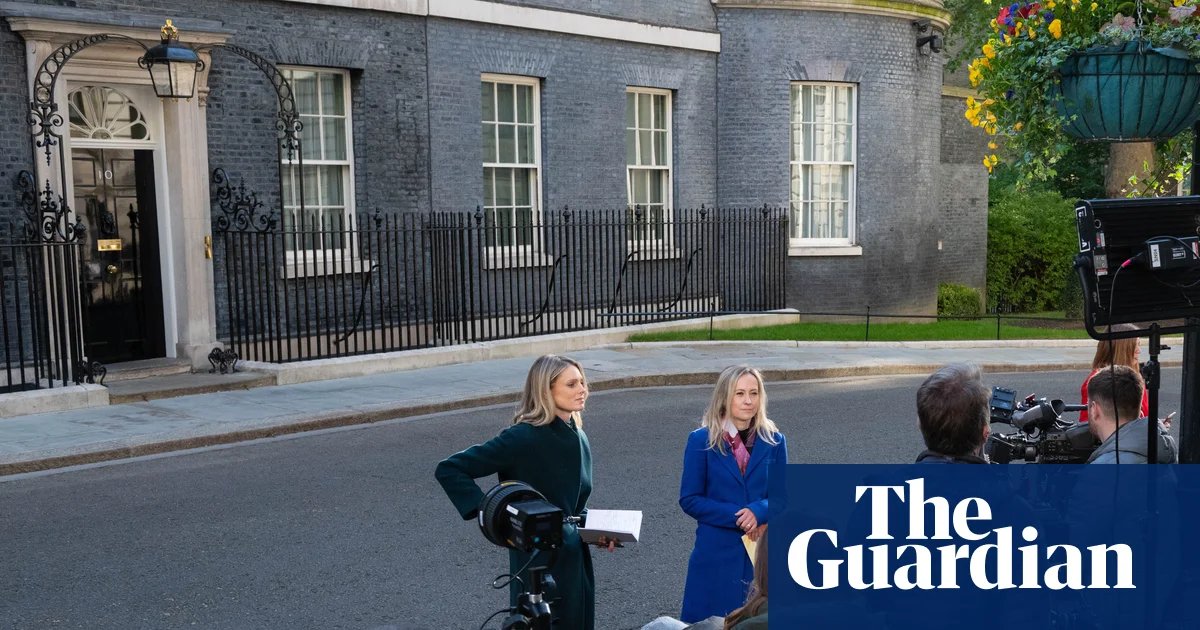
The last time Keir Starmer faced a threat to his leadership, his core team assembled in the cabinet room and persuaded ministers to fire off a succession of supportive tweets in an attempt to keep him in office. This time has been different.
As the number of MPs calling for the prime minister to resign has grown over the last 48 hours, much of the cabinet has remained quiet.
And though the prime minister remained in office on Tuesday night, some in government were wondering whether his political operation was as sharp as it once was, especially since the departure of Starmer’s long-term aide Morgan McSweeney.
“How could they not plan for this, it’s mad,” said one MP, frustrated at what they saw as a lack of fightback from Downing Street. Another said there was “literally no guidance or plan. I have no idea what plan it was that they think they were preparing.”
Starmer’s political operation is a very different one from what it was for most of his first 20 months in office, during which the prime minister would decide the broad direction of the government but leave much of the daily politics to McSweeney.
When faced with a scandal, for example, it was often McSweeney who would lead the strategy over how to respond and, if required, make the first phone call to a minister whom the prime minister wanted to resign.
McSweeney resigned as chief of staff in February over his role in recommending Peter Mandelson as ambassador in Washington.
He remains close to Starmer and is understood to have spoken to the prime minister in recent days about his situation. He is not providing advice to No 10 however, even behind the scenes.
Starmer appointed Vidhya Alakeson and Jill Cuthbertson after McSweeney’s resignation, and they led the fightback in February when the Scottish Labour leader, Anas Sarwar, called for Starmer to resign.
Alongside Amy Richards, the Downing Street political director, and Jonathan Reynolds, the chief whip, they coordinated a response to Sarwar that was so swift it gave any potential rival very little time to act.
This time the same team has once more assembled in the cabinet room, albeit largely without Cuthbertson, who is on maternity leave. While she came in to Downing Street on Monday evening, sources say it was only briefly and she did not get involved in making calls.
“They have really missed Jill, she was the one with the connections across the Labour party,” said one government official.
Stuart Ingham, one of the prime minister’s longest-standing aides, and Sophie Nazemi, his director of communications, have also pitched in.
Downing Street officials say they have tried to use broadly the same tactics as they employed last time to keep him in post, with phone calls across the party and defiant messages in public.
Some have been warning of dire consequences should the prime minister be ousted, such as a spike in bond yields – though they have been careful not to use those arguments too directly with Labour MPs.
“There is a very good chance that we are heading for a Liz Truss moment in the next few months,” said one government figure, referring to the jump in UK borrowing costs that followed the former prime minister’s “mini-budget”.
“We can’t say so in such terms to MPs though, as they get nervous about being made to feel like they are being held hostage.”
To an extent, Starmer’s aides have been helped by the fact that MPs are still in their constituencies after the local elections, and do not return to Westminster until Wednesday.
While their absence has made it more difficult to coordinate the prime minister’s defence, it has also prevented the same level of collaboration among his opponents.
For some MPs, the outreach has worked.
On Tuesday more than 100 Labour MPs, including the former minister Tulip Siddiq, Carolyn Harris and Perran Moon, signed a letter insisting: “This is no time for a leadership contest.”
The letter was coordinated by backbenchers and some parliamentary ministerial aides. Organisers say it did not come from No 10, though MPs said it had been circulated by government whips.
Starmer himself made his message clear at cabinet – it was time to trigger a leadership contest or stand down.
In words that in effect dared the health secretary, Wes Streeting, to move against him, the prime minister said: “The past 48 hours have been destabilising for government and that has a real economic cost for our country and for families.
“The Labour party has a process for challenging a leader and that has not been triggered.”
Sources told the Guardian that Starmer did not give cabinet critics time to respond, before moving the conversation on to the Middle East.
They added that he did not have one-on-one meetings before or after cabinet, apart from with his close ally Richard Hermer. One source said Streeting had tried to speak to the prime minister privately after, but had been rebuffed.
While Starmer then headed to a technical college in south London for a planned ministerial visit, his words persuaded some cabinet ministers to issue supportive statements to reporters outside Downing Street as they left the meeting.
Others, however, have remained quiet, in marked contrast to February, when every cabinet minister quickly issued public declarations of support. Streeting himself has remained quiet in public, as have Ed Miliband, the energy secretary, and Yvette Cooper, the foreign secretary.
As the dust began to settle on another day of political drama, Starmer’s allies were quietly hopeful they had shored the prime minister up for another day, even if they were wary of predicting any further into the future.
“I don’t know what happens next,” said one. “It might be that Andy or Wes backs down having marched their armies halfway up the hill. Or it might be that one of them succeeds and arrives in Downing Street just as the jet fuel runs out.”