Sucker fish are hiding in manta rays’ ‘butthole,’ new study reveals
The practice of “cloacal diving” could help remoras hide from predators—it could also be a feeding strategy or help the fish hitchhike
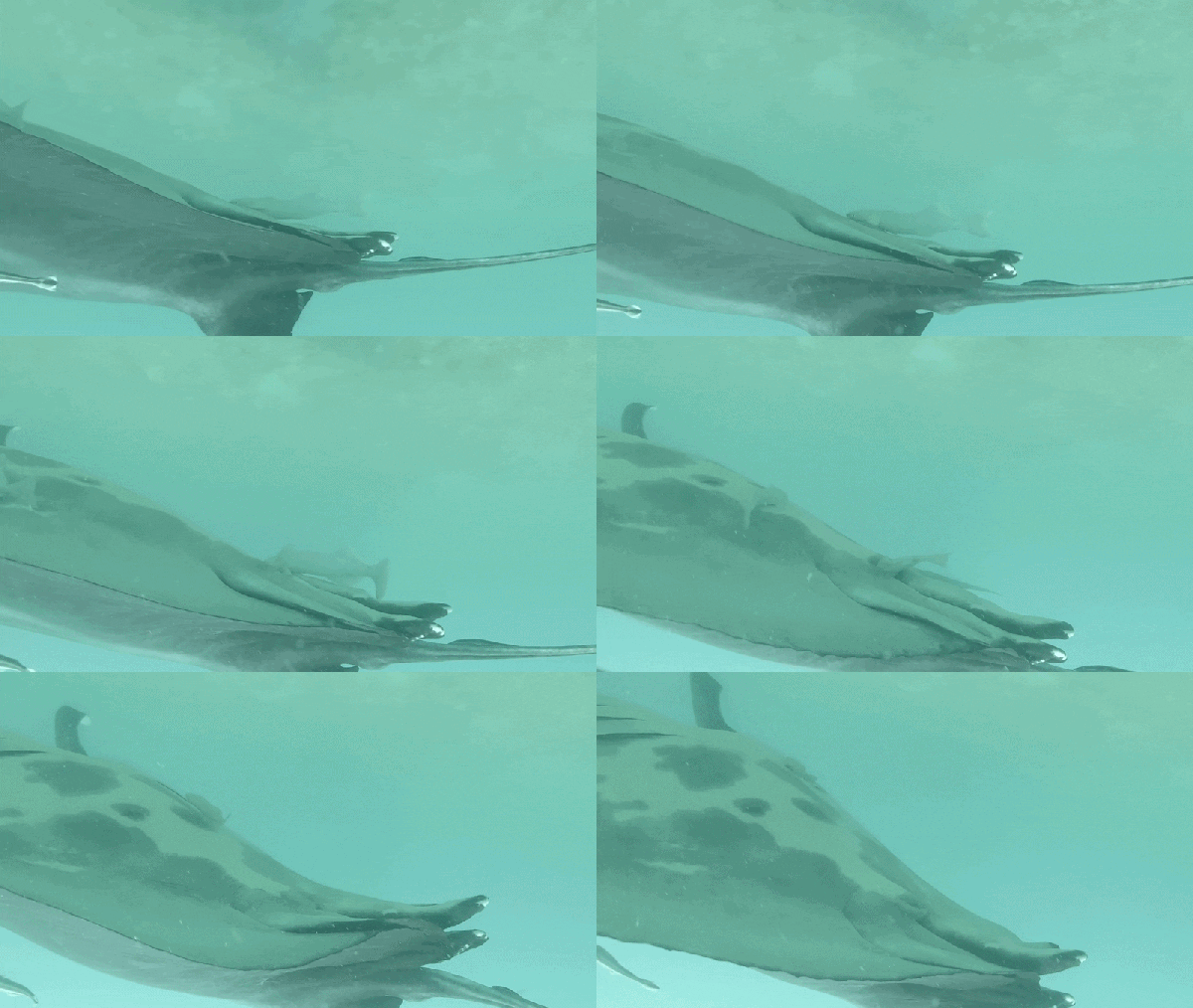
A remora enters the cloacal opening of a Mobula yarae manta ray in Florida.
Emily Yeager/Ecology and Evolution
Fish are diving into manta rays’ rear, and the rays are, perhaps unsurprisingly, not thrilled about it, according to new research.
In a new study, researchers documented seven cases of remoras, a fish known for suctioning itself onto rays—as well as sharks, dolphins, boats and even divers—plunging into manta rays’ cloacal orifice, an opening used for pooping, peeing and mating. The researchers call the practice “cloacal diving.”
It’s unwelcome behavior, at least on a manta rays’ end. “It does not look like the manta ray likes it,” said Catherine Macdonald, senior study author and a marine biologist at the University of Miami, to the New York Times.
On supporting science journalism
If you’re enjoying this article, consider supporting our award-winning journalism by subscribing. By purchasing a subscription you are helping to ensure the future of impactful stories about the discoveries and ideas shaping our world today.
But for the remoras, shimmying into a manta ray’s behind could offer several benefits, the authors speculate: it could function as a convenient hiding place from predators, a source of food—remoras typically eat a diet made up of their hosts’ feces, scraps and parasites—or simply a hitchhiking spot with “reduced drag,” they write in the study.

Photographs document the presence of remoras within manta ray cloacal openings
Remoras have been known to hide in other marine species’ “semi-internal structures,” the study authors write. The fish have been found in the gills and cloacal openings of whale sharks and the mouths of lemon sharks. “However, limited observations of these cryptic behaviors impede scientific descriptions of the mechanisms driving their occurrence,” the researchers add in the study.
It’s unclear how long a remora might stay inside a manta ray’s cloaca. But it’s entirely possible that just a “moderately-sized” remora could “impede mating behavior, live birth, or defecation” if the fish were in there for “extensive periods of time,” the authors write.
The study was published on Monday in the journal Ecology and Evolution.
It’s Time to Stand Up for Science
If you enjoyed this article, I’d like to ask for your support. Scientific American has served as an advocate for science and industry for 180 years, and right now may be the most critical moment in that two-century history.
I’ve been a Scientific American subscriber since I was 12 years old, and it helped shape the way I look at the world. SciAm always educates and delights me, and inspires a sense of awe for our vast, beautiful universe. I hope it does that for you, too.
If you subscribe to Scientific American, you help ensure that our coverage is centered on meaningful research and discovery; that we have the resources to report on the decisions that threaten labs across the U.S.; and that we support both budding and working scientists at a time when the value of science itself too often goes unrecognized.
In return, you get essential news, captivating podcasts, brilliant infographics, can’t-miss newsletters, must-watch videos, challenging games, and the science world’s best writing and reporting. You can even gift someone a subscription.
There has never been a more important time for us to stand up and show why science matters. I hope you’ll support us in that mission.