
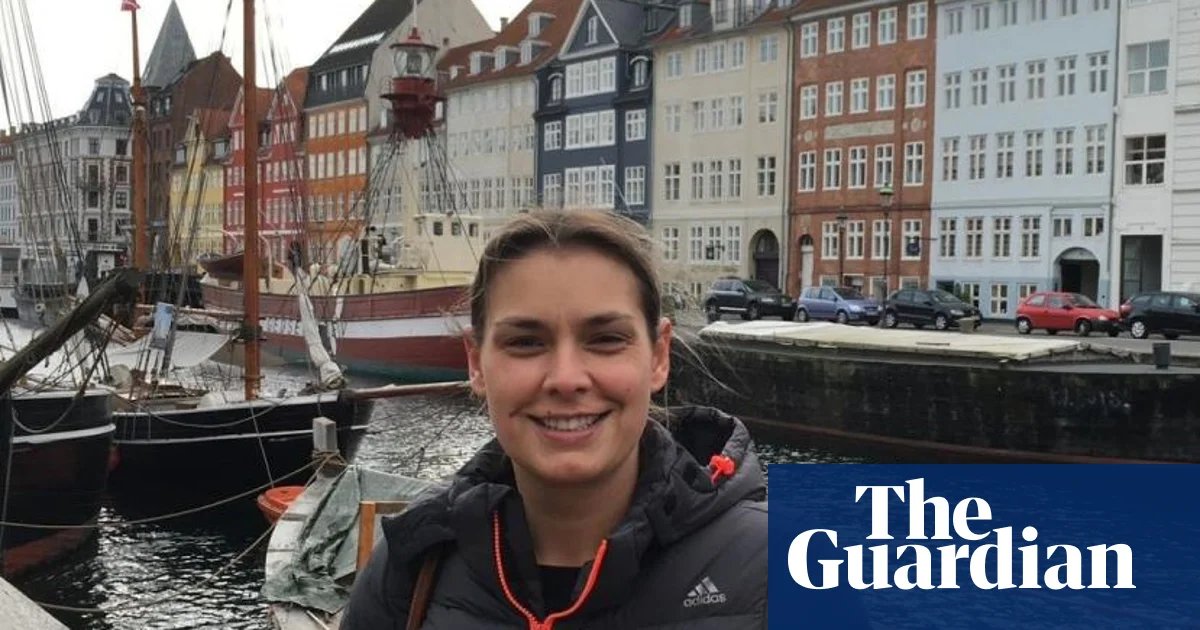
A barrister has suggested that a “dead woman was put on trial” in the case of Christopher Trybus, who was cleared of manslaughter by a jury.
Charlotte Proudman’s comments came after Trybus was found not guilty by a jury of eight women and four men, who deliberated for more than 40 hours. He was acquitted of all charges: manslaughter, coercive and controlling behaviour and two counts of rape.
The case had been brought after his wife, Tarryn Baird, 34, took her own life in 2017. Prior to her death, she made allegations that Trybus had been abusive to her.
Trybus’s defence argued that Baird had made false allegations because she was “bored and lonely”, and because she had been “desperately seeking help” for her mental health issues, “and feeling she wasn’t receiving it and she may have become addicted to the attention that her allegations brought”.
Trybus, 44, denied all of the charges and said he had been unaware of his wife’s allegations before her death. He told the court: “I feel bad she was in such a place that she was saying these things – what was going through her mind?”
He said that the day Baird had died was “the worst day of my life, just absolutely terrible, I don’t know how else to describe it”.
Baird had lived with PTSD from witnessing violent incidents in South Africa where the couple had lived before they moved to the UK, and had taken several prescription drug overdoses in the months leading up to her death.
Trybus told the court that he could not have caused some of the injuries Baird had presented to doctors with, as he was not in the country at the time.
After the trial, Proudman criticised Trybus’s defence for aspects of its closing speech.
The defence had questioned how Trybus was “supposed to answer the allegations of a ghost from 10 years ago”. It described the case as “Kafkaesque”, and suggested the prosecution had “an agenda”.
Trybus’s barrister, Katy Thorne KC, said: “They are totally obsessed with a dogma, this whole case is based on an agenda that when women allege violence and domestic abuse, they must be telling the truth.”
Proudman said she felt the comments meant that a “dead woman was put on trial”, while “the defendant faded into the background”.
Thorne said Proudman’s remarks did not “accurately reflect what was said to the jury” and showed a “limited understanding of the facts of the case”. Shesaid Proudman, who practises family law, had not been in court to hear evidence during the trial.
Trybus’s defence argued the case had echoes of the French Revolution, where innocent people had been swept up by a cause that was ultimately trying to achieve a positive aim, and compared Trybus to Mr Cellophane from the film Chicago, likening Baird to Roxy, a murderer who manipulates her husband.
Thorne also made a direct appeal to the men on the jury, saying: “You might feel very afraid now, because if you enter into a relationship with a woman who’s making allegations against you, even if they turn out to be untrue, you will be prosecuted even if the allegations are uncredible, you will be prosecuted.”
Proudman said: “[The defence] claimed there is an ‘agenda’ to believe women by the criminal justice system when in fact it barely prosecutes rape and routinely retraumatises victims. That claim is false and misleading.”
She also criticised the defence for “telling male jurors to be afraid of false allegations”, saying they were “vanishingly rare” and represented less than 2% of reports made.
In response, Thorne said: “This trial was prosecuted by the most senior prosecutor in the country and presided over by a senior high court judge whose background is in discrimination law. Had I said anything to the jury which was improper or did not reflect the evidence in the case, the prosecution and the judge would have objected. They did not.
“Dr Proudman was not present for any part of the trial and did not hear any of the evidence. Her comments do not accurately reflect what was said to the jury and show a limited understanding of the facts of the case.”
However, Janaya Walker, the interim director of End Violence Against Women, said that many women were “treated as suspects” by the criminal justice system after dying by suicide. “Successive governments have rightly taken action to address the fact that the criminal justice system and courts are often a site of harm and retraumatisation … with high dropout rates and low prospects of justice.
“However, we can see that harmful sexist beliefs about women are still widely prevalent, with women treated as suspects even after they’ve died by suicide – this includes a culture of disbelief and wrongful claims about false allegations, which are exceptionally rare.”
Although the Crown Prosecution Service (CPS) has yet to see a successful case in a jury trial for a prosecution of manslaughter after a suspected suicide related to domestic abuse, it has said it will consider bringing cases where there is evidence to do so.
A spokesperson for the CPS said: “We respect the decision of the jury. They have heard all the evidence and come to their verdicts.”
In the UK and Ireland, Samaritans can be contacted on freephone 116 123, or email jo@samaritans.org or jo@samaritans.ie. In the US, you can call or text the National Suicide Prevention Lifeline on 988, chat on 988lifeline.org, or text HOME to 741741 to connect with a crisis counselor. In Australia, the crisis support service Lifeline is 13 11 14. Other international helplines can be found at befrienders.org


