Millions of Britons are “prepping” for a potential “major disruptive event” by keeping a stash of cash at home, stockpiling tinned goods or ensuring they have a battery-powered torch close to hand, new data suggests.
With war raging in the Middle East and Ukraine, extreme weather becoming more frequent, and warnings that the UK’s critical infrastructure is at risk from cyber-attacks and power outages, many people feel the world has become a more dangerous and chaotic place.
While some are taking steps to make sure they are not left high and dry in the event of a bank IT failure, others are preparing for a possible natural disaster, or even a societal collapse. UK experts recently advised people to have an emergency store of food in their home in case something happens that causes shortages.
Link, the UK’s ATM network, tracks how people are using, and thinking about, cash and, for the first time, its researchers have asked the public about what “contingency planning” they are doing to prepare for an event that would cause “major disruption to normal services”.
Link’s suggestions include a power outage, IT failure, natural disaster or cyber attack. It did not explicitly mention war or conflict.
Asked what they thought they would do if something happened that meant card and mobile payments were not accepted in shops, 54% of those surveyed said they would withdraw cash from an ATM.
Meanwhile: 46% said they would use supplies, such as food, that they had at home; 41% said they would use cash they had on their person to pay for items; 36% said they would use cash they had at home; and 31% said they would shop online.
Notably, 15% said they would raid the supply of banknotes and coins that they had kept safe specifically for this type of scenario.
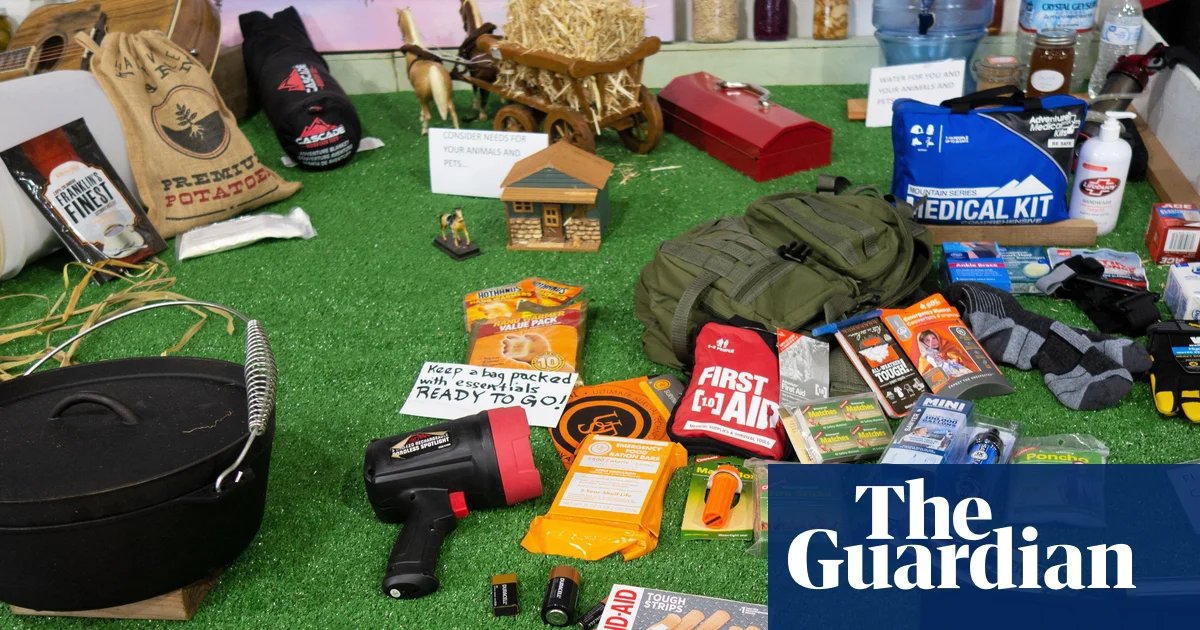
The researchers then asked what people had already done, or were now doing, in preparation for a disruptive event. Almost half (49%) said they had battery-powered items at home, such as a torch, while 47% said they had a supply of tinned goods such as baked beans and canned fruit, and 37% said they kept a power bank in the house to keep their mobile phone charged.
One in five (20%) said they had access to a portable gas hob such as a camping stove, while 15% said they had an analogue radio. In terms of money, 17% said they had “a stash of cash at home”.
Just over a quarter (27%) of respondents had not done anything to prepare for an event of that type.
Of those who had taken any of the above actions, 23% said they had done so recently: within the last three months.
Graham Mott, Link’s director of strategy, said the data demonstrated the growing role played by cash in people’s resilience planning.
“With rising public concern about threats like power outages, cyber-attacks and disruption to card payments, more people are prepping by keeping some emergency cash at home,” he added.
The UK government’s Prepare website outlines steps it says people should consider taking to prepare for emergencies, which include assembling a list of items at home that could include tinned food that does not need cooking, bottled water, a first aid kit, hand sanitiser, a battery-powered or wind-up torch and radio, a portable power bank for phone charging, and spare batteries.
Specialist “prepper” shops have become popular in the UK, with some reporting a boom in the aftermath of the Covid lockdowns.