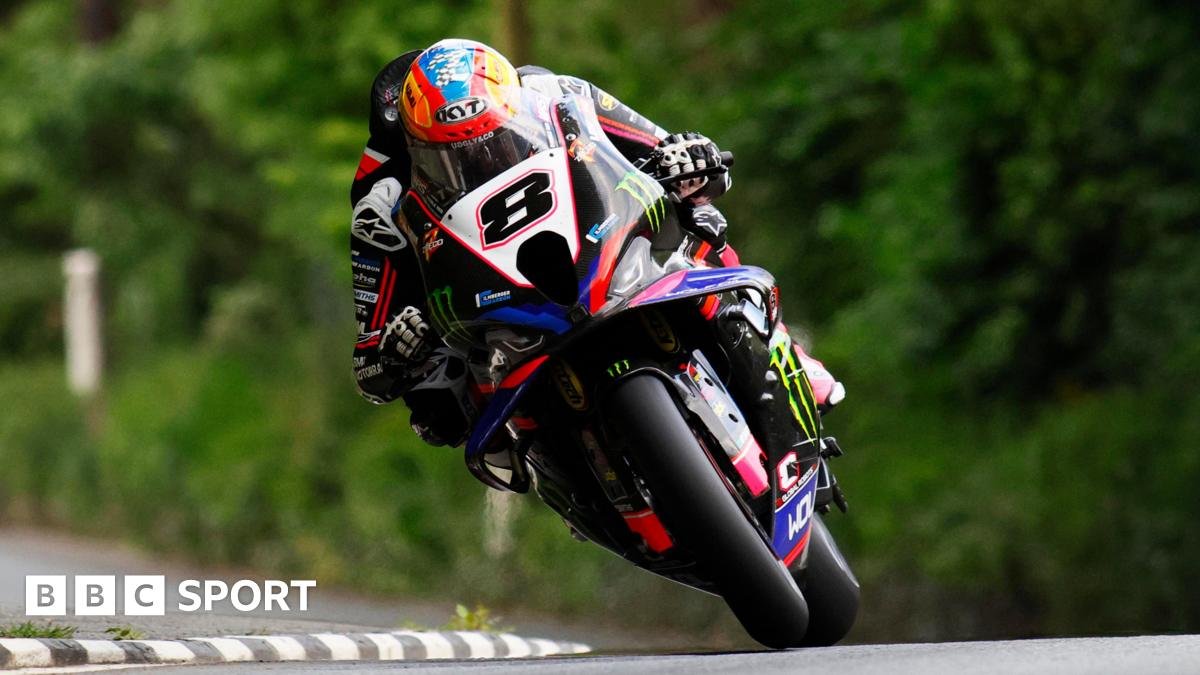
Road racing is a dangerous sport, as riders can reach speeds of more than 200mph on the long run to University Corner at the North West 200, but there are measures in place to make it as safe as it can possibly be.
Protectors and bales are placed in front of trees, lamp posts, walls and kerbs that line the circuit, while certain street signs and other obstacles are removed for the duration of the event.
The circuit used to be a fast and flowing triangle, but as the speeds of bikes have increased four chicanes have been introduced to lower the average speed of the lap.
The latest of these was introduced at Mather’s Cross in 2010, which was previously a high-speed curve with little run-off, after the deaths of Robert Dunlop in 2008 and Mark Young the following year.
When Mitchell-Thomas died in 2016, additional protectors were introduced along the coast road, and safety measures are reviewed before the event each year.
If there are any concerns about track conditions, such as oil spills or debris, experienced former racers are among those who head to the scene along with officials to help decide if it is safe for bikes to head back out on track, and if any action needs to be taken.
However, as Holan’s accident tragically highlighted, the sport will never be 100% safe, and those who race on Saturday will do so in his memory.
“When it’s good, it’s the best thing in the world,” Todd said.
“There’s nothing that compares to the feeling of it. The highs are highs, but the lows are really low.”