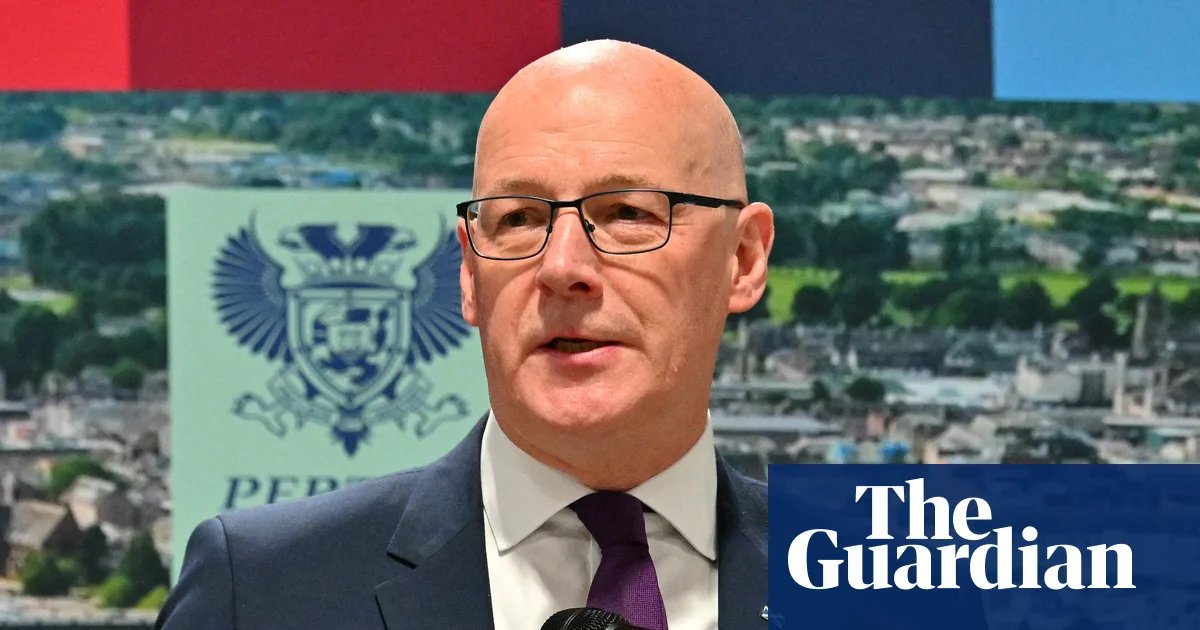
John Swinney, the Scottish National party leader, has declared victory in the Holyrood elections after only a handful of results confirmed Labour had been comprehensively beaten.
Speaking to the BBC after holding his own seat of Perthshire North, Swinney said he was “absolutely certain the SNP is going to be the leading party coming out of this election”.
He said he would be “privileged” to form the next Scottish government after leading his party to its fifth successive victory. “I think that’s a reflection of the work that we’ve undertaken to rebuild public confidence and trust in the SNP,” he said.
A little earlier the Scottish Labour leader, Anas Sarwar, conceded that his party had comprehensively lost, after admitting the party failed to counter the “national dissatisfaction” with Keir Starmer.
Speaking to the media in Glasgow after only seven of Holyrood’s 129 seats had been declared, Sarwar said: “We made an argument for change and, ultimately, it’s an argument we lost.”
He said he stood by his demands in January for Starmer to quit as UK Labour leader and prime minister. “My party is hurting today and it’s my job to hold it together,” he said. “We will continue to fight for the change we believe Scotland so desperately needs.”
“The tragedy of this election campaign is that despite all the arguments we wanted to make about the health service, the future of our schools, about tackling homelessness, sadly that’s not what the election became about,” Sarwar added. “It became about a national mood, and a national dissatisfaction. And that was a mood that we were not able to overcome.”
Labour sources said they had been punished by a disillusioned electorate, with voters deserting the party or staying at home in protest at Starmer’s policies on welfare changes, Israel’s war in Gaza and his engagement with Reform’s anti-immigration agenda.
Meanwhile, the Scottish Greens believe they are on the brink of an electoral breakthrough by winning their first constituency seats at Holyrood, with Scotland’s parties braced for a series of shock results.
Senior figures in the pro-independence party believe they could unseat Angus Robertson, the Scottish National party cabinet minister, in Edinburgh Central and were originally hopeful of winning at least one constituency seat in Glasgow.
Those forecasts came as the Liberal Democrats won the first of Holyrood’s 129 seats to be declared, holding Orkney with a record 70% vote share, while the SNP comfortably held Dundee City West with 49.1%.
Liam McArthur, who was held Orkney for the Lib Dems since 2007, is seen as a contender to become Holyrood’s next presiding officer. He thanked his rival candidates for showing “you can have a political contest without knocking seven bells out of each other”.
Yet, in the first surprise result of the day, the SNP won the former Liberal Democrat stronghold of Shetland for the first time. The Lib Dems had held the seat for 27 years.
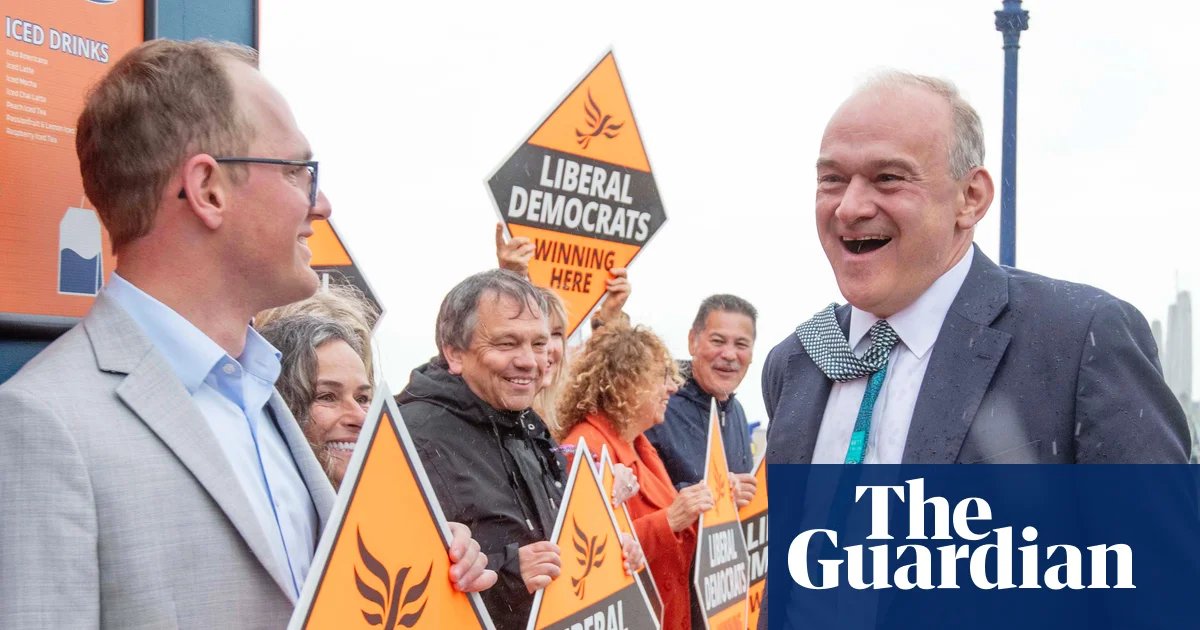
The Lib Dems’ vote fell by 14.3%, damaging their hopes of staging a significant revival on the back of centrist Conservatives voters deserting the Tories after their recent swing to the right.
This election, after the surge in support for Reform UK, was thought to be the least predictable since the advent of devolution in 1999. The SNP was expected to win comfortably, but on the lowest share of the vote since 2007, with Reform’s arrival splitting the anti-SNP vote.
The SNP enjoyed a series of wins in the first wave of constituency declarations, and by lunchtime the Scottish Greens were playing down their chances of winning a Glasgow constituency. They hoped to record their “best ever Glasgow result” but said the SNP had edged into the lead in both their target seats in the city.
By 2pm Swinney’s SNP had taken six constituency seats, despite clear cuts in its support. Academic studies have found increasing evidence voters are unhappy with the SNP’s record in government, which has hit its support.
Under the Scottish parliament system, Holyrood’s 73 first-past-the-post constituency seats are counted first before returning officers calculate each party’s share of the vote in 56 regional list seats, where the Greens, Reform and Labour are expected to benefit most.
In Kilmarnock and Irvine Valley south of Glasgow, the SNP won with 40% of the vote but its share of the vote fell by 13 percentage points. It held Dundee City West with 49.1% but recorded a 12.5-point fall in support. In both seats, Labour’s vote slightly improved. It held Dundee City East too, with 48.8% but saw its vote fall by 10.4 points.
Reform UK, which the latest opinion polls suggest is on course to become Holyrood’s second largest party, had its strongest showing in very narrowly losing in Banff and Buchan Coast, where there was majority support for leave in the 2016 EU referendum. Karen Adams held it for the SNP by just 264 votes over Reform, with the SNP share falling by 10 percentage points.
In the first wave of results Reform did well in Carrick, Cumnock and Doon Valley in western Scotland, coming second behind the SNP with a 24.1% vote share.
It has never contested that seat before, and its second place appeared to be largely at the expense of the Tories; their vote share fell by 17.9 points to just 12.7%.
On a very difficult day for Scottish Labour, it enjoyed a shock victory in Na h-Eileanan an Iar (the Western Isles), with its popular candidate, Donald MacKinnon, narrowly defeating the former SNP minister Alasdair Allan, who has held the seat for the SNP since 2007, by just 154 votes.
With the full count taking place on a Friday for the first time in a Scottish parliament election, the unpredictability was underscored by low turnouts in several constituencies.
Although some boundaries have changed, in several Glasgow seats with higher than average levels of deprivation, the turnout was as low as 43%. In the 2021 Holyrood election, turnout in comparable constituencies was in the low 50s.
Turnout in Carrick, Cumnock and Doon Valley was down by 10.7 points on 2021, to 48.7%.
In Edinburgh, Scotland’s wealthiest city, the turnout in the Scottish Greens’ target seat of Edinburgh Central was 54.7%. While subject to boundary changes, turnout in the comparable seat in 2021 was 62.5%.