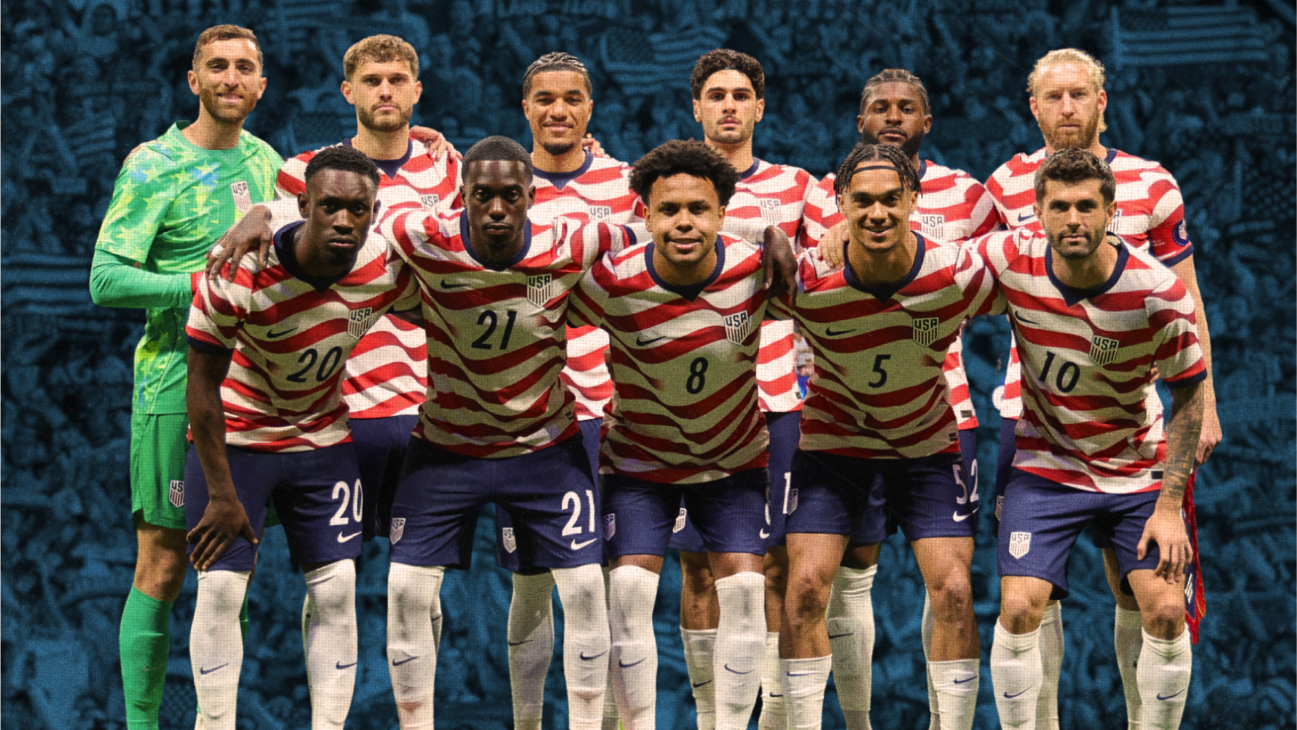
We’re a little less than a month away from U.S. men’s national team coach Mauricio Pochettino announcing his 26-man squad for this summer’s World Cup.
If you want a sense of what that roster might look like, then allow me to direct you to my colleague Jeff Carlisle’s big board from the beginning of last month. What I’m doing today — and what we did last year, and the year before — is informed by Jeff’s projections, but we’re going a little bit deeper than just who might feature this summer. Instead, we’re taking a look at the depth across the entire USMNT player pool.
This is especially relevant because while it’s hard to really see much progress in on-field performance under Pochettino, he did expand the pool of selected — and selectable — players since taking over in 2024. Per Stats Perform data, 61 different players have played for Pochettino’s USMNT across his 24 games in charge.
To come up with this depth chart, I leaned heavily on recent USMNT involvement. Beyond that, I favored players who have featured in some minutes under Pochettino — the thinking being that, in an emergency, he’d at least lean on players he’d felt comfortable putting on the field at some point.
Once we get beyond those 61 guys, though, it’s a mix of MLS stalwarts, exciting prospects who are actually playing professional minutes, and USMNT vets who never got a look under Pochettino.
These are not my top 15 players at every position, but rather a rough projection of who Pochettino’s top 15 might be. Let’s get to it.
– How McKennie keeps winning over USMNT, Juventus coaches
– Life after Pochettino: USMNT needs ambitious succession plan
– Can USMNT’s depth at the 2026 World Cup make a difference?
Goalkeepers
1. Matt Freese, New York City FC
2. Matt Turner, New England Revolution
3. Chris Brady, Chicago Fire
4. Roman Celentano, FC Cincinnati
5. Patrick Schulte, Columbus Crew
6. Zack Steffen, Colorado Rapids
7. Ethan Horvath, New York Red Bulls
8. Drake Callender, Minnesota United
9. Brad Stuver, Austin FC
10. Andrew Thomas, Seattle Sounders
11. Duran Ferree, San Diego FC
12. Diego Kochen, Barcelona
13. Gaga Slonina, Chelsea
14. Brian Schwake, Nashville FC
15. Michael Collodi, FC Dallas
This caveat applies to every position: the further you go down the list, the less confident I am in what you are reading. At that point, we’re getting into a mixture of veterans who have never or rarely played for the United States or young players who have never or rarely played high-level professional soccer.
Despite the explosion of American talent across Europe, the goalkeeper talent pool seems to have regressed. Sure, Gaga Slonina and Diego Kochen play for Barcelona and Chelsea, but they never actually, well, play. And odds are neither of them ever will play much for either of their current employers.
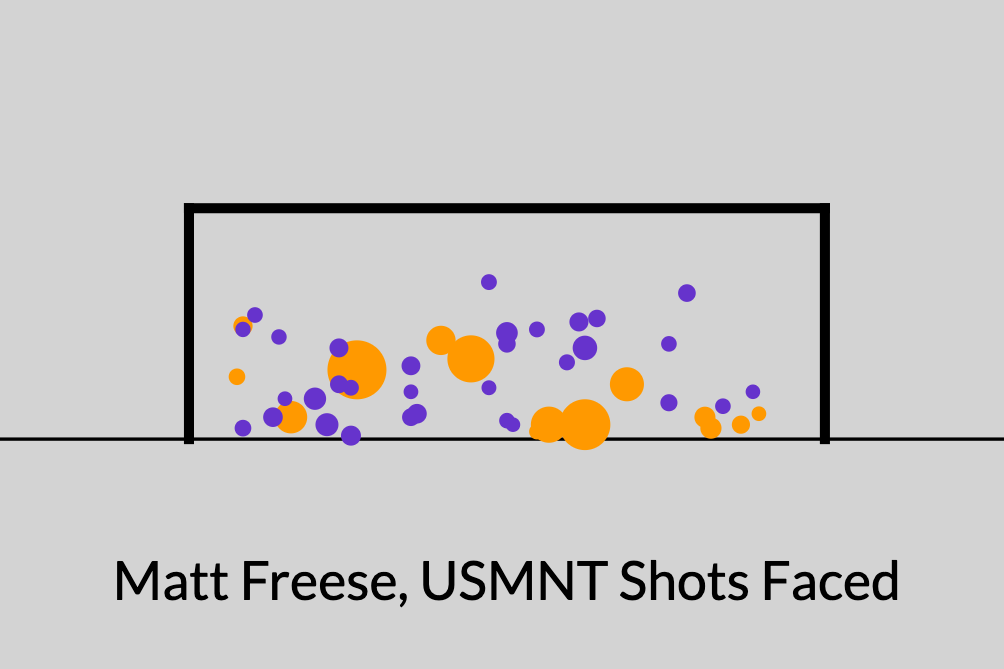
Freese appears likely to be the USMNT starter. And he’s been solid in all of his matches under Pochettino. Per Opta, the average goalkeeper would be expected to concede 19.45 goals from the shots he’s faced for the USMNT, while Freese has allowed just 16:
In MLS this season, per Gradient Sports, neither Freese nor his likely backup, Matt Turner, have made a mistake while facing a shot. That’s one of the better, if not the best, metrics for predicting future performance.
While I’m not sure we should expect a stand-on-his-head performance from the USMNT goalkeeper that singlehandedly wins a match against a world power this summer, we can be reasonably confident that the performance of whoever is in goal will be good enough.
Center backs
1. Chris Richards, Crystal Palace
2. Tim Ream, Charlotte FC
3. Mark McKenzie, Toulouse
4. Miles Robinson, FC Cincinnati
5. Auston Trusty, Celtic
6. Tristan Blackmon, Vancouver Whitecaps
7. Noahkai Banks, Augsburg
8. Sean Zawadzki, Columbus Crew
9. Walker Zimmerman, Toronto FC
10. George Campbell, West Bromwich Albion
11. Jackson Ragen, Seattle Sounders
12. Justin Haak, Los Angeles Galaxy
13. Justen Glad, Real Salt Lake
14. Brendan Hines-Ike, Austin FC
15. Maximilian Dietz, Greuther Furth
Despite all of the currents pushing back against it — a new manager, the passing of four years of time, a move to a much less competitive league — Tim Ream seems likely to be one of the starting center backs for the USMNT at the 2026 World Cup.
If you want one example of how unpredictable soccer careers can be, then how’s this? Yunus Musah, who started as a 19-year-old at the last World Cup and hasn’t suffered any notable injuries since, probably isn’t even going to make the 2026 roster, while Ream, who turns 39 later this year, is going to start in back-to-back World Cups.
That’s amazing — and, well, it depends how you want to look at it. This could be held up as an example of Ream’s incredible longevity and professionalism … or it could be an indictment on the rest of the center-back pool. No one could displace the guy who is older than the already-old person writing the article you’re currently reading?
To his credit, Ream has played well in MLS and provides passing from the back that no one else, not even Chris Richards, can. It’s just that … he’s 39! And like most 39-year-olds, his body doesn’t move how it used to, and he needs defensive protection despite, you know, being a defender.
If Pochettino ends up going with the back-four-into-a-back-three setup that has been successful in some recent matches, then that should help to cover up some of Ream’s ever-decreasing range.
Cameron Carter-Vickers would at least be in the mix for a spot on the plane, but he’s missed most of the season for Celtic with injury.
Same goes for Noahkai Banks, who may have even had an outside shot at starting for the U.S. this summer, but has been unwilling to commit to the USMNT over Germany. I threw him into the middle of the pool, but that’s really just splitting the difference: he’s either toward the top of the depth chart or he’s not on it at all because he’s playing for Germany.
2:00
Johnny Cardoso: USMNT can’t wait to show the world what we can do
Johnny Cardoso believes the USMNT will have a good World Cup under head coach Mauricio Pochettino.
Right back
1. Sergiño Dest, PSV
2. Alex Freeman, Villarreal
3. Joe Scally, Borussia Monchengladbach
4. Nathan Harriel, Philadelphia Union
5. Shaq Moore, FC Dallas
6. Bryan Reynolds, Westerlo
7. Brandon Bye, Portland Timbers
8. Benjamin Kikanovic, San Jose Earthquakes
9. Griffin Dorsey, Orlando City
10. Oscar Verhoeven, San Diego FC
11. Jake Davis, Sporting Kansas City
12. Kalani Kossa-Rienzi, Seattle Sounders
13. DeAndre Yedlin, Real Salt Lake
14. Reggie Cannon, Colorado Rapids
15. Mauricio Cuevas, Los Angeles Galaxy
Fullback is weird. Both as a position and as a specific part of this exercise.
It’s the only spot on the field where you really only play that position, on that side of the field, and you rarely get subbed off. So, naturally, the 10th-best right back and left back is going to be significantly worse than the 10th-best midfielder. After the top four on this list, I truly have no idea what Pochettino’s depth chart would be.
He seems to rely heavily on MLS players for the depth roles, so I’ve gone with a mixture of guys who have been playing right back in MLS this year, plus a couple guys who used to play right back in MLS more frequently and who occasionally started for the USMNT in the past.
Looking at things from this view, Sergino Dest might be the least-replaceable player in the theoretical starting 11. Granted, his backups are playing for Villarreal and Borussia Monchengladbach, but Alex Freeman doesn’t offer the same kind of creativity and possession security as Dest.
Meanwhile Joe Scally is more of a third-centerback-type fullback than someone who is going to provide anything going forward. I put Tim Weah in the winger/attacking-midfielder group below, but he’s potentially ahead of Scally in Pochettino’s right-back pecking order, and he really might be ahead of Freeman, too.
Dest is back in training with PSV, so it seems like it’s less of a question of “will he be fit in time for the World Cup?” and more “how fit will he actually be?”
Left back
1. Antonee Robinson, Fulham
2. Max Arfsten, Columbus Crew
3. John Tolkin, Holstein Kiel
4. DeJuan Jones, San Jose Earthquakes
5. Kristoffer Lund, FC Koln
6. Marlon Fossey, Standard Liege
7. Luca Bombino, San Diego FC
8. Daniel Lovitz, Nashville FC
9. Frankie Westfield, Philadelphia Union
10. Tate Johnson, Vancouver Whitecaps
11. George Bello, LASK
12. Marco Farfan, Tigres UANL
13. Caleb Wiley, Chelsea
14. Will Sands, New England Revolution
15. Anthony Markanich, Minnesota United
While there aren’t many young right backs playing in MLS, there are a bunch of young left backs. Luca Bombino, Frankie Westfield, and Tate Johnson are all starters despite not being able to legally purchase a Mike’s Hard Lemonade in order to celebrate a victory.
Beyond the first seven players, who have all played under Pochettino, it’s a mix of some exciting youngsters, veteran MLS-ers, and a couple guys who starred in MLS at a young age but have lost their way since going to Europe.
While this has, historically, been a weak spot for the USMNT, the pipeline looks quite strong — someone from the Bombino/Johnson/Westfield/Caleb Wiley quartet should develop into a USMNT starter at some point, right?
Max Arfsten, meanwhile, has played more minutes under Pochettino than anyone other than Freese and Ream. At this point last year, most USMNT fans had never heard of him. Now he seems like a lock for the World Cup, with an outside shot at breaking into the starting 11.
But if Robinson is healthy in a month and a half, he’ll be starting. There might be some questions about how exactly he fits into the potential back-three-ish formation — does anything other than the traditional fullback role mute and de-leverage his world-class athleticism? — but he’s been one of the best left backs in the Premier League for the past few seasons. You gotta find a way to make it work.
Central midfielders
1. Tyler Adams, Bournemouth
2. Weston McKennie, Juventus
3. Tanner Tessmann, Lyon
4. Johnny Cardoso, Atletico Madrid
5. Cristian Roldan, Seattle Sounders
6. Sebastian Berhalter, Vancouver Whitecaps
7. Aidan Morris, Middlesbrough
8. Luca de la Torre, Charlotte FC
9. Yunus Musah, Atalanta
10. Gianluca Busio, Venezia
11. Emeka Eneli, Real Salt Lake
12. James Sands, FC Saint Pauli
13. Adri Mehmeti, New York Red Bulls
14. Mark Delgado, Los Angeles FC
15. Edwin Cerrillo, Los Angeles Galaxy
Rather than dividing this by central and defensive midfielders, I’ve grouped them together because the roles are a little more similar if the USMNT opts for the kinda-back-three system that I keep mentioning.
The big question here is: should Weston McKennie be a midfielder?
That applies to this exercise and also to his actual role on the USMNT. To get the most talent onto the field, I think you play McKennie next to Tyler Adams, give him more freedom to break into the box, and trust Adams and the three players behind him to clean up any gaps he leaves open.
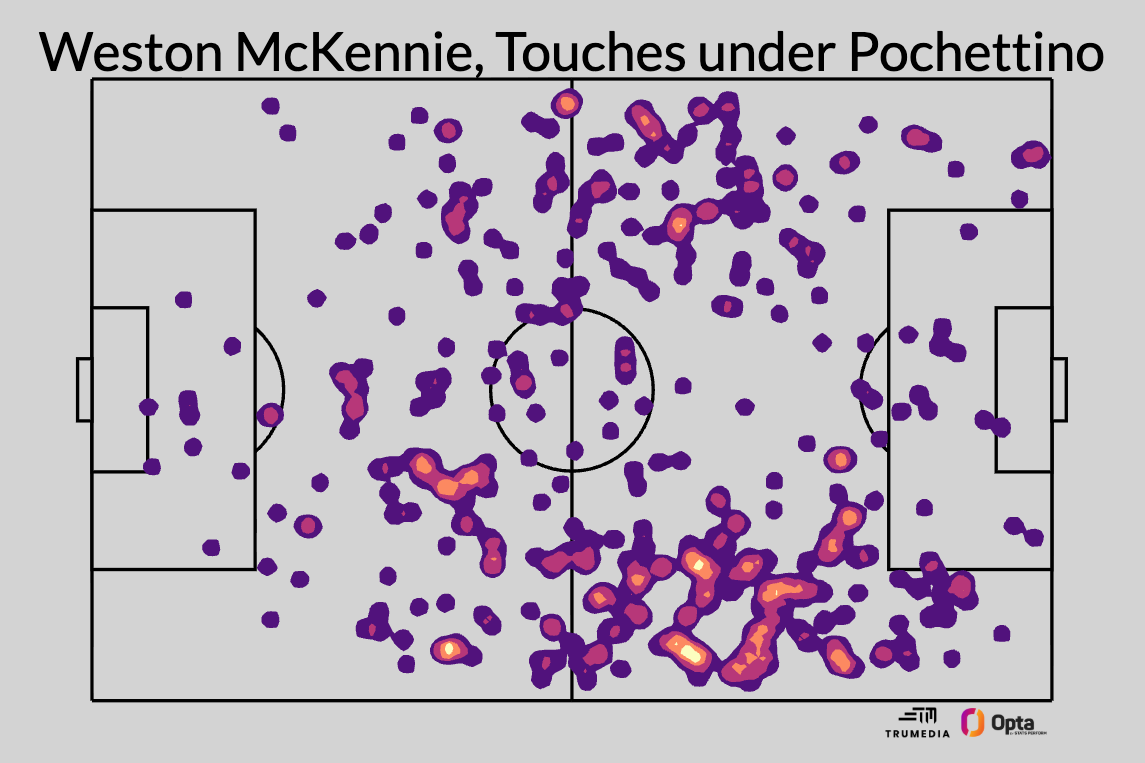
To get the most out of McKennie, you probably play him a little higher up the field, like he’s been doing with Juventus, where he’s on fire. But I don’t think maximizing McKennie and maximizing the overall USMNT performance necessarily have a one-to-one correlation. I also think a big part of McKennie’s value comes from how he can contribute — in a similar way, by running into valuable spaces — from an array of roles across the field.
Plus, Tanner Tessmann, Johnny Cardoso, and Aidan Morris haven’t shown themselves to be obvious midfield answers in the handful of starts they’ve been given by Pochettino. Cristian Roldan might even have the inside track on all of them.
You’re not struggling if any of these guys are starting this summer, but they’re all less likely to have an impact on the outcome of a match than McKennie is — even if he’s beginning his runs farther away from goal.
Wingers/Attacking midfielders
1. Christian Pulisic, AC Milan
2. Timothy Weah, Marseille
3. Malik Tillman, Bayer Leverkusen
4. Brenden Aaronson, Leeds United
5. Alejandro Zendejas, Club America
6. Diego Luna, Real Salt Lake
7. Giovanni Reyna, Borussia Monchengladbach
8. Jack McGlynn, Houston Dynamo
9. Quinn Sullivan, Philadelphia Union
10. Matko Miljevic, Racing Club
11. Timothy Tillman, LAFC
12. Indiana Vassilev, Philadelphia Union
13. Paxten Aaronson, Colorado Rapids
14. Zavier Gozo, Real Salt Lake
15. Niko Tsakiris, San Jose Earthquakes
These two positions get grouped together because they’re kind of the same in the expected system. The two players who play behind the striker will occupy one of two roles: sitting in-between the opposition midfield and defensive lines, or providing width on whatever side of the field where the fullback is pinching in as part of the back three.
Everyone is freaking out about Christian Pulisic’s goal-less streak, but this is soccer. It’s hard to convert chances. Sometimes, especially when you’re not a striker, the ball just keeps bouncing the wrong way off your foot or the opposition keepers make a bunch of saves for a couple months in a row.
The best stat we have to quantify attacking performance is a combination between expected goals and expected assists — the combined quantity and quality of the shots you get for yourself and the shots you create for your teammates. Among players who have played at least 1,500 minutes in Serie A this season, Pulisic is second in xG+xA per 90 minutes.
Again: second! In Serie A!
I know the USMNT fanbase needs something to be freaking out about at all times in order to feel alive, but take a deep breath. Sometimes the ball doesn’t go in the goal for a little while. Despite that, Pulisic has been one of the best players in Italy — again.
Also, the bottom of these lists are populated by a ton of young players who are playing a lot in MLS. It appears that the academy system is really starting to bear some fruit.
Niko Tsakiris, in particular, has been one of the best Americans in MLS this season — at any age, and he’s only 20. I dropped him and Zavier Gozo at the bottom of the list because they’ve never played under Pochettino — unlike everyone ahead of them — but I wonder if Pochettino might have a small surprise up his sleeve, with one spot on the roster reserved for a younger prospect?
Probably not — because he’s probably not going to be the coach beyond the World Cup, so why do anything that looks beyond this summer? — but he’s surprised us with just about every other roster he’s called up so far.
2:20
Does Christian Pulisic need to improve his form before the World Cup?
The ‘Futbol Americas’ crew discuss Christian Pulisic’s form leading into the 2026 FIFA World Cup.
Strikers
1. Folarin Balogun, Monaco
2. Haji Wright, Coventry City
3. Ricardo Pepi, PSV
4. Josh Sargent, Toronto FC
5. Damion Downs, Hamburg
6. Brian White, Vancouver Whitecaps
7. Julian Hall, New York Red Bulls
8. Brandon Vázquez, Austin FC
9. Jesús Ferreira, Seattle Sounders
10. Charlie Kelman, Charlton Athletic
11. Preston Judd, San Jose Earthquakes
12. Logan Farrington, FC Dallas
13. Darren Yapi, Colorado Rapids
14. Duncan McGuire, Orlando City FC
15. Daryl Dike, West Bromwich Albion
Folarin Balogun is No. 1 here — by about a mile.
He’s one of the better young strikers in all of Europe. Among players 24 and under across Europe’s Big Five top leagues who have played at least 1,500 minutes, he’s fifth in xG+xA per 90 minutes. That’s, of course, aided by the fact that he’s 24 and thus just on the outer edge of the age cohort, but the fact remains: the USMNT finally has a center forward who is good enough to start for a Champions League team.
That has never been the case before.
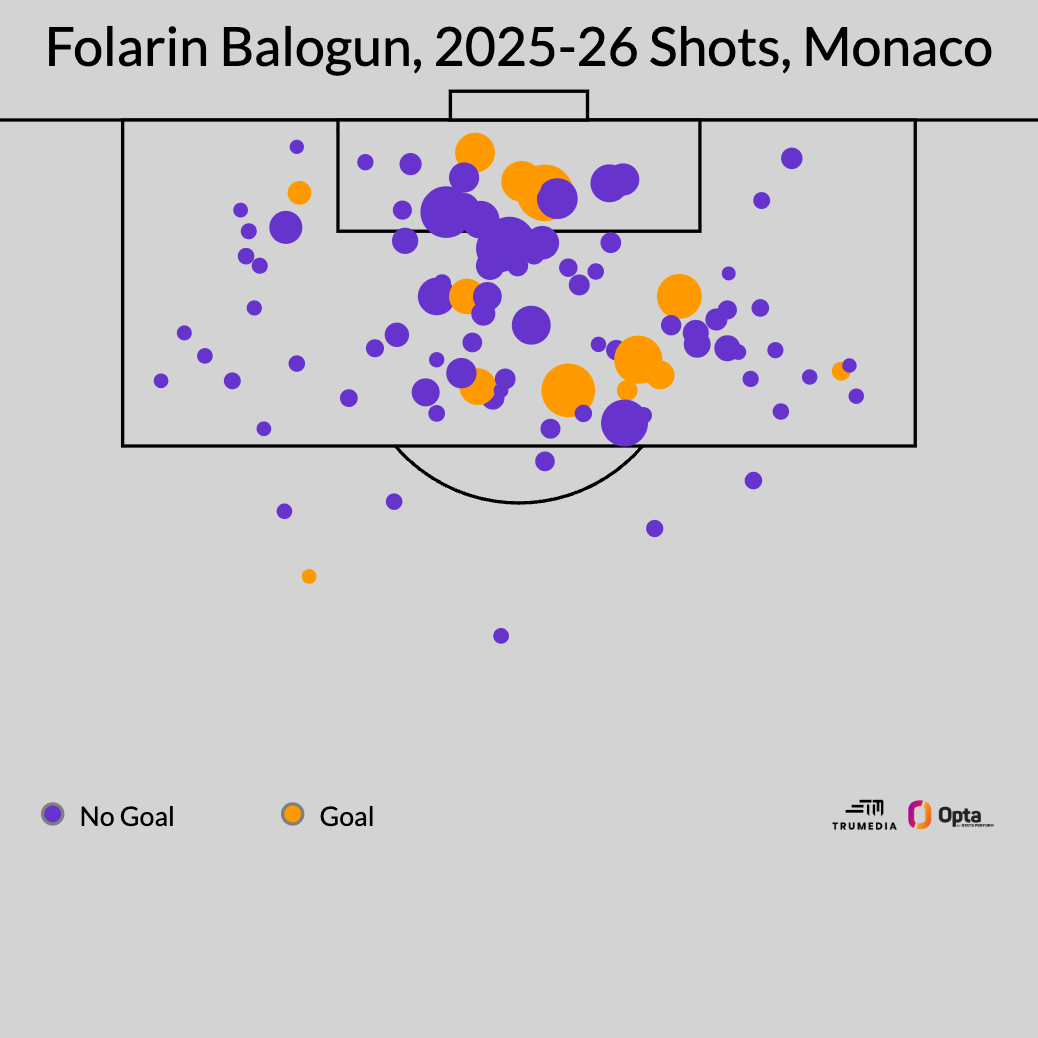
Outside of Balogun, there’s a big drop-off but Haji Wright has developed a lot since the last World Cup, while Ricardo Pepi remains a good off-the-bench option even if he still hasn’t developed enough of his overall game to play starter minutes.
Josh Sargent has been good in MLS, but I think you’d expect a little more than that? He might still make the roster after Patrick Agyemang, who was playing surprisingly well in his first season in the Championship, tore his Achilles.
One other name to call attention to is Julian Hall. He’s part of that group of young stars in MLS, and like some of the others, he’s a genuinely good MLS player — not just a good young player.
There are four players in MLS this season who have both at least six goals and six expected goals. In other words: guys who are scoring a lot and backing it up by getting lots of chances. Three of them combine for an average age of 27, pushed up by 31-year-old Brian White, who is the best center forward in MLS right now and might have an outside shot at the World Cup roster.
And then there’s Hall, who only turned 18 a couple weeks ago.