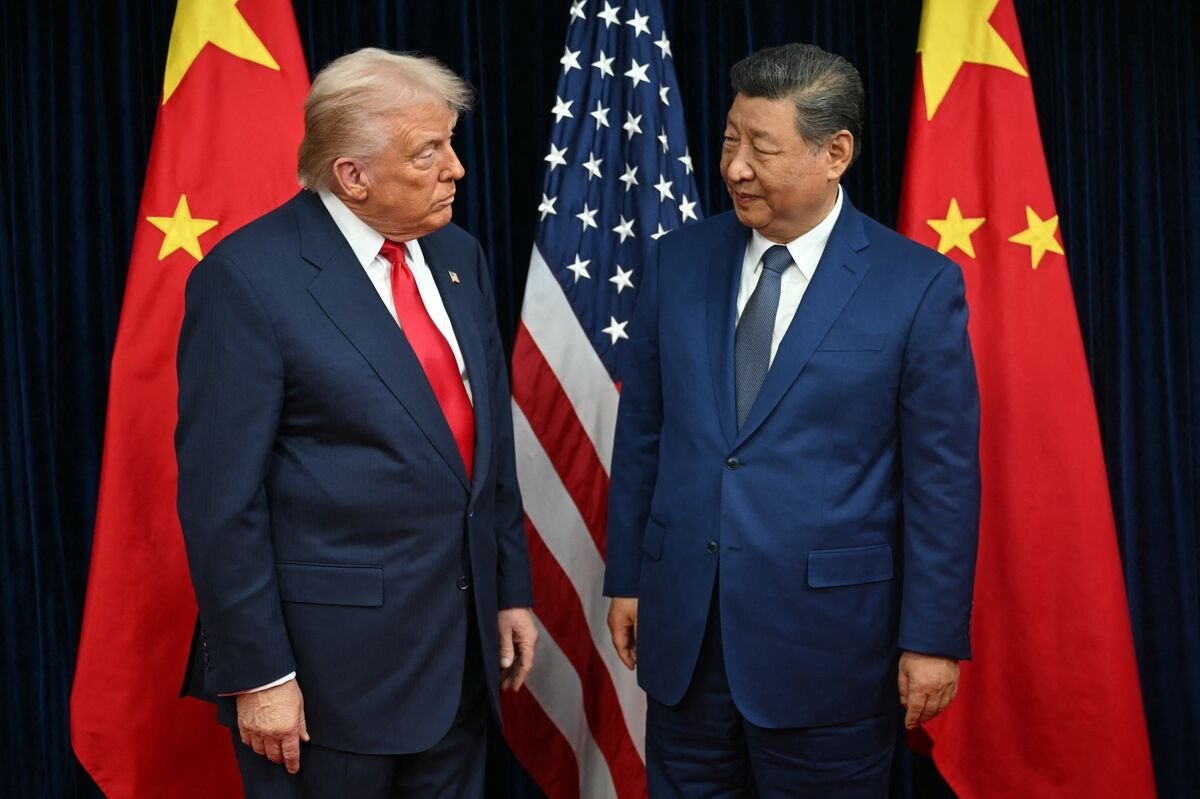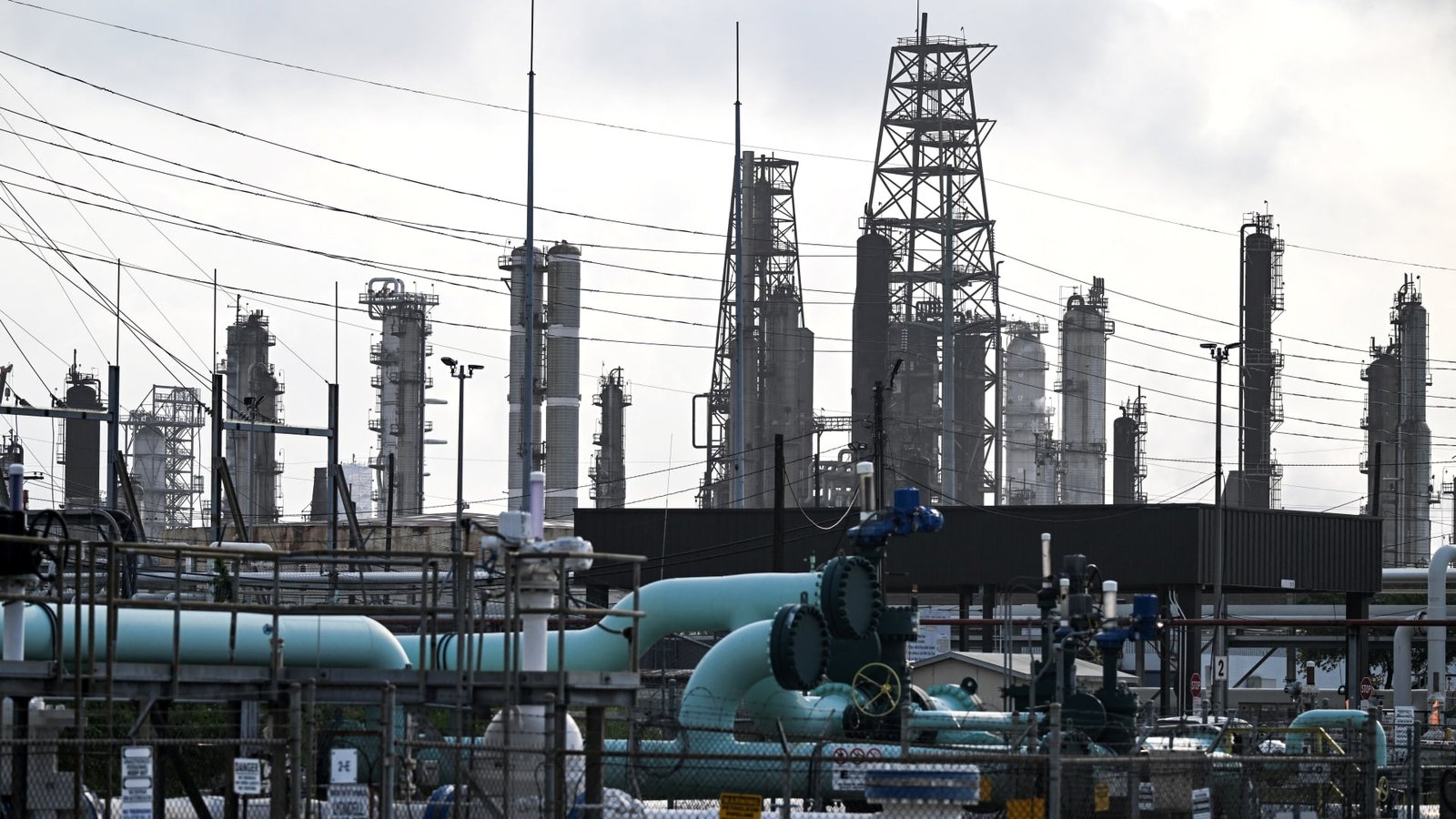
Renewed fears about the trajectory of the U.S.-Iran war sent global benchmark Brent crude futures to a four-year high and rattled equity markets on Thursday — but analysts say investors are still pricing for peace and underestimating potential future risk. The latest step higher in oil prices came after Axios reported that U.S. Central Command is preparing to present U.S. President Donald Trump with plans for further possible military action against Iran, citing anonymous sources. The president was also reported to have rejected a peace proposal from Tehran, which would mean an American blockade of the Strait of Hormuz — a critical oil shipping route — will remain in place. By 6:06 a.m. ET, Brent futures for June delivery fell 1.7% at $116.05 a barrel, climbing down from an earlier surge that put the contracts on track for their highest close since March 2022. U.S. West Texas Intermediate futures for June delivery were down about 0.2% to trade at $106.59, also paring earlier gains. @LCO.1 @CL.1 1D line Oil futures The fresh volatility on Thursday raised questions about what comes next for the oil market and the global economy. “This move in the oil price might be the catalyst to see sentiment and longer-term positioning changing,” Neil Birrell, chief investment officer at London-based Premier Miton Investors, told CNBC in an email on Thursday. He noted that while asset prices and sentiment have fluctuated alongside oil prices throughout the two-month Iran war, “it does feel like they have reflected more the likelihood of a resolution to the conflict.” Backwardation to bite Since the start of the Iran war in late February, the oil market has been in a state of backwardation : a phenomenon where futures with near-term deliveries are marketed at a premium over longer-dated contracts. Even as near-term futures contracts continue to surge, backwardation remains the status quo — signaling that money markets are pricing in a looming resolution to the war and a stabilization of energy prices. Optimistic sentiment has also been pervasive across other asset classes, with traders largely shrugging off the sell-off and volatility seen in the immediate aftermath of the war breaking out. However, the four-year high in oil markets, and fresh concerns about Trump’s next move, bled into equity and bond markets once again on Thursday. “The macro impact and the potential damage to corporate profits will come back into stark focus,” Birrell said of Thursday’s oil price spike. “However, economies and equities, in particular, have proven to be remarkably resilient — the question is, can that continue if the oil price stays at this level or higher?” In the near term, front-month futures could go a lot higher, warned Patrick Armstrong chief investment officer at Plurimi Group — who also cautioned that investors may not be fully pricing the longer-term impact of the war. “Where the curve is just crazy to me is the sharp backwardation,” he said. “It’s being priced as if the Strait is going to open imminently, and then everything is going to be okay. There’s been millions of barrels every day that haven’t gotten through, and that’s led to massive inventory drawdowns on oil — but on refined product, particularly jet fuel, diesel, even petroleum, all of these things are getting close to what you’re going to call crisis levels, where you’re going to have to really pay up to get them, and refineries are going to have incredible profit margins.” Armstrong told CNBC sellers are “going to be able to charge whatever [they] want for refined goods, because oil prices [will] stay higher for longer.” “Trump jawboned the oil price down by saying we’ve got a peace deal, and we don’t,” he said. “The Strait is going to be disrupted, we think, for all of May, and there’s very little inventory, so it’s hard to be diversified in equities — energy stocks are diversification, that’s what goes up when everything else goes down, because that gives you this stagflationary hedge, [and] that’s the biggest risk in the world right now.” Bill Perkins, the founder and managing partner of Skylar Capital — a hedge fund focused on the energy market — told CNBC’s “Squawk Box Asia” on Thursday that the economy is yet to see the true effects of the oil crisis arising from the effective closure of the Strait of Hormuz. “It takes about 40 days for that crew to get to its final destinations, to the big users. If the well runs dry, it takes a little bit [of time] for you to feel the effects, because there’s still … oil on the water that was able to reach its destination,” he said. Perkins said the bigger story is what’s happening in diesel and jet fuel supply chains, noting that while strategic petroleum reserves had dampened the crude oil market somewhat, diesel had almost doubled in price. “In the product markets, it’s a Wild West Show,” he said. “Even if we had peace today, you also have to consider the logistics of getting those ships out.” But Perkins also struck a more optimistic tone, telling CNBC that any peace deal would likely “come with some sort of good boy dividend for Iran” — putting deflationary pressure on energy. “Maybe they won’t be sanctioned,” he said. “We don’t have Venezuela sanctioned. Strategic petroleum reserves around the world are being released. [The market] will be extremely bearish once the logistics are worked out in the energy markets, which should be another boost for equities … and a resumption of demand. It’s just a matter of timing.”