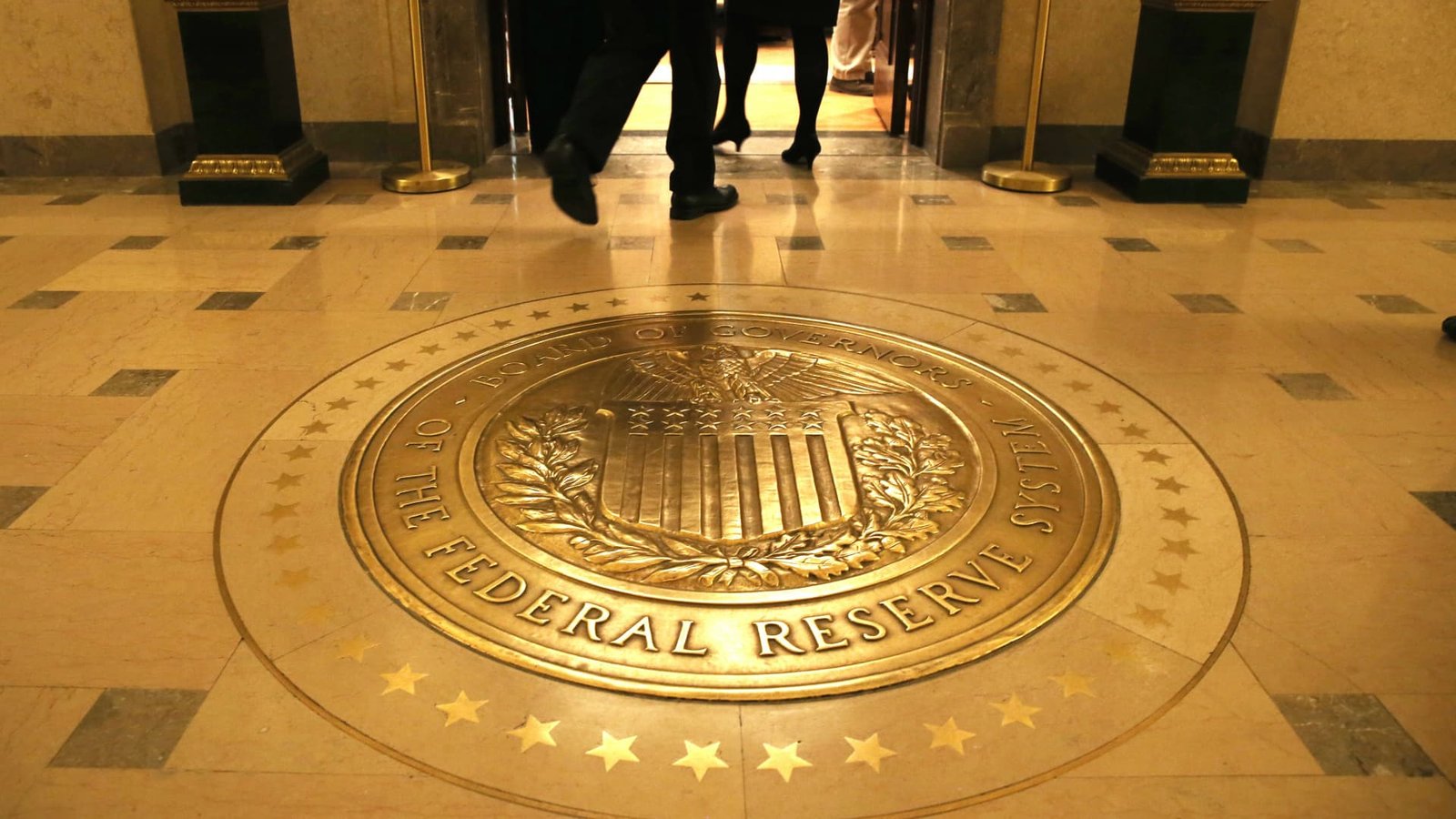
People walk into a meeting of the Board of Governors at the Federal Reserve in Washington DC.
Getty Images
U.S. Treasury yields rose on Tuesday as investors awaited developments on negotiations between the U.S. and Iran, which hit an impasse over the weekend.
The yield on the 10-year U.S. Treasury note — the key benchmark for U.S. government borrowing — added 1 basis point to 4.346%. The 2-year Treasury note yield, which more closely tracks short-term Federal Reserve interest rate policy, was more than 3 basis points higher at 3.836%.
One basis point is equal to 0.01%, and yields and prices move in opposite directions.
President Donald Trump and his national security team discussed Iran’s proposal to reopen the Strait of Hormuz if the U.S. lifts its blockade and the war ends, White House press secretary Karoline Leavitt confirmed on Monday.
The proposal would postpone negotiations on Tehran’s nuclear ambitions for a later date, Axios and The Associated Press reported.
It’s unclear whether Trump, who has vowed not to lift the blockade until a deal with Iran is “100% complete,” entertained the reported offer to end the two-month-old war. Oil prices edged higher Tuesday as uncertainty lingered over the outcome of the war.
Bond investors are also be looking ahead to the Fed’s two-day monetary policy meeting that wraps up Wednesday, when outgoing Fed chair Jerome Powell and the Federal Open Market Committee are widely expected to keep interest rates on hold at their current 3.50% to 3.75%.
The European Central Bank (ECB) and Bank of England (BOE) are also due to hold pivotal meetings as the Iran war upends the outlook for inflation and economic growth.
The two central banks will both publish their latest monetary policy decisions on Thursday, with economists expecting both to leave their benchmark interest rates unchanged at their policy meetings this month, while leaving the door open to hikes later this year.
— CNBC’s Holly Ellyatt also contributed to this report.