
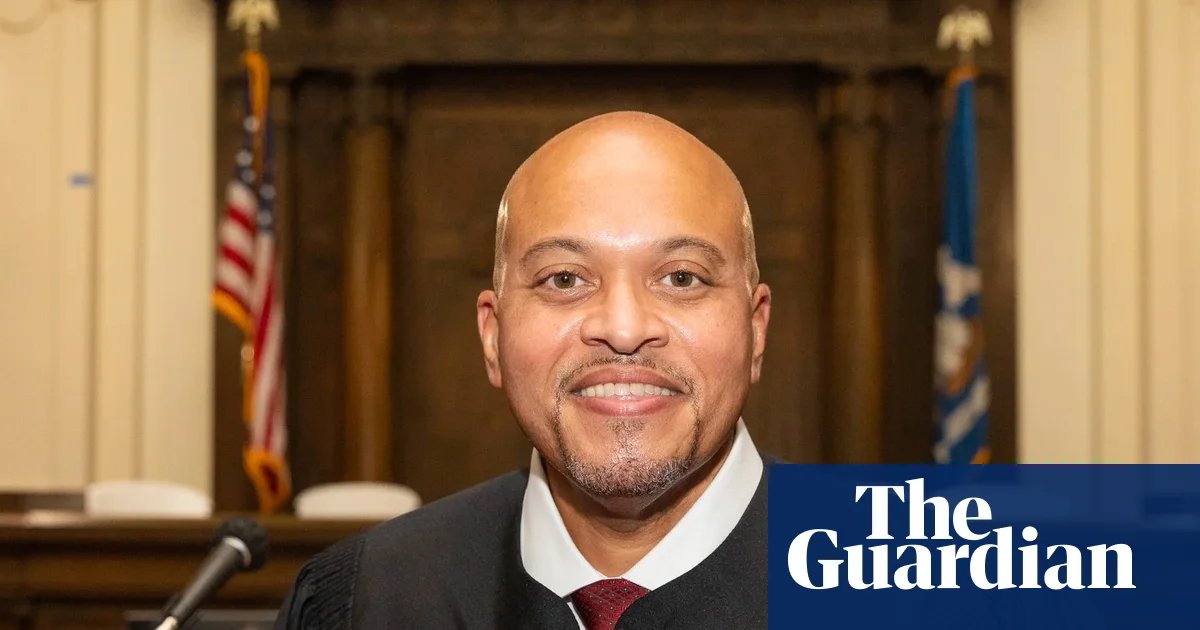
Only one judge in Louisiana has ruled in favor of the Catholic church’s ongoing attempts to strike down a law there which allowed old abuse claims their day in court – even after a state supreme court decision upheld the constitutionality of that so-called “lookback window”.
But now, that judge – Kendrick J Guidry of Lake Charles – is being forced to acknowledge that his ruling benefited a specific church on whose finance committee he sits, giving him a direct financial interest that required his recusal under the state’s judicial code.
Guidry’s handling of the situation has invited questions about why he didn’t recuse himself much earlier. And it served up another of multiple instances in which avowedly Catholic judges in Louisiana – one of the religion’s US strongholds – have issued rulings in favor of a church or affiliated group only to later admit they should not be hearing the case.
These controversial rulings have come as dioceses across the state are grappling with a decades-old, financially costly clergy abuse scandal.
Before his recusal, Guidry had disclosed he was a congregant of that particular church: Immaculate Heart of Mary in the Lake Charles diocese. But until he finally disclosed it last week, he had stopped short of saying he had been serving on the church’s finance committee since February.
Diane Ciolino, a Loyola University New Orleans law professor who specializes in judicial ethics in Louisiana, said state law was clear that judges with such ties to a party in a case must recuse themselves from that case.
“Judges, even with close ties to parties, to lawyers, sincerely sometimes believe that they can be impartial,” Ciolino said. Yet Louisiana’s legislature, which revised laws governing judicial recusals in recent years, “made it clear that the standard is an objective one”, Ciolino continued.
“It’s not what this judge thinks, but it’s what an objective, reasonable observer would believe under the totality of the circumstances.”
Kathryn Robb of the abuse victims advocacy group Enough Abuse, a leading national advocate for lookback window laws across the country, blasted Guidry for not disclosing his role on the church’s finance committee from the outset.
“He’s made it seem as if this relationship with the church of the Immaculate Heart of Mary and the diocese of Lake Charles was one of a distant cousin when in fact, when you look at all the facts, the relationship between the judge and the church is really more like that of an identical twin,” Robb said.
‘Duties to be fair and impartial’
At the heart of Guidry’s recusal controversy was a 31 March hearing in a case alleging a priest at Immaculate Heart of Mary committed “severe child sexual abuse” of a five-to-nine-year-old child in the 1980s. Guidry disclosed at the start of the hearing that he was an Immaculate Heart of Mary member. Still, he said he could be fair, and lawyers on both sides agreed that mere membership at a church was not disqualifying.
Guidry then agreed with the diocese’s position that allowing a 40-year-old abuse claim would be an unconstitutional “taking” of the church’s property because the law in effect at the time of the alleged molestation set a filing deadline that had long expired, according to a transcript of the hearing.
Louisiana’s highest court already rejected that stance when it upheld the lookback window in June 2024 despite arguments to the contrary by the diocese of Lafayette, about 75 miles to the east of Lake Charles. Guidry, though, found the Louisiana supreme court’s decision in that case hinged on a separate argument about due process rights and never finally settled the question of whether institutions have a property right to not be sued for old abuse claims once the original deadline to sue them expired.
Robb said she was taken aback by Guidry’s apparent lack of impartiality in some of his comments from the bench. At one point, he told church attorneys the lookback window law let people “take shots at you guys for something that might have happened 30 or 40 years ago”.
“This is not about taking shots,” Robb said. “This is about finding justice and accountability for victims who were raped, sexually assaulted and sodomized as children.”
Attorneys for the alleged victim in the Lake Charles case filed a motion on 15 April for Guidry to recuse himself. They contended the judge’s position as a eucharistic minister and leader in a men’s group at Immaculate Heart of Mary – and his history as a former finance committee member at another church in the same diocese – went well beyond what he had disclosed.
Guidry then disclosed that he served on Immaculate Heart of Mary’s finance committee when Daniel Meyer, an attorney representing an alleged abuse victim in a separate case in front of Guidry, made his own request for the judge to step aside.
In an email obtained by WWL Louisiana and the Guardian, Guidry bristled at Meyer’s request, saying “it does come with a personal sting”. He asserted that he didn’t recuse himself in March because he believed his role as a eucharistic minister and leader in a men’s group at the church didn’t compromise his impartiality. Then, however, Guidry offered a new piece of information.
“Unfortunately, at that time, I failed to mention I was a member of the finance committee which is reflected in my updated bio” on the Lake Charles state courthouse’s website, Guidry wrote in the email. “Based on the motion to recuse and the attached bio, I noticed my updated bio was not uploaded to the website as it should have been when I updated it on [24 February]. I accepted the appointment to the finance committee about that time, so it is still new to me and it slipped my mind at the recent hearing.”
A new version of Guidry’s biography was posted to the court’s website on 15 April, according to the file’s metadata. The bio was nearly identical to the previous version – but it added that Guidry serves on Immaculate Heart of Mary’s finance committee.
“I let nothing interfere with my duties to be fair and impartial in all cases,” Guidry wrote in the email. He then alluded to the Louisiana code of civil procedure section 151(B), which requires judges to recuse themselves if there is a “substantial and objective basis that would reasonably be expected to prevent [them] from conducting any aspect of the cause in a fair and impartial manner”.
“Based solely on me being on the finance committee of the church and just saying the word ‘finance,’ I can understand how under 151(B) there would be a ‘substantial and objective’ basis requiring my recusal,” Guidry wrote.
WWL and the Guardian obtained the judge’s email independently of Meyer. Meyer confirmed the authenticity of the email but declined to comment.
Guidry, too, did not immediately comment.
The case in which Guidry ruled on the church’s side has since been reallotted to another judge named Michael Canaday. In November, in another clergy abuse case involving the Lake Charles diocese’s St Joseph church, Canaday ruled against the arguments which had triumphed before Guidry.
Guidry’s pre-recusal ruling came as a pair of lawsuits alleging sexual abuse at the Jesuit high school in New Orleans by personnel there remain pending. In those cases, unfolding at New Orleans’ state civil courthouse, attorneys representing the Catholic school unsuccessfully made the same arguments that won in front of Guidry.
They were among dozens of similar arguments in cases across Louisiana that have gone to the state’s supreme court. In every one of them, including in a ruling issued on Tuesday, the high court has declined to hear the case.
A ruling at the US fifth circuit court of appeals likewise declined to hear a clergy abuse case out of Baton Rouge involving the Salesians’ religious order, which was airing the same arguments.
Nonetheless, despite that losing track record, on 31 March, Guidry said he agreed with church attorneys that the repeated denials did not actually set a legal precedent to which he had to adhere.
Other recusals
Guidry’s subsequent recusals called to mind US district judge Jay Zainey in New Orleans’ federal courthouse.
Zainey initially was among several federal judges in the city who recused themselves from presiding over any cases that could directly affect a bankruptcy protection filing that New Orleans’ Catholic archdiocese made in 2020 as it grappled with the financial fallout of clergy molestation claims. The reason for his recusal were various ties to the archdiocese, including his past service on the governing board of the archdiocesan college which teaches prospective clergymen.
But later, in an abuse case involving the Holy Cross Catholic religious order, Zainey decided to strike down as unconstitutional the lookback window that Louisiana’s legislature approved in 2021.
Zainey’s ruling at first was seen as a decisive victory for the state’s Catholic church, allowing it to settle abuse claims for far less money than it would otherwise have to. Yet the Louisiana supreme court later upheld the law’s constitutionality, in effect negating Zainey’s ruling.
He later recused himself from the Holy Cross case. In June 2025, a jury ordered Holy Cross officials to pay the plaintiff $2.4m in damages.
The New Orleans archdiocese and its insurers since have also agreed to pay about $305m to settle with clergy abuse claimants involved in the bankruptcy, which is unrelated to the Lake Charles cases in front of Guidry. Before the opening of the lookback window, the archdiocese estimated it could settle the bankruptcy for $7m or less.
Meanwhile, another New Orleans federal judge named Greg Guidry – who is not related to Kendrick Guidry – insisted that he could impartially handle appeals related to the archdiocese’s bankruptcy despite having donated tens of thousands of dollars to the institution. One of his key rulings denied a request to unseal secret church documents outlining how archdiocesan officials handled clerics suspected of sexually abusing children.
Then, in April 2023, amid scrutiny into his personal relationship with an attorney representing archdiocesan affiliates in insurance disputes, Greg Guidry recused himself from his role in the church bankruptcy.
The Guardian and WWL Louisiana managed to report on one of the clergymen in the archdiocesan bankruptcy’s sealed files – retired priest Lawrence Hecker. In December 2024, Hecker pleaded guilty to charges of child rape and kidnapping and died shortly thereafter in prison.
Louisiana state police troopers who pursued Hecker furthermore opened a broader inquiry into whether the archdiocese ran a child sex trafficking ring responsible for the “widespread … abuse of minors dating back decades” that was “covered up and not reported” to authorities, as they wrote in a sworn statement filed in criminal court.
It has not been clear whether any of Hecker’s superiors may be charged as part of that investigation.


