Instead of relying on the soil for nutrients, plants may grab some of those essentials from airborne particles.
Feeding through leaves is already well-established in agriculture — farmers spray liquid nutrients on crops. But some plants can also absorb nutrients from dust that lands on their leaves, researchers report April 8 in New Phytologist. The team says this route may be an underappreciated source of nourishment in dusty, nutrient-poor ecosystems.
“Plants are not like animals; they cannot move,” says Anton Lokshin, a plant biologist at Ben Gurion University of the Negev in Be’er Sheva, Israel. “So they have to have strategies to absorb food and nutrients from the environment.”
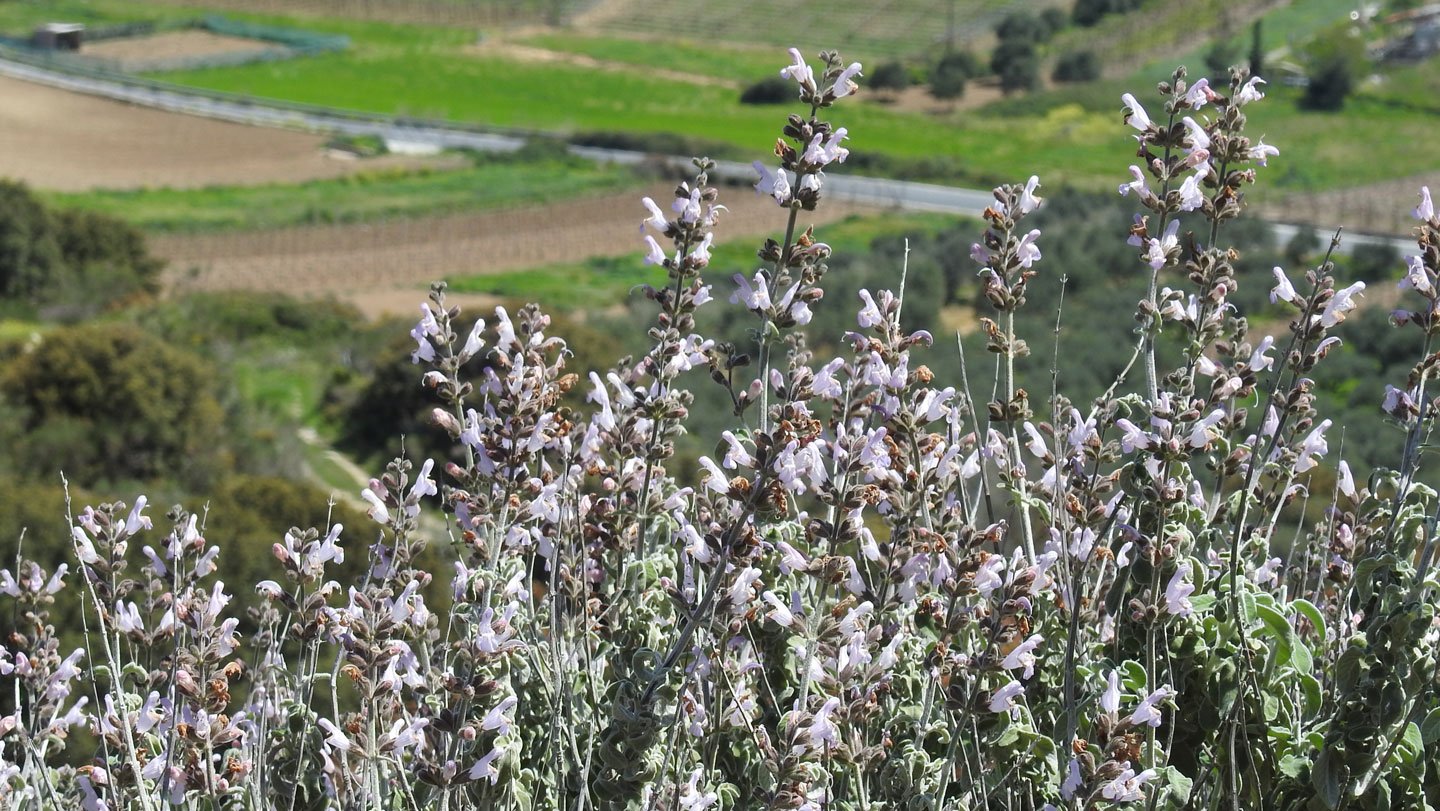
To investigate the contribution of foliar uptake, or absorption through leaves, Lokshin and his colleagues studied three species — pink rock rose, Greek sage and headed germander — at a field station in the Judean Hills, Israel. This region receives lots of dust from the Sahara and the Arabian Desert. Over three months, the team raised 12 plants of each species, treating six with volcanic dust directly on their foliage and leaving the rest untreated. The team chose volcanic dust because it contains a distinct rare earth element signature that let the researchers distinguish dust-derived nutrients from soil-derived ones.
Plants whose leaves had been dusted showed a spike in micronutrients such as iron, nickel, manganese and copper in the shoots. The team did not detect a clear buildup of phosphorus in plant tissues, but Lokshin says that’s because phosphorus moves quickly within plants. His earlier research showed that plants can, in fact, absorb phosphorus from dust through their leaves.
Mineral uptake in the roots remained mostly unchanged, even in a parallel experiment where dust was applied directly to the soil. In soil, dissolved phosphorus and iron face immediate competition from microorganisms and from minerals that chemically bind to these nutrients before roots can access them.
However, Lokshin says, there is no such competition on leaves. Leaf surfaces, he says, create a distinct chemical environment by secreting organic acids that can help dissolve nutrients in dust.
By combining field measurements with dust deposition and soil nutrient data from other regions, the team estimates that foliar uptake could supply up to 17 percent of soil’s iron contribution in the western United States and up to 12 percent of soil’s phosphorus contribution in the eastern Amazon. During Mediterranean dust storms, the researchers say, these atmospheric inputs can match or exceed what soil provides.