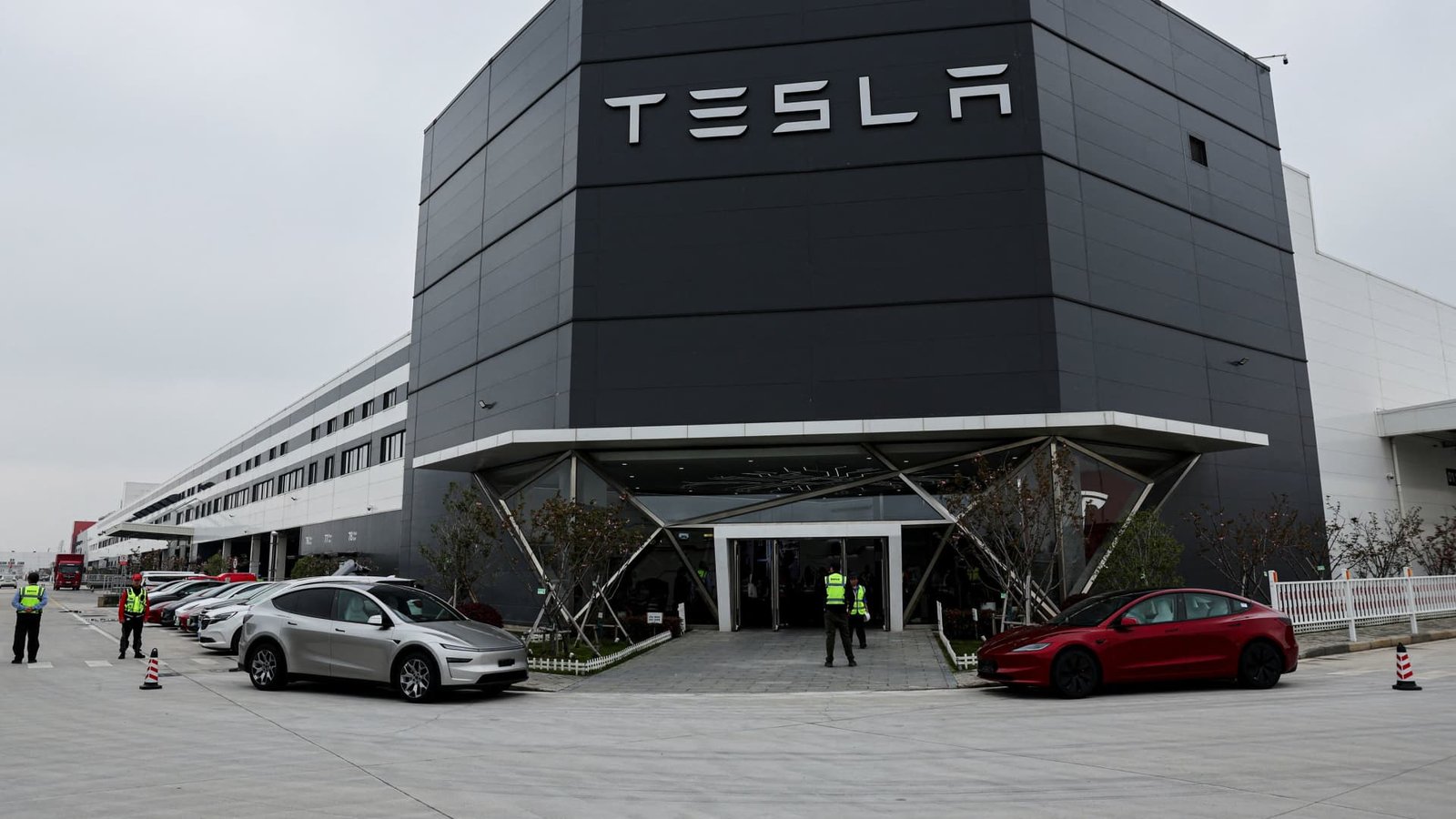
Tesla’s earnings report is coming after markets close on Wednesday, but those figures won’t be a top driver of movement in the stock, Wall Street analysts said. Signals about the company’s longer-term ventures in energy storage, autonomous driving, AI chips, and robotics are more likely to matter to the share price. Tesla is facing declining vehicle profitability as well as the loss of its regulatory credit advantage due to Republicans’ 2025 tax-cutting legislation. Investors want to hear from CEO Elon Musk on the earnings conference call about progress in other areas of the business to offset these declines and drive profits. Energy storage Top of mind is a recent dip in Tesla’s energy storage business performance, one of the fastest growing parts of the company in recent quarters. In the first quarter, Tesla deployed 8.8 gigawatt hours of battery systems in the first quarter, down from a record 14.2 gigawatt hours in the fourth quarter of 2025. “Was the dip in energy storage deployments truly a commissioning / timing issue or is this going to be a multi-quarter challenge?” analysts for Wolfe Research asked in an April 21 research note. Robotaxis Robotaxi developments are another key area of focus for Tesla on the Street. “We think investor focus for TSLA 1Q earnings will be on its robotaxi deployments … as it looks to disrupt the rideshare market and capture a portion of the $1tn+ market opportunity,” analysts for Bank of America wrote in an April 21 note. Tesla has been planning to expand its robotaxi operations into seven new markets in the first half of this year, according to Wolfe Research, and announcements on those new areas of operation could move the stock. “TSLA is now looking to expand to additional markets, including: Phoenix, Miami, Orlando, Tampa, and Las Vegas as its next target cities,” analysts for Cantor wrote in a Tuesday note. “On its Q1 call, we look for an update on the company’s plans to expand Robotaxi deployments into new cities, and an update on the targeted unit economics.” Data/miles driven is one potentially important metric for investors when it comes to robotaxis. “Incremental unsupervised robotaxi miles driven improve the underlying autonomy model, which accelerates the path to personal unsupervised [fully self-driving capability],” Morgan Stanley analysts wrote on Monday. Self-driving software On its last earnings call, Tesla disclosed customer penetration on its fully self-driving (FSD) capabilities for the first time, analysts noted. Tesla’s self-driving software – which still requires human oversight – recently won regulatory approval in the Netherlands, the first European country to give it a thumbs up. “The company reported that it added an additional ~100K FSD customers in 4Q25, and for FY25, TSLA disclosed 1.1M active FSD subscribers (vs. 0.8M in FY24),” Cantor analysts said Tuesday. Updates on these penetration numbers could meaningfully drive the stock. New AI chip AI capital expenditures, which is expected to be around $20 billion for this year, is another potential touchpoint. Tesla shares jumped earlier this month on an announcement that the company had finished designing its AI5 chip, which Musk said will be produced along with Taiwan Semiconductor and Samsung. Humanoids Tech investors are also watch for development on Tesla’s humanoid robot, Optimus. They want to know when its latest unveil will be and what the production scale will be and when it will be rolled out. “While we don’t expect any significant near-term contribution from Optimus, we see potential long-term opportunity and our team forecasts global humanoid robot shipments of 1.2mm/10mm globally by 2030/2035,” Bank of America analysts wrote on Tuesday. While retail investors appear to still supporting the stock, Wall Street analysts have become skeptical as the shares detached from trading on earnings figures. Tesla has an average rating of hold from Wall Street analysts, according to FactSet with a 12-month target price of $412.63. Shares were last trading around $389.